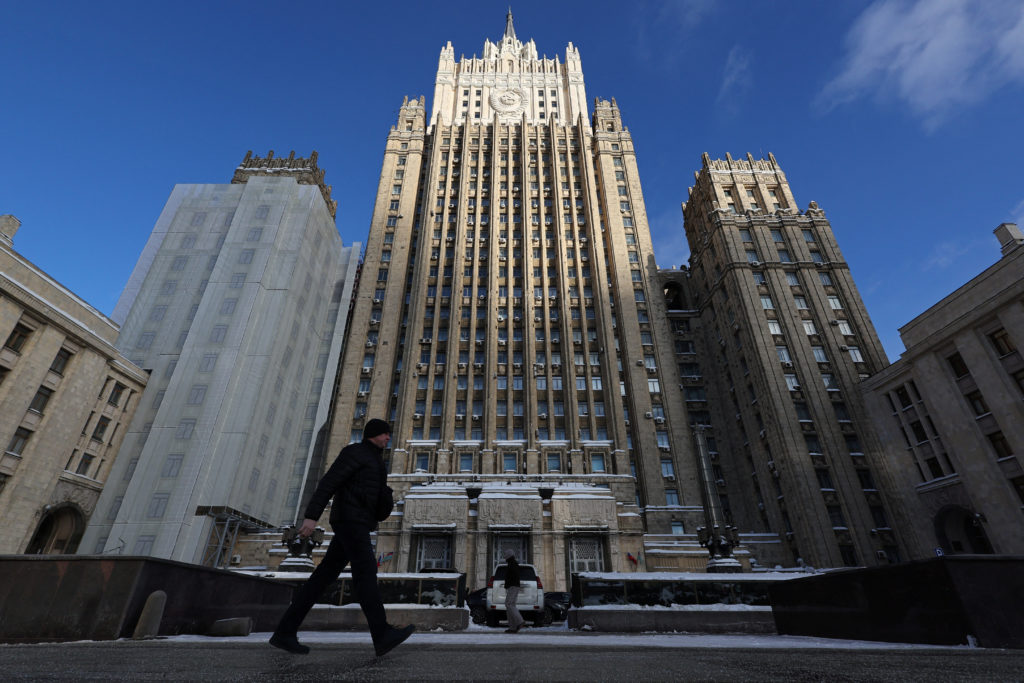
In a significant diplomatic move on Saturday, Russia issued a robust condemnation regarding reported military operations conducted by the United States and Israel against Iran. Official statements emanating from Moscow characterized these actions as a deliberate and unwarranted act of hostility, asserting they constituted 'a preplanned and unprovoked act of armed aggression against a sovereign and independent U.N. member state.' The Russian government unequivocally called for an immediate cessation of all military activities, urging a prompt return to diplomatic channels as the sole viable path to resolve the escalating tensions. This forceful declaration from a major global power underscores the gravity with which Moscow views the reported developments, highlighting concerns over regional stability and adherence to international norms. The statement serves as a clear signal of Russia's position amidst heightened geopolitical sensitivities in the Middle East, demanding a swift de-escalation to prevent further destabilization.
The context surrounding Russia's strong denouncement is rooted in a complex web of international relations and long-standing geopolitical rivalries. Russia, a permanent member of the United Nations Security Council, frequently positions itself as a counterweight to Western influence, particularly in regions like the Middle East. Its relationship with Iran has deepened in recent years, encompassing strategic cooperation in various sectors, including defense and energy, and a shared opposition to what both nations perceive as unilateral actions by the United States and its allies. This backdrop lends considerable weight to Moscow's official pronouncements, transforming them from mere diplomatic rhetoric into a significant political stance. The condemnation reflects not only an immediate reaction to the reported strikes but also a broader assertion of Russia's role in shaping the international discourse on sovereignty, non-intervention, and the peaceful resolution of disputes, particularly when actions involve nations with whom it maintains strategic ties.
Further elaborating on its position, the Russian government's statement meticulously described the reported U.S.-Israeli actions as an affront to international law and the principles of national sovereignty. By labeling the strikes as 'preplanned and unprovoked,' Moscow explicitly challenged any potential justifications for the military operations, implying a deliberate breach of peace without legitimate cause. The emphasis on Iran as a 'sovereign and independent U.N. member state' underscores Russia's argument that such actions violate fundamental tenets of the United Nations Charter, which prohibits the use of force against the territorial integrity or political independence of any state. Officials stated that the immediate demand for a cessation of military operations and a return to diplomacy was not merely a suggestion but an imperative, reflecting a deep concern that continued military engagement could spiral into a wider regional conflict with unpredictable and potentially catastrophic consequences for global security.
Analysts suggest that Russia's robust condemnation carries significant implications for regional dynamics and international diplomacy. Such an unequivocal stance from Moscow could potentially embolden Iran, reinforcing its resolve against perceived external aggression and complicating any future de-escalation efforts. Furthermore, the declaration risks deepening existing geopolitical fissures, particularly between Russia and Western powers, who may hold differing views on the legitimacy or necessity of the reported military actions. Expert perspectives indicate that Russia's statement serves multiple strategic purposes: it reaffirms its commitment to allies like Iran, challenges U.S. and Israeli military assertiveness in the region, and positions Moscow as a vocal advocate for international law and multilateralism, even as it faces its own criticisms on these fronts. The broader implications suggest a further hardening of positions among major global actors, making a consensual path to regional stability increasingly challenging.
In conclusion, Russia's forceful condemnation of reported U.S.-Israeli military actions against Iran marks a critical juncture in the ongoing regional tensions. By characterizing these strikes as 'preplanned and unprovoked armed aggression' against a sovereign state, Moscow has not only expressed its strong disapproval but also laid down a clear demand for immediate de-escalation and a return to diplomatic engagement. This declaration, rooted in Russia's strategic interests and its role in global affairs, underscores the potential for further geopolitical polarization. As the international community watches for reactions from the involved parties and other global powers, Russia's statement highlights the urgent need for a peaceful resolution to prevent further instability in an already volatile region, emphasizing the critical importance of adherence to international legal frameworks.