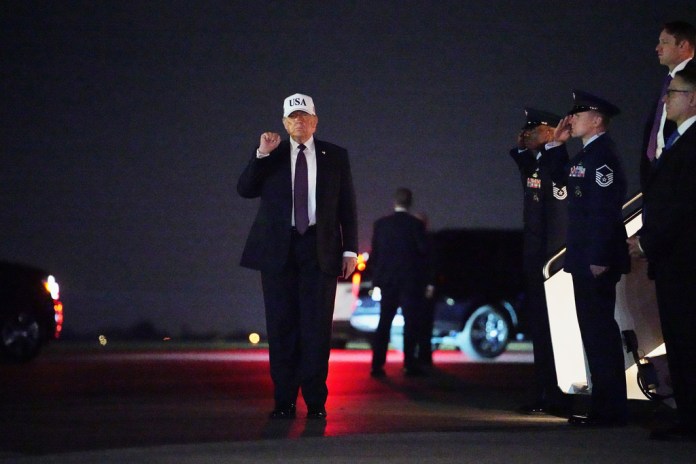
The United States Secret Service has implemented enhanced security protocols for its high-profile protectees situated in Washington, D.C., and various other locations across the country. This significant increase in protective measures follows President Donald Trump's directive for a U.S. military operation against Iran, reportedly executed in coordination with Israeli forces. The federal agency, primarily responsible for safeguarding the President, Vice President, and their immediate families, confirmed it is "actively monitoring" the evolving situation in Iran and is collaborating closely with both federal and local law enforcement partners. While specific operational security details are not publicly disclosed, officials indicated that the public might observe a more visible presence of law enforcement and federal personnel around sites under Secret Service protection. Any temporary disruptions to traffic or pedestrian access will be communicated by local law enforcement partners, according to a statement released by the agency on Saturday, which also urged public vigilance and encouraged reporting of unusual or concerning activities to authorities.
The US military action, designated "Operation Epic Fury," was ordered by President Trump overnight from his Mar-a-Lago resort in Florida, marking a critical escalation in regional tensions. This decision has immediately prompted heightened concerns for the safety and security of high-ranking American officials, both domestically and abroad. The Secret Service's mandate, which encompasses protecting the President, Vice President JD Vance, and their immediate families, necessitates comprehensive and adaptive security adjustments during periods of elevated geopolitical risk. The agency's proactive stance in bolstering security reflects standard operating procedures designed to ensure the continuity of government operations and safeguard national leadership amidst potential threats or retaliatory actions. The reported coordination with Israel further underscores a shared strategic objective in the region, adding layers of complexity to the geopolitical landscape and potentially broadening the scope of implications for U.S. interests and personnel.
Vice President JD Vance, alongside several key cabinet members, reportedly monitored the joint U.S.-Israeli strikes on Iran from the White House's highly secure Situation Room, underscoring the gravity and high-level coordination involved in the operation. Among those present were Energy Secretary Chris Wright, Treasury Secretary Scott Bessent, and the Director of National Intelligence Tulsi Gabbard. The enhanced security measures are particularly focused around the White House and any location where the President might be, including his current stay at Mar-a-Lago. This heightened vigilance is also informed by a recent security incident at the Florida resort on February 22, where an individual armed with a shotgun and carrying a fuel can managed to infiltrate the premises before being fatally shot by two Secret Service agents and a local sheriff’s deputy. President Trump was not present at Mar-a-Lago during that specific event, according to Secret Service reports, but the incident highlighted potential vulnerabilities even at highly protected sites. Furthermore, Senator Marco Rubio reportedly informed the "Gang of Eight" congressional leaders about the impending Iran attack, a move that contrasts with previous instances, such as a mission concerning Venezuela, suggesting a deliberate effort to ensure bipartisan awareness for this significant military action.
The immediate security enhancements by the Secret Service underscore the perceived threat level following a direct military engagement with Iran. While such measures are standard operating procedure during times of international conflict, their public announcement serves as a clear message of preparedness and caution to both domestic and international audiences. The involvement of multiple cabinet secretaries and the Director of National Intelligence in monitoring the strikes from the Situation Room highlights the gravity and strategic importance of "Operation Epic Fury," indicating a unified front within the administration regarding the military action. The previous security incident at Mar-a-Lago serves as a stark reminder of the constant challenges faced by protective services, emphasizing that even with robust security protocols, vulnerabilities can emerge. The decision to alert the "Gang of Eight" prior to the strike, as reported by sources, suggests an administration aiming for greater transparency with congressional leadership on critical national security matters, potentially seeking to mitigate political fallout or build consensus for future actions, a departure from some past practices. This complex interplay of military action, domestic security concerns, and political maneuvering defines the current operational environment.
In summary, the United States Secret Service has significantly bolstered its security posture for key government officials and protected locations in response to President Trump's order for military strikes against Iran. This move, which includes increased law enforcement visibility and public advisories, reflects the heightened risk environment following "Operation Epic Fury." The incident at Mar-a-Lago earlier this year further emphasizes the continuous need for vigilance and adaptive security strategies in an unpredictable world. As the geopolitical situation with Iran continues to evolve, the focus will remain on the effectiveness of these protective measures and any potential ripple effects on domestic security. The public is encouraged to remain aware and assist law enforcement by reporting suspicious activities, while the Secret Service continues its active monitoring and collaborative efforts with partner agencies to ensure the safety of its protectees. Future developments will likely hinge on Iran's response and the ongoing diplomatic and military strategies employed by the U.S. and its allies.