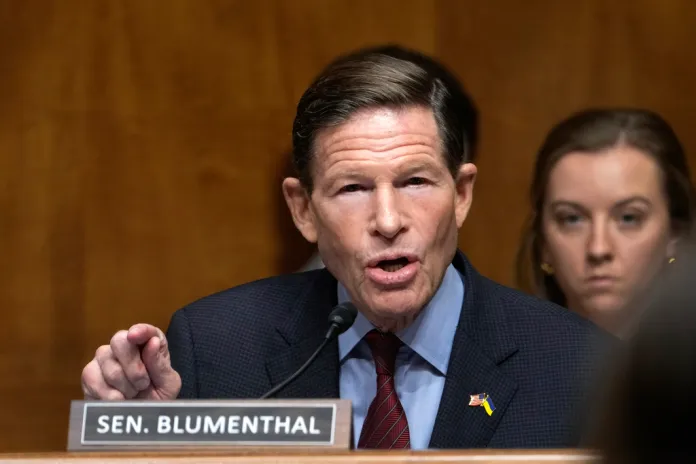
Following a high-level Senate briefing on the escalating conflict in the Middle East, Senator Richard Blumenthal, a Democrat from Connecticut, conveyed profound apprehension regarding the potential deployment of United States ground forces to Iran. The senator reportedly stated that he felt "more fearful than ever" after the Tuesday session, suggesting that American troops might become necessary to achieve the administration's perceived objectives in the region. This significant concern emerged after top national security officials, including Secretary of State Marco Rubio, War Secretary Pete Hegseth, CIA Director John Ratcliffe, and Chairman of the Joint Chiefs of Staff General Dan Caine, provided senators with an update on the volatile situation. The briefing underscored the gravity of recent developments, which have seen a rapid escalation of hostilities between the U.S. and Iran, prompting serious questions about the scope and future direction of American involvement.
The current crisis ignited in the early hours of Saturday morning when the United States and Israel reportedly launched coordinated preemptive airstrikes against targets within Iran. These strikes were described as highly impactful, with reports indicating that they successfully eliminated a significant portion of Iran's leadership, including the supreme leader, Ayatollah Ali Khamenei. In the immediate aftermath, Iran initiated a series of retaliatory attacks, targeting both Israeli territory and U.S. military facilities situated across the region. These counter-strikes have had severe consequences, tragically resulting in the deaths of six American service members, further intensifying the already fraught geopolitical landscape. The Senate briefing, therefore, took place against a backdrop of heightened tensions and direct military engagement, aiming to inform lawmakers about the rapidly unfolding events and the strategic considerations guiding the administration's response to this critical juncture in Middle Eastern affairs.
During his remarks to reporters following the closed-door briefing, Senator Blumenthal also highlighted a lack of clarity regarding the administration's precise strategic priorities moving forward. He indicated that he remained uncertain whether the primary goal was to dismantle Iran's nuclear capabilities, target its missile arsenal, pursue a policy of regime change, or solely focus on counter-terrorism operations. This ambiguity, according to the senator, contributes to the heightened concern about potential ground intervention. In contrast, Secretary of State Marco Rubio, speaking to journalists the day prior, affirmed that the U.S. was "not postured for ground forces" at present. However, Rubio notably kept all military options on the table, emphasizing that the President, in his constitutional role as commander-in-chief, retains the authority to authorize any operations deemed necessary, signaling a flexible but firm stance on future actions despite the current posture.
The divergent perspectives and the administration's stated flexibility underscore the profound strategic dilemmas facing Washington amidst the escalating conflict. Senator Blumenthal's apprehension reflects a broader concern within Congress regarding mission creep and the potential for the United States to become entangled in a protracted ground war in the Middle East, a region where past interventions have often led to unforeseen and complex challenges. The lack of a clearly articulated, singular objective, as noted by Blumenthal, could complicate military planning, public support, and international coalition building. Analysts suggest that pursuing multiple, potentially conflicting goals—such as nuclear disarmament, missile interdiction, and regime change—simultaneously could lead to an overextension of resources and an unclear exit strategy. The administration's decision to keep all options open, while a standard presidential prerogative, also signals a readiness for significant escalation should diplomatic or limited military actions fail to achieve desired outcomes, raising the stakes for regional stability and global security.
As the conflict between the U.S. and Iran continues to intensify, Senator Blumenthal's expressed fears regarding ground troop deployment highlight the critical decisions confronting American policymakers. The immediate aftermath of the preemptive strikes and subsequent Iranian retaliation has created a volatile environment, with the loss of U.S. service members adding a somber dimension to the crisis. While Secretary Rubio indicated no immediate plans for ground forces, the explicit retention of all presidential options ensures that the possibility remains a significant concern. The coming days will likely reveal more about the administration's strategic direction and whether the objectives, currently perceived as ambiguous by some lawmakers, will be clarified. Observers will be closely watching for any further military actions, diplomatic overtures, or shifts in rhetoric that could indicate the trajectory of this rapidly evolving and dangerous confrontation.