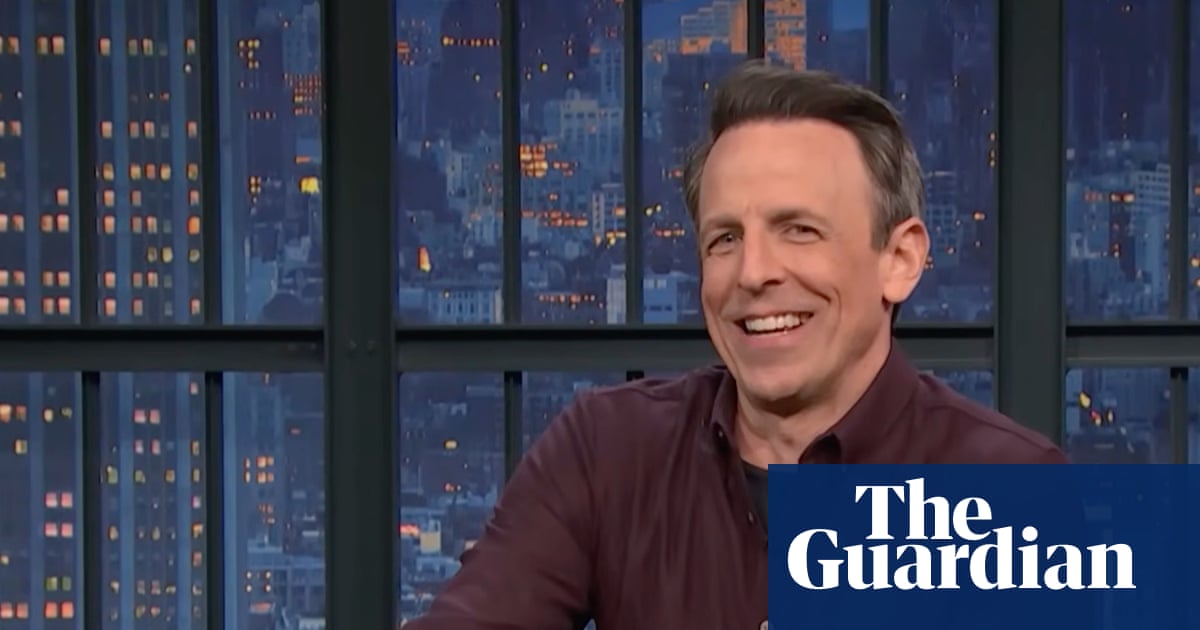
Late-night television host Seth Meyers recently voiced strong criticism regarding former President Donald Trump's public remarks concerning military operations in Iran, highlighting what he perceived as a concerning disclosure of sensitive strategic information. During a recent interview, Trump reportedly described potential military actions against Iran using colloquialisms such as "knocking the crap" out of the country, further indicating that more significant engagements were imminent, stating, "We haven’t even started hitting them hard. The big wave hasn’t even happened, the big one is coming soon." Meyers, commenting on these statements, expressed incredulity that a commander-in-chief would openly discuss future military plans, suggesting that Trump's enthusiasm for such actions led him to inadvertently reveal classified intentions. This public commentary from a former president, particularly concerning ongoing or planned military engagements, raises significant questions about national security protocols and the appropriate boundaries of presidential communication.
The critique from Meyers is part of a broader trend where late-night comedians frequently engage with and scrutinize the rhetoric and actions of political figures, offering a blend of humor and pointed commentary. In the context of international relations, especially concerning volatile regions like the Middle East, a president's public statements carry immense weight, potentially influencing geopolitical dynamics, troop safety, and diplomatic efforts. The perceived revelation of military strategy, as highlighted by Meyers, could theoretically compromise operational security and provide adversaries with valuable intelligence. Historically, presidential communication regarding military matters has been carefully managed to maintain an element of surprise and to avoid escalating tensions unnecessarily. Meyers' observations underscore a persistent concern among critics about the former president's communication style and its potential implications for national security and foreign policy, placing his remarks within a larger discourse about the responsibilities of the highest office.
Beyond the discussion of military strategy, Meyers also focused on other reported remarks by Trump, including comments made during a Medal of Honor ceremony. According to Meyers, Trump's speech at the event veered into tangential topics, such as observations about the White House drapes. More notably, the late-night host highlighted Trump's reported admission that he had attempted to secure a Medal of Honor for himself, only to be advised that such an action would constitute "bad protocol." Meyers emphasized the multiple layers of this admission, noting that Trump not only confessed to the attempt but also acknowledged being informed of its impropriety, yet still chose to disclose it publicly. The comedian drew a humorous parallel, suggesting that such a lack of self-awareness, even after being corrected, was akin to reprimanding a puppy for misbehavior. These specific anecdotes, according to Meyers, illustrate a pattern of behavior that challenges conventional expectations of presidential decorum and self-restraint.
The implications of a president's public statements, particularly those concerning military operations or personal accolades, extend far beyond mere political commentary. From an analytical perspective, a commander-in-chief's open discussion of impending military actions, as described by Meyers, could be interpreted as a significant breach of strategic communication principles. Such disclosures risk undermining the element of surprise crucial to military success, potentially endangering personnel and complicating international relations. Furthermore, the reported attempt to self-award a Medal of Honor, and the subsequent public admission of being told it was 'bad protocol,' speaks to a broader discussion about presidential ego, adherence to established norms, and the perception of leadership. Experts often emphasize the importance of presidential rhetoric in shaping both domestic and international perceptions of American power and values. Meyers' commentary, while comedic, taps into serious concerns about the impact of a leader's words on national security, institutional integrity, and the very fabric of democratic governance.
In summary, Seth Meyers' recent critiques of Donald Trump's public statements underscore ongoing concerns about presidential communication, particularly regarding sensitive military matters and adherence to established protocols. Meyers highlighted what he viewed as Trump's concerning candor about potential military actions in Iran and his reported attempt to secure a Medal of Honor for himself, despite being advised against it. These observations, while delivered through the lens of late-night comedy, resonate with broader debates about the responsibilities of the presidency, the impact of a leader's words on national security, and the importance of maintaining decorum in the highest office. As political discourse continues to evolve, the scrutiny of presidential rhetoric by media figures like Meyers remains a significant aspect of public accountability, prompting ongoing discussions about the standards expected of those in power and the potential repercussions of their public pronouncements.