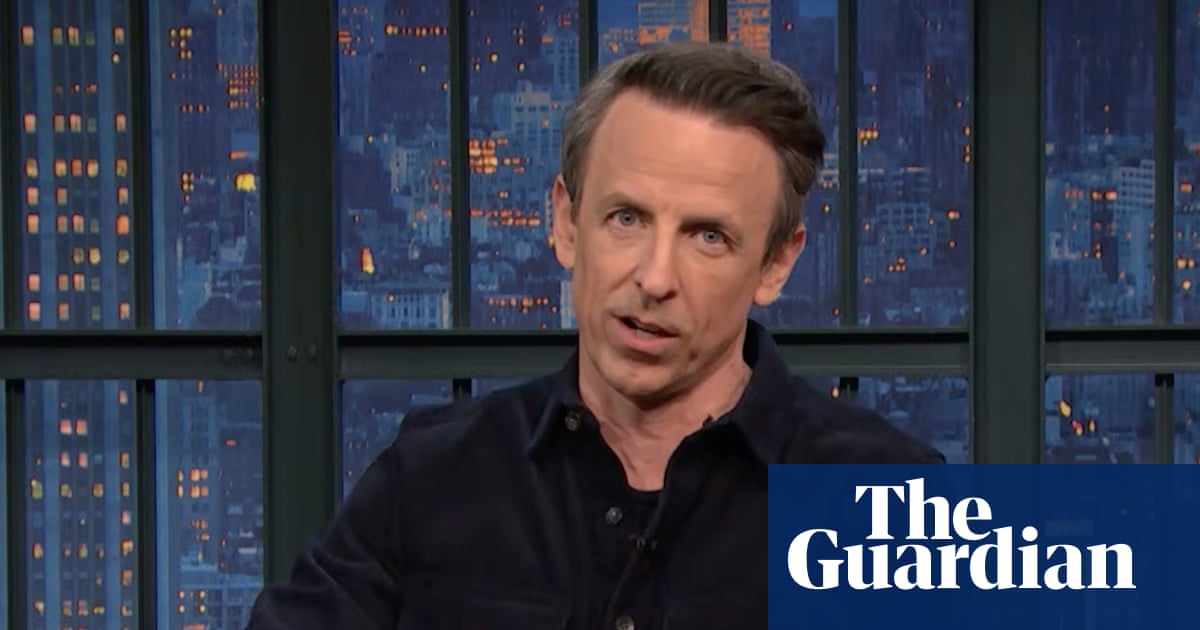
During a recent broadcast of "Late Night," host Seth Meyers dedicated a significant portion of his program to dissecting the current administration's foreign policy and domestic appointments, specifically focusing on the escalating tensions with Iran. According to reports from the broadcast, Meyers utilized his platform to scrutinize President Donald Trump’s repeated assertions regarding the 2015 international nuclear agreement. The late-night host highlighted what he characterized as a pattern of aggressive rhetoric coming from the White House, suggesting that the language used by officials often lacks the nuance required for complex geopolitical negotiations. Beyond the situation in the Middle East, the program also touched upon the ongoing legal developments surrounding the Jeffrey Epstein investigations and the president’s recent decision to nominate a wellness influencer to the position of United States Surgeon General. Journalists observing the segment noted that Meyers appeared particularly focused on the discrepancy between the administration's self-portrayal as master negotiators and the actual diplomatic outcomes achieved on the world stage. This critique comes at a time when the international community remains on edge regarding the potential for military conflict, as officials have stated that the threat of a U.S. strike remains a point of intense internal debate within the executive branch.
To understand the weight of Meyers' critique, one must look at the historical context of the Joint Comprehensive Plan of Action (JCPOA), which was established in 2015 under the Obama administration. This landmark deal involved Iran and several world powers, including the United States, the United Kingdom, France, Germany, Russia, and China. The primary objective of the agreement was to place significant restrictions on Iran’s nuclear capabilities in exchange for the lifting of crippling economic sanctions. However, since his initial campaign for the presidency, Donald Trump has consistently labeled the agreement as a failure. According to public records, the president has frequently argued that the deal was one-sided and failed to address Iran’s ballistic missile program or its influence in regional conflicts. This background is essential for interpreting Meyers' commentary, as the host pointed out that the president’s desire to dismantle existing frameworks often precedes a clear alternative strategy. The significance of this event lies in the shift from multilateral diplomacy to a "maximum pressure" campaign, which critics argue has increased the likelihood of a direct confrontation. By revisiting these historical points, the broadcast aimed to provide viewers with a framework for evaluating the administration's current claims against the documented history of international nuclear non-proliferation efforts.
In a specific segment of the show, Meyers played clips of President Trump defending his record as a negotiator while disparaging the work of his predecessors. According to the footage aired, Trump claimed to have brokered "wonderful deals" throughout his career and asserted that he had never witnessed a transaction as "incompetently negotiated" as the 2015 nuclear pact with Iran. Meyers responded to these claims by performing what he described as a fact-check, questioning the validity of the president’s self-assessment. The host pointed out that while the president prides himself on his business acumen, the complexities of international law and nuclear physics present challenges that differ significantly from real estate transactions. Furthermore, the episode delved into the controversial nomination of a wellness influencer for the role of Surgeon General, a move that has drawn skepticism from the medical community. Reports indicate that this appointment is seen by some as part of a broader trend of selecting unconventional figures for high-ranking government positions. Meyers suggested that these choices reflect a disregard for traditional expertise, a theme he connected back to the administration's approach to the Iran situation. The host’s analysis included specific references to the potential consequences of replacing seasoned diplomats and medical professionals with individuals whose primary qualifications may lie in their public personas or loyalty to the executive branch.
The broader implications of this late-night critique extend into the realm of how political information is consumed and processed in the modern era. Analysts suggest that figures like Seth Meyers have increasingly stepped into roles that blend entertainment with investigative journalism, providing a counter-narrative to official government statements. This phenomenon is particularly relevant when discussing high-stakes issues such as the threat of war or public health policy. By framing the administration's rhetoric as nonsensical or physically impaired—using the metaphor of someone who has "been hit on the head"—Meyers is tapping into a widespread public concern regarding the stability and coherence of U.S. foreign policy. From an expert perspective, this type of commentary serves to highlight the erosion of traditional diplomatic norms. If the administration continues to prioritize aggressive posturing over structured agreements, the long-term impact on global security could be profound. Furthermore, the focus on the Epstein investigation during the same broadcast underscores a growing demand for accountability among the nation's elite. What this means going forward is a likely continuation of the friction between the executive branch and the media, as late-night hosts and journalists alike seek to verify the claims made by officials who often bypass traditional press briefings in favor of direct, often unvetted, public communications.
In summary, the recent commentary by Seth Meyers serves as a microcosm of the current political climate, where the lines between governance, diplomacy, and public spectacle are increasingly blurred. The key takeaways from the broadcast include a sharp rejection of the president’s narrative regarding the Iran nuclear deal and a warning about the potential dangers of unconventional cabinet appointments. As the situation with Iran remains volatile, observers should watch for how the administration responds to both international pressure and domestic criticism. Additionally, the progress of the Surgeon General’s confirmation process will be a critical indicator of the Senate's willingness to challenge the president's picks. Ultimately, the discourse surrounding these events highlights a fundamental disagreement over the best path forward for American interests abroad and the health of the nation at home. Whether the administration’s "maximum pressure" tactics will result in a new, more favorable deal or lead to further instability remains the central question for policymakers and the public alike in the coming months.