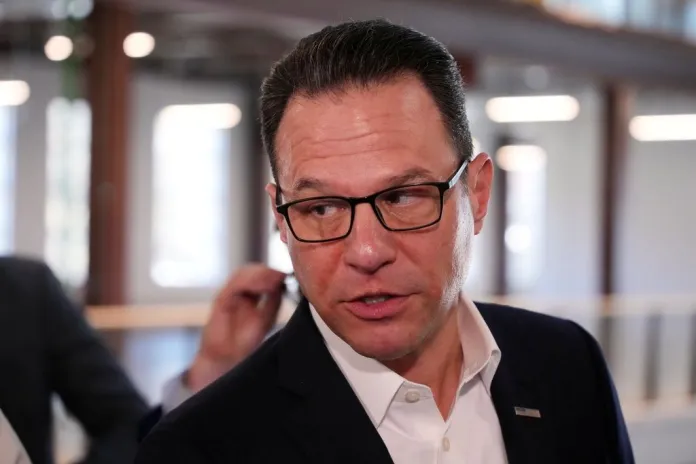
Pennsylvania Governor Josh Shapiro recently articulated a complex position regarding President Donald Trump's decision to initiate military action against Iran. While expressing significant reservations about the strategic clarity of the administration's approach, Shapiro simultaneously voiced strong support for a fundamental change in Iran's governmental structure. The Democratic governor, a figure often mentioned in discussions about potential 2028 presidential candidacies, raised concerns that the White House had not adequately articulated a comprehensive strategy for the aftermath of the recent strikes, which occurred early Saturday. According to statements released by Shapiro, the President's rationale for the urgency of military engagement, the anticipated scope of the campaign, and its overarching strategic objectives remained insufficiently explained to the American public. This criticism was tempered, however, by Shapiro's unequivocal condemnation of the current Iranian leadership, indicating a desire for a new governmental direction for the nation. His stance highlights a delicate balance between questioning the execution of foreign policy and aligning with the broader goal of opposing a regime widely perceived as repressive.
The recent military actions against Iran, which included strikes attributed to Israel that reportedly resulted in the death of Supreme Leader Ali Khamenei, mark a significant shift in U.S. foreign policy, moving away from a focus on nuclear diplomacy towards a strategy emphasizing regime change. This pivot, according to reports, appeared increasingly likely as negotiations aimed at a nuclear accord had made minimal headway. Governor Shapiro specifically criticized this change in approach, contending that prioritizing a governmental overthrow in Iran, particularly in conjunction with Israeli operations, introduces considerable risks. He asserted that such a strategy could jeopardize the safety of American military personnel stationed in the Middle East and potentially undermine the broader national security interests of the United States. The escalation of tensions between Washington and Tehran has been a developing situation, exacerbated by internal events within Iran, including a severe crackdown on public demonstrations that occurred earlier in the year, further fueling the impetus for a more confrontational stance from the U.S. and its allies.
In his public remarks, Governor Shapiro did not mince words regarding his apprehension about the administration's strategic planning. He explicitly stated that the President had failed to provide a compelling justification for the immediate necessity of military conflict with Iran, nor had he outlined the potential trajectory of such a campaign or its ultimate strategic aims. Shapiro emphasized that the administration had not presented a clear operational blueprint to the American populace concerning this mission. Despite these criticisms directed at the Trump administration's foreign policy execution, Shapiro maintained a firm stance against the existing Iranian government. He unequivocally labeled the Iranian regime as oppressive towards its own citizenry and identified it as the foremost state sponsor of global terrorism. Furthermore, Shapiro highlighted the severe human cost of the regime's actions, noting that in recent weeks, tens of thousands of courageous Iranians had reportedly lost their lives while protesting for fundamental freedoms against what he described as a brutal government. These internal struggles, particularly the violent suppression of dissent in January, significantly contributed to the heightened animosity between the U.S. and Iran, directly preceding the current military engagement.
Governor Shapiro's nuanced commentary underscores the profound complexities inherent in U.S. foreign policy towards Iran, particularly when considering a shift from diplomatic engagement to military intervention aimed at regime change. His critique of the administration's strategy, focusing on the absence of a "clear plan," suggests a deep concern for the potential unintended consequences and the long-term stability of the region. Pursuing a governmental overthrow, as opposed to a negotiated settlement, often entails significant challenges, including the risk of prolonged conflict, humanitarian crises, and the emergence of unforeseen power vacuums. Shapiro's assertion that such a pivot endangers U.S. service members and national security reflects a common apprehension among policymakers regarding the practical implications of military operations without a well-defined post-conflict strategy. Simultaneously, his strong condemnation of the Iranian regime aligns with a bipartisan consensus regarding its human rights record and its destabilizing activities. This dual perspective from a prominent political figure like Shapiro, who is considered a potential future presidential candidate, highlights the delicate balance leaders must strike between strategic caution and moral imperative in international relations, particularly when dealing with adversaries perceived as repressive.
In conclusion, Governor Josh Shapiro's recent statements reveal a multifaceted perspective on the United States' engagement with Iran, characterized by both strategic skepticism and moral conviction. He has publicly challenged the Trump administration's decision to pursue military action and regime change without, in his view, a clearly articulated plan for the future, expressing concerns about the safety of U.S. personnel and national security. Concurrently, Shapiro has unequivocally denounced the Iranian government for its repressive policies against its own citizens and its role in sponsoring terrorism globally, signaling his support for a different leadership structure in Tehran. This complex stance reflects the ongoing debate within American political circles regarding the most effective and ethical approach to confronting adversarial regimes. As the situation in the Middle East continues to evolve following the recent strikes and reported leadership changes, observers will closely monitor the administration's subsequent actions and the broader regional response, while Shapiro's remarks offer a significant insight into the critical considerations facing potential future leaders.