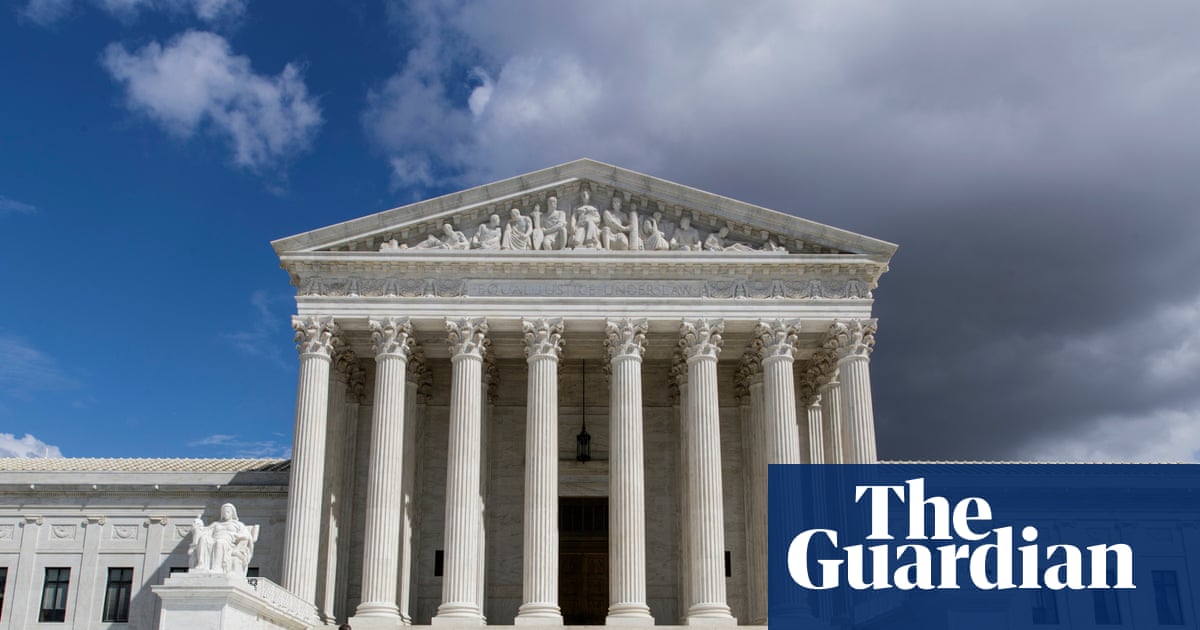
The United States Supreme Court recently delivered a significant victory to Republicans, ruling that the existing boundaries of New York City's sole congressional district held by the GOP will remain unchanged for the 2026 electoral cycle. This decision, issued on Monday, effectively overrides a prior state court determination that had deemed the district's configuration to be disadvantageous to its Black and Hispanic residents. The nation's highest court, with its conservative majority presiding, moved to halt the state court's directive which had mandated New York's redistricting commission to redraw the electoral map for the district currently represented by Congresswoman Nicole Malliotakis. This particular district encompasses Staten Island and a segment of Brooklyn, and its current form was challenged on grounds of fairness and equitable representation for minority populations. The Supreme Court's ruling was not unanimous, as the three liberal justices expressed their dissent, underscoring the ideological divide within the court on matters of electoral mapping and representation. This outcome ensures that the district's current lines will be used in the next federal election, despite the earlier finding of racial inequity by a state judicial body.
The practice of redistricting, the process by which electoral districts are redrawn, is a cornerstone of democratic representation in the United States, yet it frequently becomes a flashpoint for political contention. These boundary adjustments, typically undertaken every ten years following the national census, are intended to ensure that districts reflect population shifts and maintain equal representation. However, when partisan interests influence the drawing of these lines, the process can devolve into gerrymandering, a manipulation of district boundaries to favor one political party or dilute the voting power of specific demographic groups. Challenges to such maps often emerge from state courts, which serve as crucial arbiters in ensuring electoral fairness at the local level. The federal Supreme Court's intervention in state-level redistricting disputes, as seen in this recent New York case, highlights the complex interplay between state and federal judicial systems in overseeing the integrity of the electoral process. The specific challenge to New York's 11th congressional district stemmed from allegations that its current configuration unfairly diminished the electoral influence of Black and Hispanic communities, a concern central to the principles of the Voting Rights Act and equitable political participation.
The congressional district at the heart of this legal dispute is New York's 11th, which currently includes the entirety of Staten Island and a portion of southern Brooklyn. This district holds the distinction of being the sole Republican-held congressional seat within New York City, presently represented by Congresswoman Nicole Malliotakis. The controversy arose when a state court determined that the existing boundaries of this district were drawn in a manner that disadvantaged Black and Hispanic residents, effectively diluting their voting power. Consequently, the state court issued an order directing New York’s independent redistricting commission to undertake a redraw of the district lines to rectify these identified inequities. However, the Supreme Court's recent intervention effectively put a stop to this mandated redraw. The nation's highest judicial body, through its conservative majority, issued a ruling that prevents the state court's order from being implemented, thereby preserving the current district map for the upcoming 2026 federal elections. This decision was met with strong opposition from the Supreme Court's three liberal justices, who voiced their dissent, underscoring a clear ideological division regarding the appropriate role of the judiciary in overseeing electoral boundaries and protecting minority voting rights. The practical effect of this ruling is that the district's current configuration, which was previously deemed unfair by a state judicial body, will remain in place for at least another election cycle.
This Supreme Court decision carries significant implications for the landscape of electoral politics, particularly concerning the delicate balance between partisan advantage and fair representation. For Republicans, the ruling represents a strategic win, securing a key congressional district in a predominantly Democratic state for the immediate future. Observers suggest that this outcome could embolden similar efforts by political parties to defend existing district maps, even when challenged on grounds of racial equity, potentially leading to more protracted legal battles over redistricting nationwide. Conversely, advocates for voting rights and fair maps may view this as a setback, raising concerns about the federal judiciary's willingness to intervene in state-level efforts to address alleged gerrymandering and protect minority voting power. The ideological split within the Supreme Court itself highlights the contentious nature of these issues, reflecting broader societal debates about the interpretation of electoral laws and the extent of judicial oversight. Experts in constitutional law may analyze this decision as a signal regarding the Court's approach to state sovereignty versus federal oversight in electoral matters, potentially influencing future challenges to district maps across the country. The ruling could also prompt renewed scrutiny of the processes by which independent redistricting commissions operate and the ultimate authority that state courts hold in enforcing their mandates when federal intervention occurs.
In conclusion, the Supreme Court's recent decision to uphold the existing boundaries of New York's 11th congressional district for the 2026 elections marks a pivotal moment in the ongoing national discourse surrounding redistricting and electoral fairness. Despite a state court's finding that the district's current configuration unfairly impacts Black and Hispanic residents, the nation's highest court has intervened to prevent a redraw, securing the district for its Republican incumbent for another cycle. This outcome underscores the complex and often contentious interplay between state judicial rulings and federal oversight in electoral matters. Moving forward, stakeholders will closely monitor how this decision influences future redistricting challenges, particularly those involving allegations of racial gerrymandering. The ruling sets a precedent that could shape the strategies of both political parties and voting rights organizations as they prepare for upcoming election cycles and potential legal battles over the maps that define American democracy.