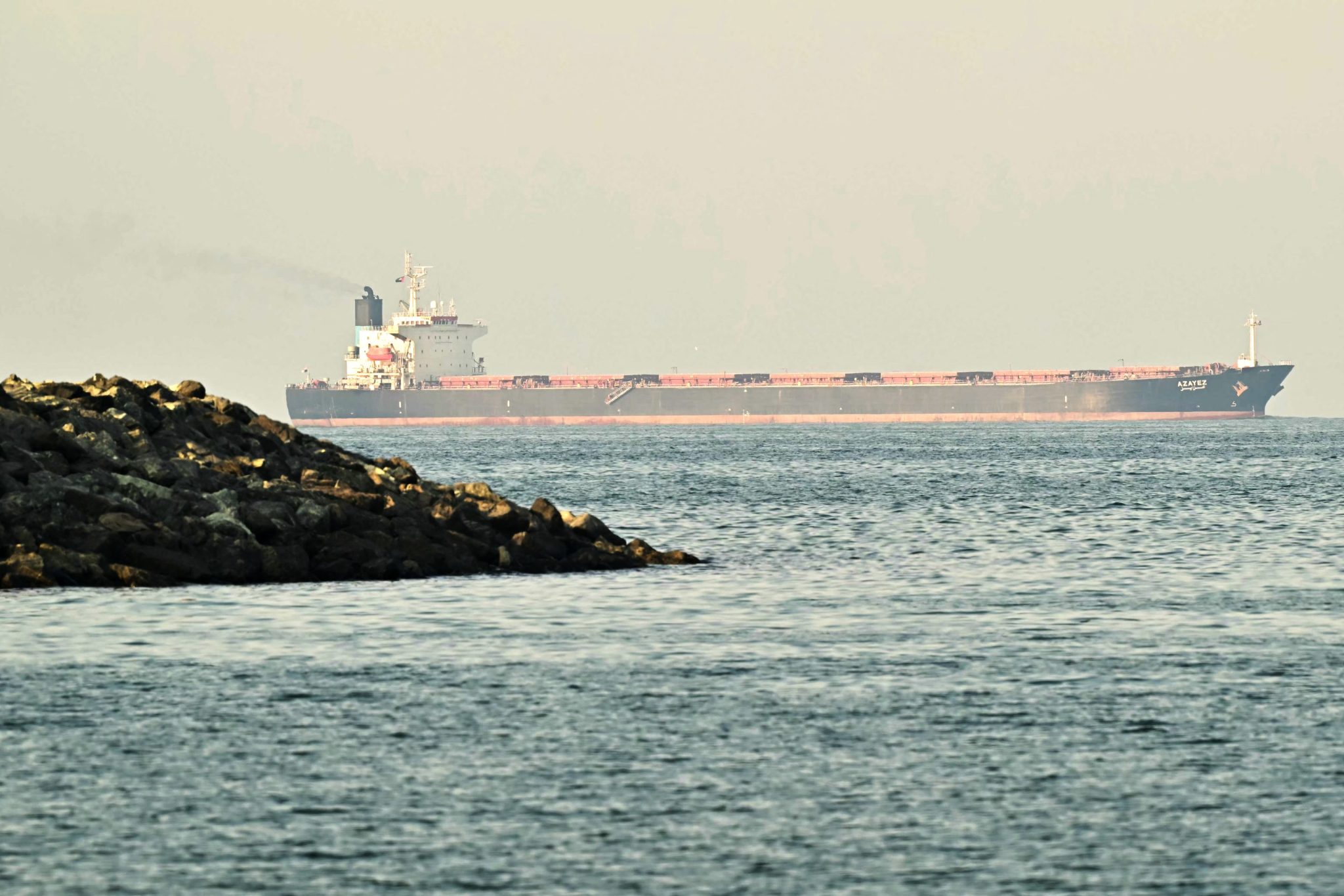
The Strait of Hormuz has once again emerged as a focal point for global energy concerns following recent military actions in the region. Reports indicate that after the United States and Israel initiated bombing campaigns against Iran over the past weekend, Iran's Islamic Revolutionary Guard Corps responded by launching missiles targeting maritime vessels in the vicinity of this crucial waterway. This escalation has severely disrupted ship traffic, bringing it to a virtual halt, according to various shipping reports. While Iranian authorities have not yet implemented more aggressive measures that would formally close the strait, major shipping enterprises are exercising extreme caution by rerouting their vessels, leading to an immediate upward surge in global oil prices. The strategic importance of the Strait of Hormuz cannot be overstated, serving as a vital conduit for a significant portion of the world's energy supplies, making any disruption here a matter of international economic and political concern.
The Strait of Hormuz's role as a critical choke point in the global energy trade is well-documented. According to data from the U.S. Energy Information Administration (EIA), an estimated 20 million barrels of oil traverse this narrow passage daily. This volume represents approximately 20% of the world's total consumption of petroleum liquids and roughly one-quarter of all seaborne oil trade globally. Beyond crude oil, the strait is also indispensable for the liquefied natural gas (LNG) market, with about one-fifth of the world's LNG trade, primarily originating from Qatar, passing through its waters, as reported by the EIA. Given these immense figures, analysts have consistently warned that a complete closure of the strait would trigger profound instability in international energy markets. Such an event, experts have estimated, could propel crude oil prices to as high as $100 per barrel, creating widespread economic turmoil.
Should Iran decide to fully close the Strait of Hormuz, various methods could be employed, including the deployment of naval mines, patrol boats, aircraft, cruise missiles, and even diesel submarines, according to security assessments. While the U.S. Navy maintains a substantial naval presence in the region, equipped with a formidable array of warships, the task of clearing the strait of potential obstacles and ensuring safe passage could prove to be a protracted endeavor, potentially spanning weeks or even months. However, the energy sector has developed some alternative pathways that could help mitigate a portion of the impact from a closure. For instance, Saudi Aramco, the state-owned energy giant of Saudi Arabia, operates a crude oil pipeline that extends from the Abqaiq oil processing center on the Persian Gulf to the port of Yanbu on the Red Sea, as detailed by the EIA. Similarly, the United Arab Emirates has its own pipeline system, which bypasses the strait by connecting onshore oilfields directly to the Fujairah export terminal situated in the Gulf of Oman. The EIA estimates that these Saudi and UAE pipelines collectively possess the capacity to divert approximately 2.6 million barrels of oil per day away from the Strait of Hormuz, offering a partial, though not complete, solution to potential disruptions.
The current escalation underscores the precarious balance of energy security in the Middle East and its ripple effects across the globe. While the alternative pipelines in Saudi Arabia and the UAE offer a valuable contingency, their combined capacity of 2.6 million barrels per day represents only a fraction of the 20 million barrels per day that typically transit the Strait of Hormuz. This disparity highlights the inherent limitations of these bypass routes in fully compensating for a prolonged closure of the strait, emphasizing the continued vulnerability of global markets to disruptions in this critical waterway. Analysts suggest that any sustained interruption would necessitate a complex international response, involving strategic petroleum reserves, diplomatic efforts, and potentially military intervention to restore stability. The broader implications extend beyond immediate price hikes, touching upon long-term investment decisions in energy infrastructure, the geopolitical strategies of major powers, and the ongoing quest for diversified energy supplies to reduce reliance on volatile choke points.
In conclusion, the recent military exchanges and their impact on shipping in the Strait of Hormuz have thrust this vital energy artery back into the global spotlight. The immediate consequence has been a significant disruption to maritime traffic and a noticeable increase in crude oil prices, signaling the market's sensitivity to regional instability. While alternative pipeline routes in Saudi Arabia and the UAE offer some capacity to divert oil, they cannot fully offset the immense volume of energy products that flow through the strait daily. As tensions persist, the international community will be closely monitoring developments, particularly any further actions by Iran that could escalate the situation, and the ongoing efforts by shipping companies and governments to navigate this complex and critical geopolitical landscape. The long-term challenge remains the safeguarding of global energy supplies against the backdrop of escalating regional conflicts.