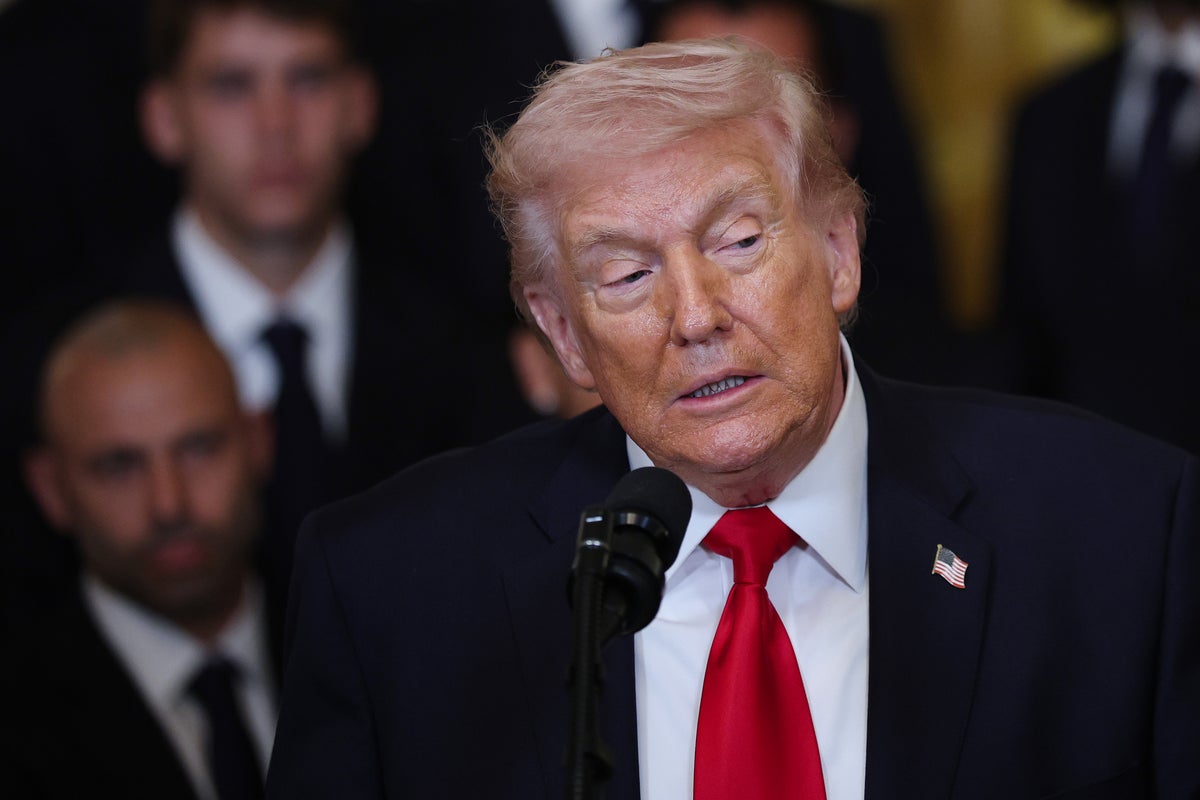
President Donald Trump has indicated that American citizens would be justified in harboring concerns about potential retaliatory attacks on U.S. soil, a direct consequence of the ongoing military engagement with Iran. In an interview with TIME, when questioned about the likelihood of domestic assaults, President Trump responded with a candid, "I guess." He further elaborated that such anxieties are a constant presence for the nation's leadership, stating, "We think about it all the time. We plan for it." The President acknowledged the grim reality of conflict, adding, "some people will die. When you go to war, some people will die." This acknowledgment arrives as six American lives have already been lost overseas in the conflict, specifically when an unmanned aircraft struck a U.S. installation located in Kuwait. The President's remarks introduce a stark perspective on the domestic implications of the overseas conflict, potentially shaping public perception of the risks involved in Operation Epic Fury.
The current military actions, designated as Operation Epic Fury, have seen a significant escalation, particularly following the recent strike that resulted in the death of Iran's Supreme Leader, Ayatollah Ali Khamenei. This development has been presented by the administration as a decisive blow, with confident updates emphasizing U.S. dominance in Iranian airspace. Historically, the United States has experienced periods of heightened domestic security threats during prolonged foreign conflicts, notably throughout the 'War on Terror' in the early 2000s, which saw various plots and attacks by foreign adversaries and extremist factions. The President's recent statements, therefore, resonate with a historical context of domestic vulnerability, even as his administration simultaneously projects an image of overwhelming military superiority and control in the current theater of operations. The tension between these two narratives — one of assured victory abroad and another of potential peril at home — defines the current public discourse surrounding the conflict.
President Trump's comments have drawn sharp criticism from political figures, with Senator Elizabeth Warren, for instance, labeling his remarks as "deranged and dangerous" on social media platform X. These presidential statements also stand in notable contrast to the more reassuring tone adopted by other senior administration officials. Defense Secretary Pete Hegseth, speaking at U.S. Central Command in Florida, sought to alleviate public fears regarding homeland security. He asserted that he had "no concerns about whether or not the homeland will be covered down on," despite the impending departure of Homeland Security Secretary Kristi Noem, which could suggest a period of transition within the department. Further complicating the national security landscape, reports indicate that the FBI reportedly dismissed members of a global counterespionage unit with extensive experience concerning Iran in the days leading up to the outbreak of the war. These firings were allegedly carried out in retaliation for their involvement in the investigation pertaining to President Trump's classified documents, raising questions about the timing and potential impact on intelligence capabilities at a critical juncture.
The President's unvarnished admission regarding the potential for domestic attacks marks a significant departure from conventional presidential rhetoric during wartime, which typically aims to project unwavering strength and reassure the populace of their safety. This candidness, while potentially seen by some as transparent, risks increasing public anxiety and could be interpreted by adversaries as a sign of vulnerability. Expert analysis suggests that such statements, particularly when they diverge from the more confident assessments provided by defense officials, can create a confusing message for both the American public and international allies. The reported internal turmoil within key national security agencies, specifically the alleged politically motivated firings within the FBI's Iran-focused unit, further complicates the picture. This situation raises concerns about the integrity and readiness of critical intelligence infrastructure at a time when robust counter-intelligence capabilities are paramount to mitigating the very threats the President has acknowledged. The broader implications extend to how the U.S. projects its resolve and unity on the global stage amidst a volatile conflict.
As Operation Epic Fury continues, the American public faces a complex and potentially contradictory narrative regarding their safety. On one hand, the administration highlights its military successes and control over the conflict zone; on the other, the President himself has acknowledged the tangible risk of domestic retaliation. This creates a critical challenge for homeland security agencies, which must not only prepare for potential threats but also manage public perception amidst conflicting official messages. The coming weeks will likely see increased scrutiny on the effectiveness of domestic security measures, the stability of leadership within key departments like DHS, and the operational readiness of intelligence units. Citizens will be watching for further developments in the conflict, additional statements from leadership, and concrete actions taken to safeguard the homeland, all while grappling with the President's stark warning that some level of domestic threat is a foreseeable consequence of the ongoing war.