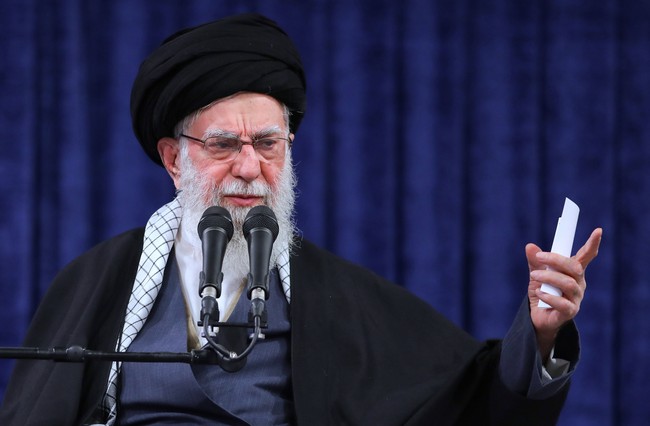
In a significant and rapidly developing situation at the commencement of military operations against Iran, initial assessments from Israeli intelligence sources indicate that Supreme Leader Ali Khamenei may have been impacted during the initial wave of attacks. Concurrently, reports suggest that the highest-ranking commander of Iran's Islamic Revolutionary Guard Corps (IRGC) has been killed. These dramatic claims emerged as former U.S. President Donald Trump publicly articulated a long-term objective of regime change in Iran early this morning, aligning with the initiation of military actions. While no official confirmation has been issued by any involved party, various Israeli media outlets have cited unnamed intelligence sources providing these assessments. The Times of Israel, for instance, referencing a report from KAN, stated that Israel 'assesses' Khamenei was likely killed in an Israeli strike earlier today, with Channel 12 noting 'growing indications' to this effect. However, earlier in the day, the assessment from the same Israeli sources was that Khamenei was 'hurt at the very least,' underscoring the fluid and unverified nature of the intelligence surrounding these critical figures.
The backdrop for these profound, albeit currently unverified, reports is the escalating and protracted tension between the United States and Iran, which has now culminated in the current offensive. Donald Trump's explicit declaration of regime change as a long-term strategic goal for the operation signals a substantial shift in policy and intent, significantly raising the stakes of the conflict. The potential targeting of figures as central as the Supreme Leader and the IRGC's top commander, if confirmed, would represent what military strategists often term a 'decapitation strike.' Such an operation aims to dismantle the core leadership and military command structure of the Iranian regime, theoretically crippling its ability to wage war or maintain control. Ali Khamenei, as the Supreme Leader, wields ultimate authority over all state affairs, encompassing foreign policy, military strategy, and nuclear programs, positioning him as the indispensable linchpin of Iran's political and religious establishment. The IRGC, a formidable ideological army, plays a pivotal role in both ensuring domestic security and projecting Iranian influence across the region, with its commander holding immense operational power.
The details surrounding these unconfirmed reports highlight the challenging information environment inherent in the early stages of a major military confrontation. According to reports from Israeli media, the intelligence regarding Supreme Leader Khamenei's status has evolved throughout the day. Initially, unnamed Israeli intelligence sources suggested he was 'hurt at the very least,' indicating an injury. However, later assessments, as cited by outlets like The Times of Israel and Channel 12, escalated this to a likelihood of him being 'killed' in an Israeli strike. These evolving assessments, all attributed to unnamed intelligence sources, underscore the difficulty in obtaining definitive information during active combat operations and the reliance on preliminary intelligence. Crucially, no official confirmation or denial has been issued by any government or military entity, including Iran, Israel, or the United States, leaving the status of these key Iranian figures in a state of high uncertainty. The timing of these alleged strikes coincides directly with the commencement of broader military operations, suggesting they were part of the opening salvos of the offensive.
Should these reports of a successful strike against Supreme Leader Khamenei and the IRGC commander be definitively confirmed, the implications for Iran, the broader Middle East, and global geopolitics would be profound and far-reaching. Such a 'decapitation strike' could potentially plunge Iran into a period of significant political instability, creating a power vacuum at the highest levels of its leadership. This could lead to internal struggles for succession, potentially weakening the regime's control or, conversely, galvanizing hardline elements. Strategically, the loss of these figures would severely disrupt Iran's military command and control capabilities, particularly those of the IRGC, which is central to both its domestic security and its regional proxy networks. Furthermore, Donald Trump's explicit declaration of regime change as a long-term objective adds another layer of complexity, suggesting that the current military actions may be part of a broader, sustained effort rather than a limited retaliatory strike. This policy shift could prolong the conflict, intensify regional tensions, and draw in other international actors, creating an unpredictable and volatile environment.
In summary, the current situation is marked by highly significant, yet unconfirmed, intelligence reports from Israeli sources indicating that Supreme Leader Ali Khamenei and the top commander of the IRGC may have been struck during the initial phase of military operations against Iran. These reports, which have evolved throughout the day, are being closely watched amidst Donald Trump's stated long-term goal of regime change in Iran. The lack of official confirmation from any party necessitates extreme caution in interpreting these developments, as the fog of war often obscures the full truth in its early stages. Moving forward, the international community will be closely monitoring for any official statements from Tehran, Tel Aviv, or Washington, as well as any verifiable evidence that could corroborate or refute these claims. The potential ramifications of such strikes, if confirmed, would be immense, shaping the future trajectory of the Iranian regime and the stability of the Middle East for years to come.