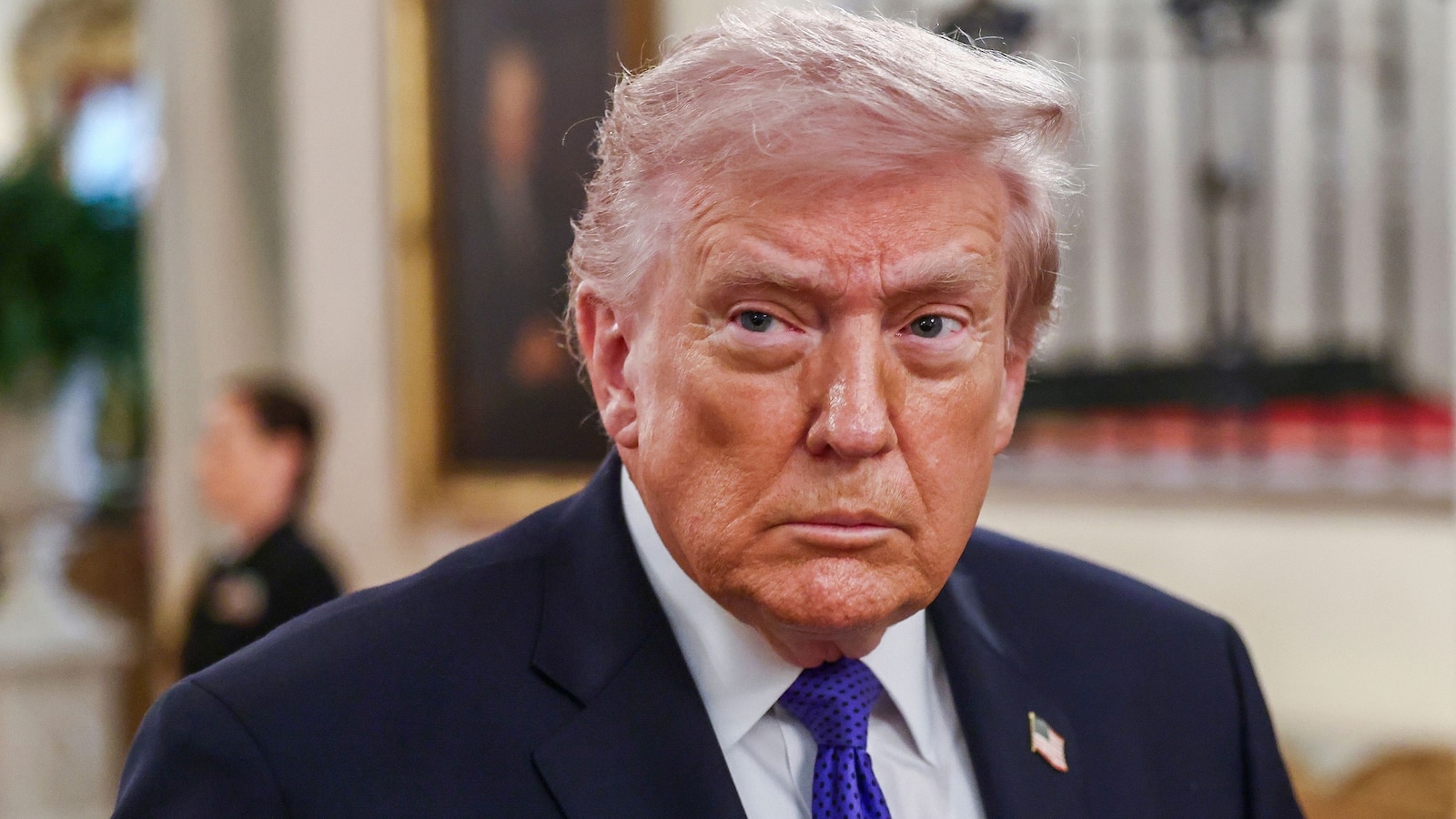
President Donald Trump recently asserted that the United States faced an imminent danger from Iran, claiming the nation was "very nearly under threat." These remarks, delivered during a Medal of Honor ceremony at the White House, represented his initial public commentary on ongoing military operations. However, the President's assessment appears to directly contradict findings from American intelligence agencies. While President Trump articulated concerns about an "intolerable threat" posed by an Iranian regime potentially armed with long-range missiles and nuclear weapons, intelligence assessments reportedly indicate a different timeline and immediate intent. This divergence between the executive's public statements and the intelligence community's analysis has drawn significant attention, particularly as it pertains to the justification for the administration's actions and the perceived level of danger from Tehran.
The backdrop to these recent statements involves a long-standing and often volatile relationship between the United States and Iran, characterized by periods of heightened tension and strategic competition in the Middle East. U.S. intelligence agencies traditionally play a critical role in informing presidential decisions on national security, providing assessments on adversaries' capabilities and intentions. A public contradiction of these assessments by a sitting president is an unusual occurrence, raising questions about the administration's reliance on established intelligence channels versus alternative interpretations of threats. Historically, a consensus between the executive branch and its intelligence apparatus is considered crucial for maintaining policy coherence and international credibility, especially when justifying military actions or significant foreign policy shifts. The current situation underscores a potential rift in this critical relationship, with implications for how future threats are perceived and addressed.
Specific details from intelligence reports further highlight the divergence. According to information conveyed to congressional staff by Trump administration officials, U.S. intelligence did not suggest that Iran was preparing to launch a preemptive strike against American interests. Instead, sources indicated that intelligence assessments pointed to a more generalized regional threat emanating from Iran's missile arsenal and its network of proxy forces. Furthermore, regarding Iran's long-range missile capabilities, American intelligence agencies reportedly believe that Iran would not possess missiles capable of reaching the United States for approximately another nine years, placing such a capability around 2035. This timeline directly contrasts with President Trump's assertion that the U.S. was "very nearly under threat" from such capabilities, suggesting a significant difference in the perceived immediacy and scope of the danger.
The public discord between the President's rhetoric and intelligence findings carries substantial implications for both domestic policy and international relations. Such a divergence can potentially erode public trust in official government statements, create confusion among allies, and embolden adversaries. When a president publicly dismisses or contradicts intelligence assessments, it can be interpreted as undermining the very institutions tasked with providing objective analysis, potentially politicizing intelligence gathering. Experts suggest this dynamic could complicate future diplomatic efforts, as the basis for U.S. policy decisions might appear inconsistent or lacking a unified factual foundation. Moreover, it raises questions about the administration's decision-making process concerning military engagements and the criteria used to justify actions that carry significant geopolitical risks.
In conclusion, President Trump's recent remarks regarding an immediate threat from Iran stand in stark contrast to the intelligence community's assessments, particularly concerning Iran's long-range missile capabilities and its immediate intent for preemptive strikes. While the President emphasized the potential for an "intolerable threat" from a nuclear-armed Iran with advanced missiles, intelligence reports suggest a longer timeline for such capabilities and a more regional, rather than immediate U.S.-focused, threat from existing forces. This public disagreement underscores a significant challenge in how threat perceptions are communicated and understood within the U.S. government and by the public. Moving forward, observers will likely continue to scrutinize the administration's justifications for its actions and the ongoing interplay between political rhetoric and the factual assessments provided by U.S. intelligence agencies.