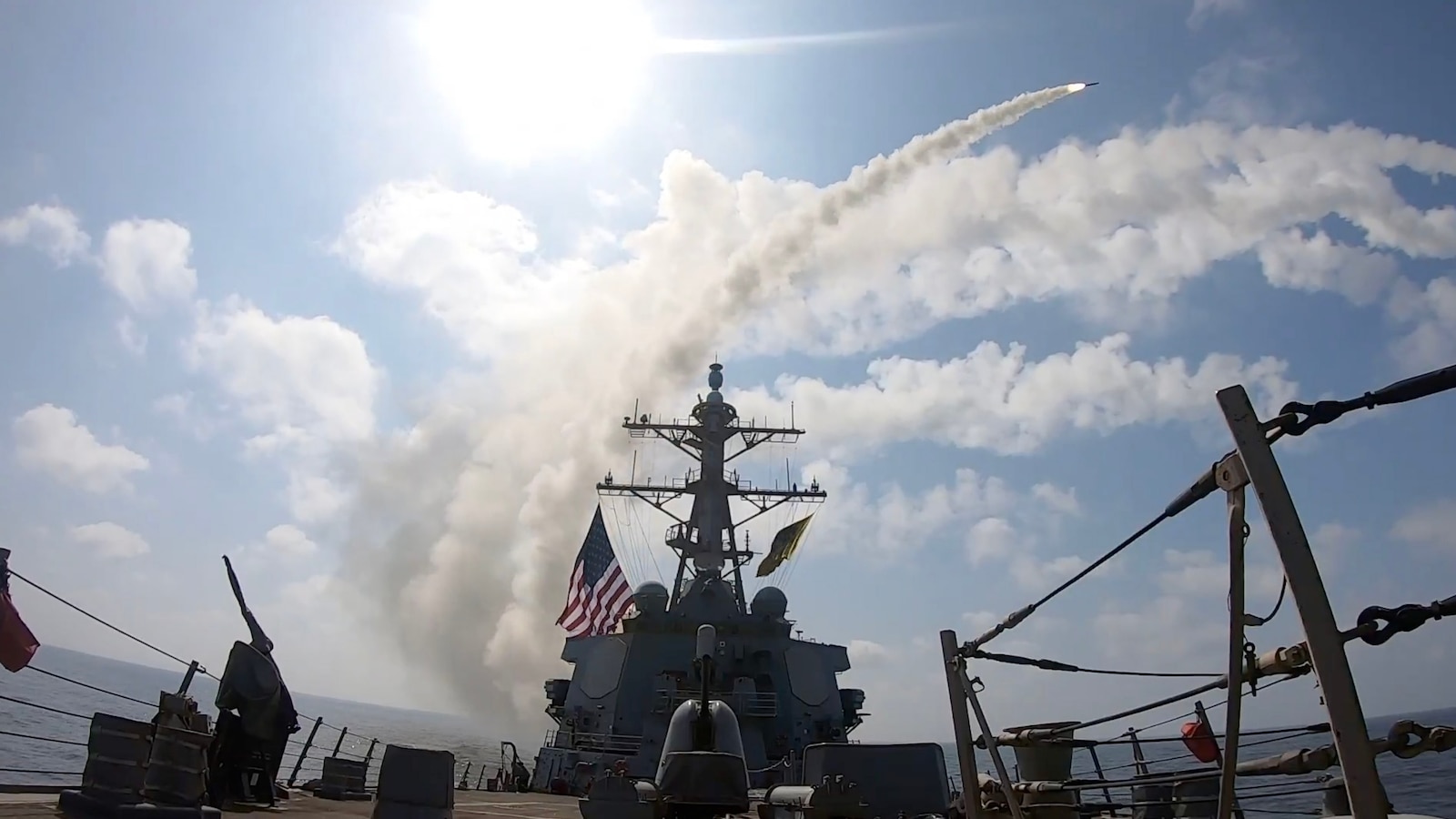
President Donald Trump has significantly broadened the rationale for recent U.S. military actions against Iran, moving beyond previous justifications focused solely on dismantling the country's nuclear program. In a notable policy shift, the President is now openly advocating for a change in Iran's governmental structure, directly encouraging the Iranian populace to rise up and depose their current leadership. This escalation, according to President Trump, is necessitated by "imminent threats" posed to the United States by the Iranian regime. Reports from three sources familiar with the details of the recent strikes, conveyed to ABC News, indicate that the targets included high-ranking Iranian officials: Supreme Leader Ayatollah Ali Khamenei and President Masoud Pezeshkian. This development marks a pronounced departure from earlier U.S. strategies, introducing a direct call for internal political upheaval within Iran, with the stated aim of safeguarding American interests against what President Trump described as a "vicious group of very hard, terrible people." The President articulated this new stance in a video message disseminated across his social media platforms early Saturday morning, signaling a profound shift in Washington's approach to Tehran and raising immediate questions about the feasibility and implications of such an ambitious objective.
For years, U.S. foreign policy regarding Iran has predominantly centered on curbing its nuclear ambitions, a concern that has driven international sanctions and diplomatic efforts, alongside occasional military posturing. The Joint Comprehensive Plan of Action (JCPOA), commonly known as the Iran nuclear deal, exemplified this focus, aiming to prevent Iran from developing nuclear weapons in exchange for sanctions relief. However, President Trump's recent pronouncement marks a dramatic pivot from this long-standing approach. By explicitly calling for regime change, the administration is now signaling a more aggressive and comprehensive strategy that seeks to alter the fundamental political landscape of Iran itself. This shift elevates the stakes considerably, moving beyond specific weapons programs to target the very legitimacy and existence of the current Iranian government. Such a move carries significant historical weight, reminiscent of past U.S. interventions or calls for regime change in other nations, often with complex and unpredictable outcomes. The President's assertion of "imminent threats" as the primary justification underscores a perceived urgency that has seemingly pushed the administration towards this more drastic policy reorientation, fundamentally reshaping the narrative surrounding U.S.-Iran tensions.
In his public address, delivered via a video posted on his social media account early Saturday, President Trump directly appealed to the "great, proud people of Iran," asserting that "the hour of your freedom is at hand." He further urged them to "take over your government" once the U.S. actions are concluded, framing this moment as potentially their "only chance for generations." The President also claimed that for "many years, you have asked for America's help, but you never got it," positioning his administration as uniquely willing to undertake such decisive measures. This rhetoric underscores a strategy aimed at galvanizing internal dissent within Iran, leveraging popular grievances against the existing government. Concurrently, reports from three sources briefed on the military strikes, as communicated to ABC News, specified that the operations targeted Iran's Supreme Leader Ayatollah Ali Khamenei and President Masoud Pezeshkian. While these strikes signal a direct confrontation with Iran's top leadership, the efficacy of achieving a fundamental regime change through aerial bombardment alone, without the deployment of ground forces, remains a significant point of uncertainty. Furthermore, the question of who might emerge to lead Iran in the event of a successful overthrow of the current government adds another layer of complexity to the administration's stated objectives.
The explicit call for regime change in Iran by a U.S. President introduces a new and potentially volatile dimension to an already fraught geopolitical situation. Analysts suggest that while air strikes can degrade military capabilities and exert pressure, achieving a complete overthrow of a deeply entrenched government solely through such means, without significant ground presence or a robust internal uprising, is an exceedingly difficult proposition. Historically, attempts at externally imposed regime change have often led to prolonged instability, power vacuums, or the rise of unintended factions. The President's direct appeal to the Iranian people, while potentially resonating with some segments of the population, also risks being perceived as foreign interference, potentially consolidating support for the current regime among nationalists. Furthermore, the targeting of high-profile leaders like Ayatollah Ali Khamenei and President Masoud Pezeshkian, as reported by sources, could be interpreted by Tehran as an act of war, potentially provoking retaliatory actions that could further destabilize the region. The long-term implications of this policy shift are profound, potentially committing the U.S. to a protracted and unpredictable engagement with Iran, far beyond the scope of its previous nuclear non-proliferation efforts, and raising questions about the ultimate cost and feasibility of such an ambitious objective.
In summary, President Trump's recent announcement marks a significant and unprecedented escalation in U.S. policy towards Iran, shifting from a focus on nuclear disarmament to an overt call for regime change, justified by claims of "imminent threats" to American security. This new strategy involves direct appeals to the Iranian populace to overthrow their government and, according to reports, included the targeting of Supreme Leader Ayatollah Ali Khamenei and President Masoud Pezeshkian in recent military strikes. While the administration frames this as a unique opportunity for Iranian freedom, the practical challenges of achieving such a profound political transformation through aerial bombardment alone, without committing ground forces, remain highly uncertain. The international community and regional actors will be closely watching how this aggressive posture unfolds, particularly regarding potential Iranian responses and the broader stability of the Middle East. The coming weeks and months will likely reveal the true extent of the administration's commitment to this ambitious goal and the unpredictable consequences it may unleash.