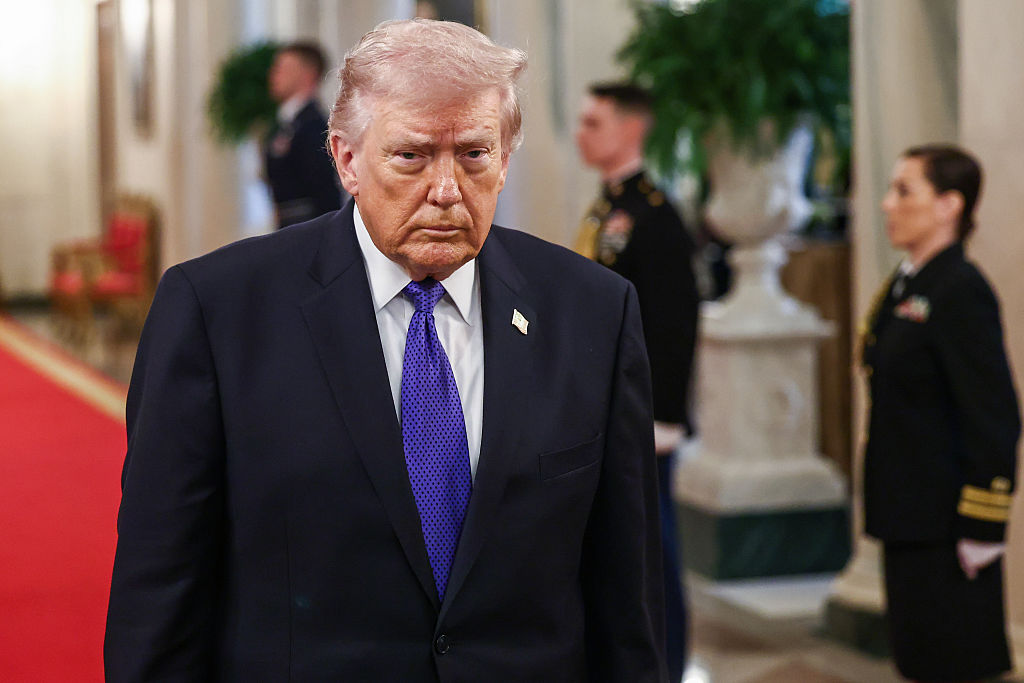
The military engagement initiated by the Trump administration against Iran has rapidly devolved into a significant crisis, barely half a week after its commencement. What many observers had cautioned could become a perilous situation has, according to various reports, deteriorated with unexpected speed and severity. Within merely three days, the conflict is already presenting a more substantial political challenge for President Donald Trump than when it began, a period during which public support for such an intervention was reportedly at a modest 27 percent. The Pentagon has officially confirmed the deaths of four United States service members, though some analysts and sources within the defense community suggest this figure might be an initial undercount, a sentiment reportedly echoed by subtle hints from both the President and military officials. This swift escalation and its immediate repercussions are drawing widespread concern regarding the conflict's trajectory and its broader implications for regional stability and domestic politics.
Prior to the current hostilities, numerous voices across political and strategic circles had issued stark warnings regarding the potential for a rapid and disastrous escalation should the United States engage militarily with Iran. These predictions, while dire, appear to have underestimated the sheer pace at which the situation has unraveled. The current 'war,' as it has been termed by some, has quickly moved beyond initial expectations, presenting a complex web of military, economic, and diplomatic challenges. The backdrop to this conflict includes a previous 'affordability crisis' that reportedly contributed to electoral difficulties for the Republican party just five months ago, making the current economic fallout particularly sensitive. The administration's decision to embark on this path, despite relatively low initial public backing, now faces intense scrutiny as the consequences unfold with alarming speed, raising questions about strategic foresight and preparedness.
Specific incidents underscore the rapid deterioration of the situation. Beyond the officially acknowledged four U.S. military fatalities, there are widespread suspicions among independent observers that the true casualty count could be significantly higher, a notion that, according to some reports, has not been entirely dismissed by official channels. Economically, the de facto closure of the critical Strait of Hormuz has already triggered a sharp increase in global oil prices, threatening to exacerbate the cost-of-living pressures that previously impacted the American electorate. Militarily, the United States forces are reportedly consuming their existing stockpiles of interceptors and other essential munitions at an unsustainable rate, with even hawkish military experts expressing doubts about the sustainability of current operations beyond a single week. Furthermore, American military installations and accommodations housing U.S. personnel have been targeted in at least four distinct Gulf states, and in a particularly troubling development, three U.S. fighter jets were downed yesterday in what the Pentagon has attributed to a friendly fire incident involving Kuwait, a key security partner.
The swift and unexpected setbacks in the nascent conflict with Iran carry profound implications for the Trump administration and the broader geopolitical landscape. Analysts suggest that the rapid accumulation of challenges – from military casualties and resource depletion to economic instability and diplomatic complications – could significantly undermine President Trump's political standing, particularly as the nation approaches an election cycle. The surge in oil prices, directly linked to the Strait of Hormuz situation, risks reigniting public discontent over economic affordability, a factor that previously proved detrimental to the Republican party. Moreover, the reported friendly fire incident involving Kuwait not only highlights the chaotic nature of the conflict but also raises serious questions about command, control, and coordination among allied forces, potentially straining crucial regional partnerships. Military strategists are reportedly assessing the long-term viability of the current operational tempo and the strategic consequences of depleting critical munitions so early in the engagement.
In conclusion, the initial days of the Trump administration's engagement with Iran have been marked by a rapid and unexpected series of adverse developments, transforming what was already a high-stakes endeavor into a significant political and military quagmire. The escalating casualty figures, the substantial economic repercussions of rising oil prices, and the strain on military resources, compounded by incidents like the friendly fire report, underscore the profound challenges facing the United States. As the situation continues to unfold, observers will be closely monitoring official casualty updates, the stability of global energy markets, and the strategic decisions made by the administration, all of which will determine the ultimate trajectory and cost of this rapidly evolving conflict.