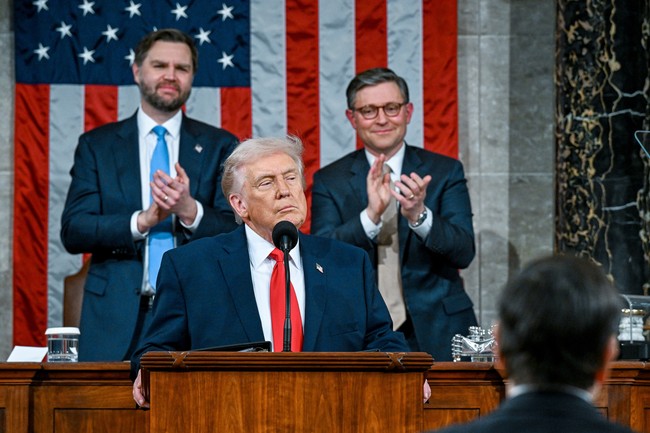
An independent assessment has offered a nuanced 'report card' evaluating the performance of former President Donald Trump, framing its observations as if for a hypothetical 'fifth year' in office. This analysis, presented in a new video, scrutinizes various aspects of his leadership, contrasting his self-proclaimed 'wonderful' achievements with a critical, yet balanced, perspective. The evaluation awards high marks for certain aspects of his public engagement and policy shifts, while simultaneously delivering failing grades for what it describes as rhetorical missteps and a perceived lack of factual accuracy. This comprehensive review delves into his interactions with the press, his economic claims, and his approach to executive power, providing a multi-faceted look at his actions and their implications, all from a right-leaning viewpoint that also critiques broader political trends.
The concept of a presidential 'report card' serves as a unique lens through which to examine a leader's tenure, offering a structured evaluation beyond typical political commentary. This particular assessment, originating from a right-leaning perspective, aims to provide a candid appraisal, acknowledging both perceived strengths and weaknesses without partisan allegiance to the individual. It emerges within a broader political landscape often characterized by intense polarization, where objective analysis can be challenging to find. By assigning specific 'grades' to different facets of Trump's hypothetical 'fifth year,' the analysis seeks to highlight areas where, according to its criteria, he excelled or fell short, thereby contributing to an ongoing public discourse about effective governance, accountability, and the role of leadership in a democratic society. The methodology implicitly invites a deeper look at presidential conduct, policy impact, and the rhetoric employed by those in power.
Delving into the specifics of the evaluation, the independent analysis awarded President Trump an 'A' for his perceived willingness to engage with the press and answer questions, a trait highlighted as a welcome contrast to what the assessment described as President Joe Biden's tendency to avoid reporters. However, the report delivered a stark 'F' grade for what it characterized as 'childish bragging' and a fundamental misunderstanding of basic mathematics. This failing mark was specifically attributed to Trump's public assertions that he had reduced drug prices by extraordinary percentages, claiming figures like '400%, 500%, even 600%,' which the analysis pointed out would logically result in free drugs if a 100% reduction meant zero cost. On the policy front, Trump received another 'A' for his actions in dismantling what the assessment termed 'Biden's self-destructive, anti-energy policies.' Conversely, the analysis expressed concern over Trump's reported obstruction of solar and wind energy initiatives, even those operating without government subsidies, questioning why either political party seems unable to allow market forces to operate freely in the energy sector.
A significant portion of the analysis addressed widespread concerns and media narratives surrounding President Trump's executive style, particularly the accusations of him being a 'dictator' or 'authoritarian.' The assessment expressed relief, stating that Trump had not fulfilled its 'worst fear' of acting as a total dictator, citing instances where he demonstrated responsiveness to public opinion. For example, following reports of alleged brutality by Immigration and Customs Enforcement (ICE) in Minnesota, Trump reportedly withdrew troops, acknowledging the need for 'a little bit of a softer touch.' Furthermore, the analysis noted his compliance with judicial rulings, such as ending National Guard deployments in cities like Los Angeles, Chicago, and Portland, and his subsequent efforts to find court-approved methods to preserve his tariff policies. To further contextualize these observations, Mises Institute Editor-in-Chief Ryan McMaken was cited, who, according to the assessment, observed that America has experienced numerous authoritarian presidents throughout its history, suggesting that figures like "Nixon and LBJ, in terms of new bombing campaigns, ignoring Congress ... both of those presidents were significantly worse" in their authoritarian tendencies compared to Trump's actions.
In conclusion, the independent 'report card' offers a complex and often contradictory picture of Donald Trump's performance, highlighting both commendable aspects and significant shortcomings. While praising his accessibility to the media and his efforts to reverse certain energy policies, the assessment sharply criticized his rhetorical excesses and factual inaccuracies regarding economic claims. Crucially, it provided a counter-narrative to the prevailing media portrayal of him as an authoritarian, emphasizing his demonstrated responsiveness to both public sentiment and judicial mandates. This nuanced evaluation underscores the importance of scrutinizing presidential actions through multiple lenses, moving beyond simplistic labels to assess the practical impact of leadership decisions. The analysis ultimately calls for a political environment where market principles are respected and leaders are held accountable for both their policies and their public statements, setting a benchmark for future leadership discussions.