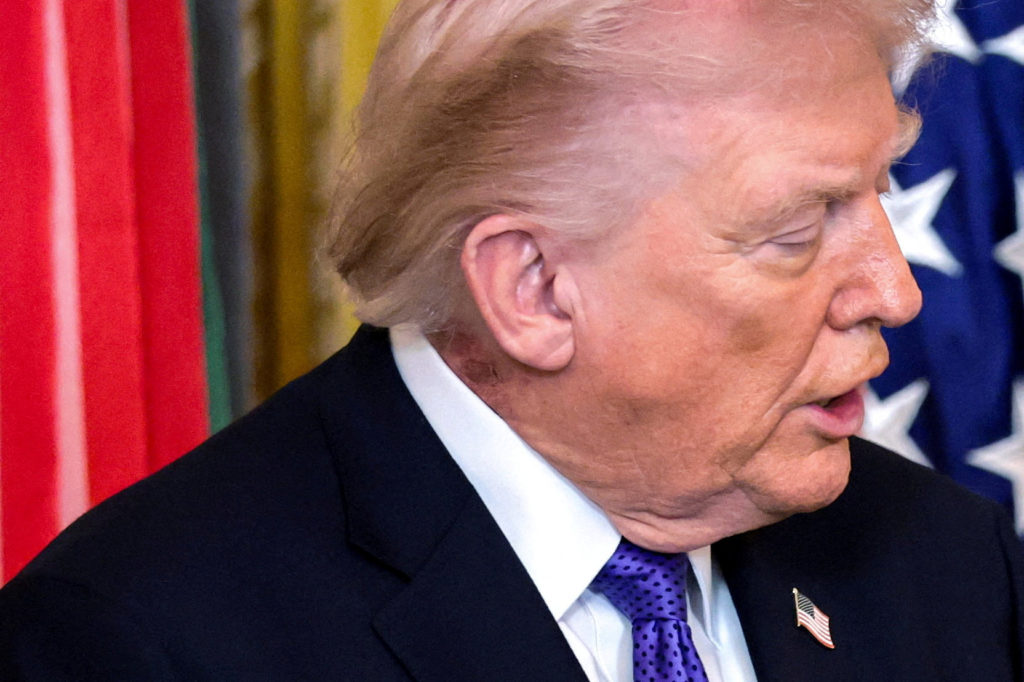
President Donald Trump's recent public statements have reportedly intensified a long-standing and critical debate within international foreign policy circles regarding the ultimate objectives of both the United States and Israel concerning Iran. According to various reports, these comments have specifically prompted renewed scrutiny over whether the two allied nations are pursuing a strategy aimed at the fundamental overthrow of the Islamic Republic's current government, or if their efforts are primarily focused on achieving a significant alteration in its existing policies and regional conduct. This distinction is paramount, as it delineates between a potentially destabilizing, large-scale intervention and a more targeted diplomatic and economic pressure campaign. The ambiguity stemming from President Trump's remarks has led observers to question the precise nature of the strategic alignment between Washington and Jerusalem on this highly sensitive geopolitical issue, with significant implications for regional stability and future diplomatic engagements. The renewed questioning underscores the profound complexities inherent in managing relations with Tehran and the diverse perspectives on how best to influence its trajectory.
The debate over whether to seek regime change or policy adjustment in Iran is not new; it has been a recurring theme in U.S. foreign policy discussions for decades, particularly since the 1979 Iranian Revolution. Historically, different administrations have grappled with the efficacy and ethics of supporting internal opposition movements versus engaging with the existing government to modify its behavior. For Israel, concerns over Iran's nuclear program, ballistic missile development, and support for regional proxy groups have consistently driven its strategic calculations, often aligning with a more hawkish stance. The current re-emergence of this fundamental question, triggered by President Trump's unspecified comments, highlights the persistent tension between these two approaches. A strategy of regime change, while potentially appealing to some factions, carries immense risks of unintended consequences, including regional destabilization, humanitarian crises, and prolonged conflict. Conversely, a policy of seeking behavioral change often involves intricate diplomatic negotiations, sanctions, and a willingness to engage, even with adversaries, to achieve specific, measurable outcomes. The renewed discussion underscores the deep divisions that can exist even among allies regarding the most effective and responsible path forward in dealing with complex geopolitical challenges.
Delving deeper into the implications, the distinction between aiming for an 'overthrow of the Islamic Republic' and 'just a change in its policies' carries profound practical and ethical weight. A strategy focused on overthrow typically implies direct or indirect support for internal regime opponents, potentially involving covert operations, economic strangulation designed to collapse the state, or even military intervention. Such an approach, experts suggest, often comes with a high probability of unforeseen outcomes, including power vacuums, civil unrest, and the rise of new, potentially more hostile, actors. Conversely, a policy centered on behavioral change would likely involve a combination of diplomatic pressure, targeted sanctions, and incentives designed to compel Iran to cease specific activities, such as uranium enrichment beyond agreed limits or support for certain militant groups. Officials and analysts often emphasize that clear communication of strategic intent is crucial in international relations to avoid miscalculation and escalation. The current ambiguity, as highlighted by President Trump's recent remarks, could lead to various interpretations by Tehran, potentially hardening its stance or provoking preemptive actions, thereby complicating any future diplomatic efforts or de-escalation pathways.
Foreign policy experts and regional analysts are closely scrutinizing the renewed questions surrounding U.S. and Israeli intentions, emphasizing the potential ramifications for Middle East stability. According to various geopolitical observers, any perceived ambiguity regarding the ultimate goal – whether it's regime change or policy modification – can introduce significant uncertainty into an already volatile region. Analysts suggest that if Tehran perceives a genuine intent for regime overthrow, it could prompt a more aggressive and defiant posture, potentially accelerating its nuclear program or increasing its support for proxy forces as a deterrent. Conversely, a clear and consistent message focused on altering specific policies might open avenues for negotiation, albeit challenging ones. The interplay between U.S. and Israeli strategic objectives is also a critical component of this analysis; while both nations share concerns about Iran, their preferred methods and ultimate goals may not always perfectly align. Some experts caution that a lack of unified and unambiguous messaging could inadvertently empower hardliners within Iran, who might exploit external threats to consolidate power and suppress internal dissent, making any future engagement even more difficult. The current situation, therefore, demands careful diplomatic calibration and transparent communication to avoid unintended escalation.
In summary, President Trump's recent comments have brought to the forefront a fundamental and unresolved question concerning the strategic direction of U.S. and Israeli policy towards Iran: is the ultimate aim to dismantle the existing government or to merely influence its actions? This distinction carries immense weight for regional stability, diplomatic efforts, and the potential for conflict. The ambiguity, as underscored by recent reports, highlights the complex challenges inherent in international relations and the critical need for clear, consistent messaging from global powers to prevent misinterpretation and unintended escalation. As the international community continues to grapple with Iran's evolving role in the Middle East, the precise articulation of U.S. and Israeli objectives will remain a central point of focus for allies, adversaries, and regional actors alike. Future developments will likely hinge on further clarifications from Washington and Jerusalem, and how Tehran chooses to interpret and respond to these ongoing discussions, ultimately shaping the trajectory of one of the world's most sensitive and consequential geopolitical relationships. The coming months will undoubtedly see continued debate and scrutiny over these crucial strategic choices.