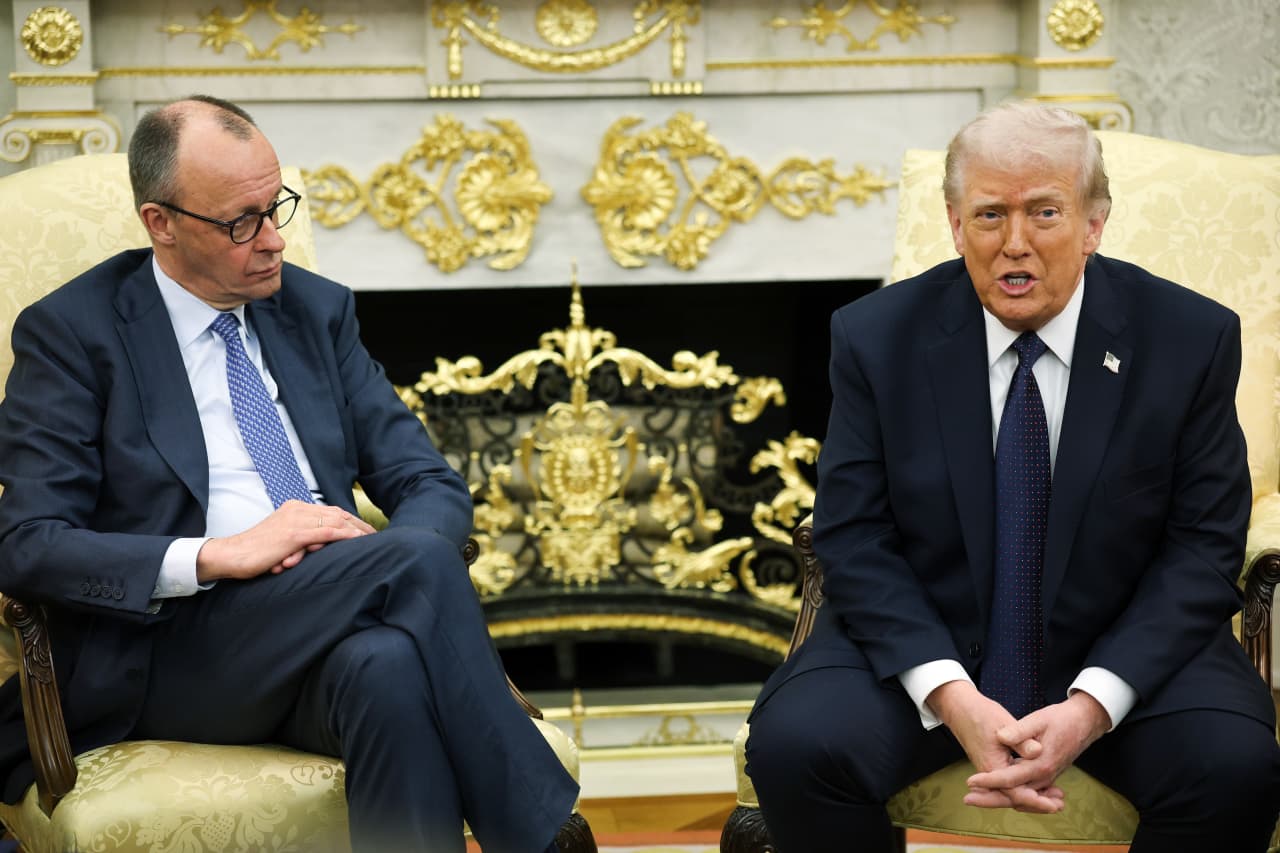
President Donald Trump recently articulated a forward-looking perspective on global energy markets, suggesting that while elevated crude oil prices are likely to persist for what he described as "a little while," a substantial decline in costs is anticipated once the United States concludes its operational activities concerning Iran. This statement, made on a recent Tuesday, positions the resolution of geopolitical tensions with Iran as a pivotal factor in the future trajectory of international oil benchmarks. The President's remarks underscore a direct link between foreign policy actions and their potential economic ramifications, particularly within the sensitive and globally interconnected energy sector. His prediction offers a conditional outlook, implying that current market pressures, which have seen oil prices remain high, are temporary and contingent on the evolving situation in the Middle East. Market observers are now weighing this presidential forecast against the complex realities of global supply, demand, and ongoing geopolitical risks that typically influence crude valuations.
The context surrounding President Trump's prediction is rooted in the long-standing volatility of global oil markets, which are acutely sensitive to geopolitical developments, especially those involving major producing regions like the Middle East. Historically, periods of heightened tension or military engagement in the Persian Gulf have often led to an increase in what is known as a 'risk premium' on crude oil, pushing prices upward as traders factor in potential supply disruptions. The relationship between the U.S. and Iran has been a significant source of this tension for decades, with various administrations employing different strategies, including sanctions and military posturing, which invariably impact global energy flows. Understanding the historical interplay between U.S. foreign policy in the region and its effect on oil prices is crucial for interpreting the President's recent comments. The prospect of an 'operation against Iran' concluding, as mentioned by the President, suggests a potential de-escalation or resolution that could theoretically alleviate market anxieties and subsequently reduce the risk premium currently embedded in oil prices, paving the way for a downward correction.
Current high oil prices are influenced by a confluence of factors, including robust global demand recovery post-pandemic, ongoing supply discipline from OPEC+ nations, and persistent geopolitical uncertainties. Reports indicate that several major oil-producing countries have been cautious about significantly increasing output, aiming to maintain market stability and higher revenues. Against this backdrop, President Trump's assertion suggests that a resolution to the 'U.S. operation against Iran' could introduce a new dynamic. While the specific nature of this 'operation' was not detailed, market analysts speculate that any outcome leading to increased Iranian oil supply returning to global markets, or a significant reduction in regional instability, would likely exert downward pressure on prices. Such a scenario could potentially ease supply constraints and diminish the geopolitical risk premium, thereby contributing to a 'significant fall' in crude valuations as predicted by the President. However, the exact timing and magnitude of such an impact would depend on the specific details and perceived permanence of any resolution.
Market analysts and economic experts offer varied perspectives on the feasibility and implications of President Trump's forecast. While acknowledging the significant role of geopolitical stability in oil price formation, many emphasize that crude markets are influenced by a multitude of factors beyond just U.S.-Iran relations. Global economic growth, the pace of energy transition, strategic petroleum reserve policies, and the collective decisions of OPEC+ members all play critical roles. Some experts suggest that even with a resolution concerning Iran, other supply-demand fundamentals or unforeseen global events could temper any dramatic price decline. Furthermore, the political dimension of such statements is often considered; presidential remarks can sometimes aim to reassure markets or signal policy intentions. The complexity of the global energy landscape means that while a de-escalation of tensions with a major oil-producing nation like Iran could indeed be a bearish factor for prices, it is rarely the sole determinant, and the market's reaction would be contingent on the broader economic and supply context at the time.
In summary, President Trump's recent prediction hinges on the premise that the conclusion of U.S. operational activities concerning Iran will serve as a catalyst for a substantial reduction in global crude oil prices, following a period of continued high costs. This outlook underscores the profound impact that geopolitical developments in the Middle East can have on international energy markets. While the precise nature of the 'U.S. operation against Iran' remains broadly defined, the market will undoubtedly monitor any developments that could lead to a de-escalation of tensions or a change in Iranian oil supply dynamics. Investors and consumers alike will be closely watching for further clarity on the situation with Iran, alongside other key indicators such as OPEC+ production decisions, global economic performance, and overall energy demand trends, all of which will ultimately shape the future trajectory of oil prices.