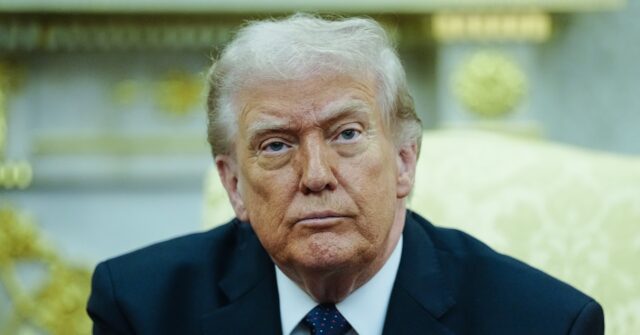
United States President Donald Trump has issued a stark warning, indicating a potential cessation of all trade relations with Spain. This significant threat follows Spain's refusal to grant the American military access to its bases for operations targeting the Islamist regime in Iran, specifically during what has been termed "Operation Epic Fury." Speaking from the Oval Office on Tuesday, during a high-level meeting with German Chancellor Friedrich Merz, President Trump openly conveyed his dissatisfaction with certain European allies, explicitly naming both the United Kingdom and Spain. According to his statements, Spain's actions were deemed "terrible," prompting him to instruct Treasury Secretary Scott Bessent to "cut off all dealings" with the Iberian nation. This development underscores a deepening rift between Washington and Madrid over critical foreign policy and defense matters, particularly concerning the volatile situation in the Middle East and the operational autonomy of U.S. forces abroad.
The diplomatic friction intensified after Spain, a socialist-led nation, took a firm stance against the recent military actions undertaken by the United States and Israel against Iran. On Saturday, Madrid emerged as the sole country among allies in the region to publicly condemn these strikes, with Spanish Prime Minister Pedro Sánchez articulating that such actions represented "an escalation and contributes to a more uncertain and hostile international order." Beyond verbal criticism, the Spanish government's refusal to permit the U.S. military to utilize its strategic bases reportedly necessitated the relocation of American Air Force assets. These assets, crucial for the ongoing operation, were compelled to depart Spain and seek alternative facilities elsewhere in Europe over the past weekend. While the United Kingdom, initially expressing a similar reservations, later softened its position, Spain has maintained its resolute opposition, further exacerbating tensions with the Trump administration.
President Trump did not mince words regarding Spain's decision, expressing his belief that the U.S. could have proceeded with using the bases regardless of Madrid's consent. He reportedly quipped, "We can just fly in and use it, nobody’s going to tell us not to use it. But they were unfriendly." This comment, made during his discussion with Chancellor Merz, highlighted his administration's frustration with perceived uncooperative allies. Furthermore, the President offered a pointed assessment of Spain's value to the United States, stating, "Spain has absolutely nothing that we need, other than great people; they have great people, but they don’t have great leadership." This characterization underscores a broader sentiment of discontent within the White House regarding the contributions and alignment of some European partners, particularly those whose foreign policy diverges from Washington's assertive approach to regional conflicts.
Analysts suggest that President Trump's threat of a trade embargo against Spain, if implemented, could have significant economic repercussions for both nations, potentially disrupting established commercial ties and supply chains. Beyond the immediate economic impact, this diplomatic confrontation signals a growing strain on transatlantic alliances, particularly within the framework of NATO, where member states are expected to cooperate on security matters. Spain's independent stance on the Iran conflict and its refusal to facilitate U.S. military operations could be interpreted as a move to assert greater foreign policy autonomy, potentially challenging the traditional dynamics of U.S.-European security cooperation. Experts indicate that such public disagreements could embolden other nations to reconsider their alignment with U.S. foreign policy objectives, potentially leading to a more fragmented international response to global crises and a re-evaluation of military basing agreements across the continent.
The ongoing dispute between the United States and Spain represents a critical juncture in transatlantic relations, highlighting fundamental differences in foreign policy approaches to the Middle East and the role of military intervention. President Trump's direct threats and critical remarks underscore a willingness to leverage economic pressure to achieve strategic objectives, while Spain's steadfast refusal to grant military access reflects a commitment to its own diplomatic principles and international order. Observers will be closely monitoring whether the U.S. administration moves to actualize its trade embargo threat and how Spain, along with other European allies, will respond to this escalating pressure. The outcome of this standoff could set a precedent for future interactions between the U.S. and its European partners, potentially reshaping the landscape of global alliances and security cooperation in the coming months.