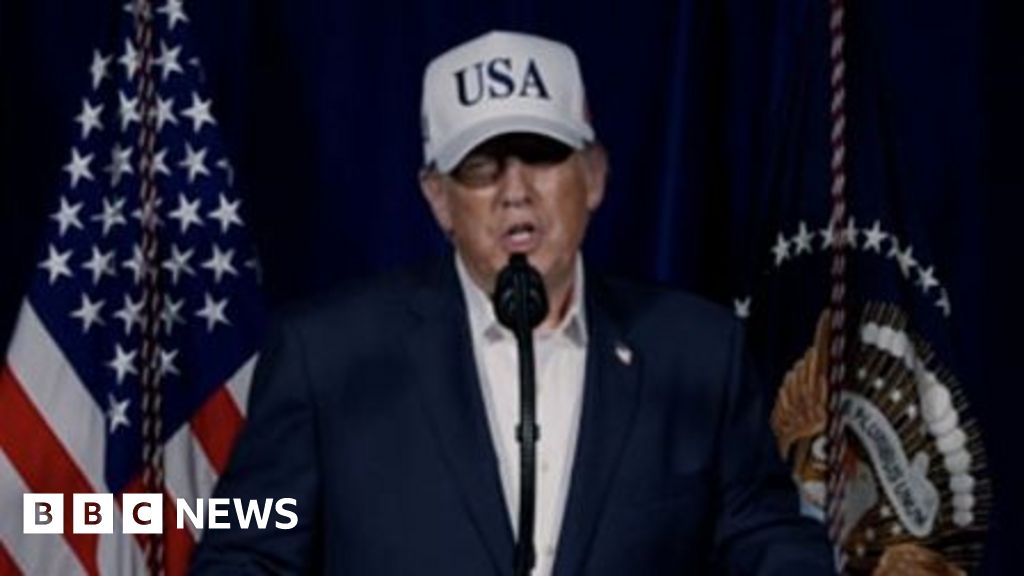
The United States has commenced military operations against Iran, a declaration made by President Donald Trump in the early hours of Saturday morning. Speaking from his Mar-a-Lago resort in Florida, the President delivered his message via an eight-minute video statement, widely distributed across various social media platforms. According to his remarks, the US is embarking on what he characterized as an "extensive and continuing military action," explicitly aimed at neutralizing what he termed "the Iranian threat." This significant announcement marks a profound escalation in the long-standing tensions between Washington and Tehran, signaling a new phase of engagement. Furthermore, the President's statement went beyond merely outlining military objectives, as he explicitly called for a "fundamental shift in leadership within Tehran," underscoring a clear and ambitious political objective alongside the military actions. This dual focus on military engagement and political transformation sets a high-stakes precedent for the unfolding situation, immediately drawing global attention to the potential ramifications of such a comprehensive strategy. The gravity of a presidential declaration of military hostilities, communicated through modern digital channels, underscores the immediate and far-reaching implications for regional stability and international relations.
This presidential declaration, designated "Operation Epic Fury," represents a critical juncture in the complex relationship between the United States and Iran, which has been characterized by periods of intense geopolitical friction. The decision to announce such a momentous undertaking through an eight-minute video shared on social media, rather than a traditional press conference or formal address, highlights a contemporary shift in high-stakes diplomatic and military communication. Delivering the message from his private Mar-a-Lago estate in Florida further underscored a departure from conventional presidential pronouncements on matters of war and peace, lending a unique optic to the gravity of the situation. Historically, declarations of military action are typically conveyed with utmost formality, often from the Oval Office or a similar official setting, emphasizing the solemnity and unified resolve of the nation. The choice of medium and location for this announcement, therefore, not only ensured direct dissemination to a global audience but also signaled a distinct approach to presidential messaging. The stated objective of "extensive and continuing military action" suggests a sustained commitment beyond isolated strikes, indicating a potentially prolonged period of engagement aimed at fundamentally altering the strategic landscape concerning Iran. This strategic pivot, as conveyed by the President, sets the stage for a period of heightened vigilance and potential instability across the Middle East and beyond.
The specifics outlined in President Trump's eight-minute video statement provide crucial insight into the administration's strategic intentions. Delivered in the early hours of Saturday morning, the timing itself could be interpreted as a deliberate move to preempt immediate market reactions or to establish a clear narrative before global financial systems fully opened. The President's characterization of the impending actions as "extensive and continuing military action" suggests a multi-faceted and sustained campaign rather than a limited, punitive strike. This phrasing implies a commitment to a prolonged engagement designed to achieve comprehensive objectives, potentially involving various military assets and operational phases. Furthermore, the explicit framing of Iran as "the Iranian threat" serves to define the adversary in stark terms, solidifying the rationale for military intervention in the public and international discourse. This rhetorical framing is often employed to galvanize support and justify significant military undertakings. Perhaps the most striking detail, however, is the President's unequivocal call for a "fundamental shift in leadership within Tehran." This objective transcends mere military deterrence or capability degradation; it explicitly targets the political structure of the Iranian state. Such a declaration, according to international observers, carries profound implications for sovereignty and self-determination, potentially escalating the conflict beyond conventional military engagements into a realm of political transformation. The clarity of this stated objective leaves little ambiguity regarding the administration's ultimate aspirations for Iran's future governance.
The implications of President Trump's declaration are far-reaching, signaling a potentially transformative period for regional dynamics and international relations. The commitment to "extensive and continuing military action" suggests that the United States is prepared for a sustained engagement, which could lead to a prolonged period of instability in an already volatile Middle East. Expert perspectives, while not explicitly cited in the source, would likely highlight the potential for retaliatory actions from Iran, possibly through proxy forces or cyber warfare, further complicating the security landscape. The explicit call for a "fundamental shift in leadership within Tehran" introduces a highly ambitious and controversial objective. Historically, efforts by external powers to engineer regime change have often led to unpredictable outcomes, prolonged conflicts, and humanitarian crises. This objective raises significant questions about international law, sovereignty, and the potential for unintended consequences, as it implies a direct intervention in the internal political affairs of a sovereign nation. Moreover, the choice to disseminate such a critical announcement via social media platforms allows for a direct channel of communication, bypassing traditional media filters, but also potentially limiting opportunities for nuanced diplomatic engagement or immediate clarification. The global community will undoubtedly be watching closely for how this declared "continuing military action" unfolds and whether the stated objective of leadership change becomes a central, actionable policy or a rhetorical stance.
In summary, President Donald Trump's early Saturday morning declaration from Mar-a-Lago marks a pivotal moment in US-Iran relations, initiating what he described as "extensive and continuing military action" under the banner of "Operation Epic Fury." Communicated through an eight-minute video on social media, the announcement not only outlined military objectives aimed at neutralizing "the Iranian threat" but also explicitly articulated a goal of achieving a "fundamental shift in leadership within Tehran." This dual focus on military engagement and political transformation underscores the comprehensive and high-stakes nature of the administration's strategy. As the situation develops, the world will be closely monitoring the immediate operational responses, the scale and duration of the "continuing military action," and the reactions from international allies and adversaries alike. The pursuit of a leadership change in Tehran represents a particularly ambitious and potentially destabilizing objective, making the unfolding events critical to regional stability and the future trajectory of US foreign policy in the Middle East. The coming days and weeks are expected to reveal the initial phases of this declared military and political undertaking, setting the stage for significant geopolitical shifts.