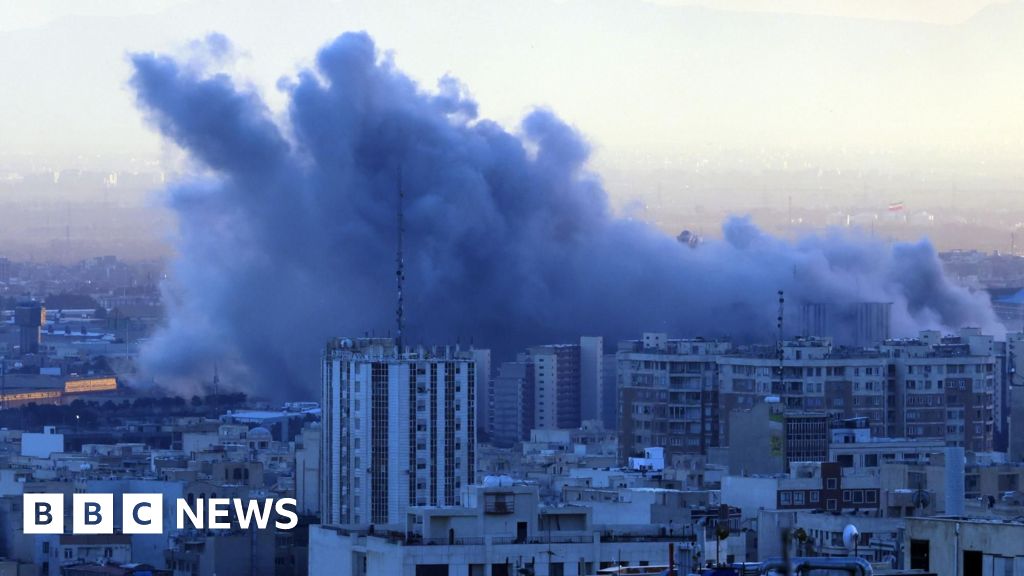
The United States and Israel have reportedly continued a coordinated aerial campaign against targets across Iran for a fourth consecutive day, with President Donald Trump asserting that Iran's military capabilities and leadership infrastructure have been severely compromised. According to statements from the Israeli military, their forces specifically targeted Iran's presidential office, a clandestine nuclear facility, and a senior Revolutionary Guards commander within Tehran. Concurrently, the US military reported its operations focused on dismantling Iranian command centers, missile launch sites, and various airfields. While Iranian authorities have not issued official comments regarding the ongoing strikes, widespread reports confirm explosions throughout the nation. Humanitarian organizations, including the Red Crescent, have tragically reported a significant loss of life, with 780 fatalities recorded since the initial assaults commenced on Saturday. Iran has not remained passive, launching its own series of deadly missile and drone attacks against Israeli interests and US military installations situated in Gulf states.
This intense period of hostilities began on Saturday with a joint US-Israeli offensive that marked a dramatic escalation in regional tensions. The initial wave of strikes proved devastating, reportedly resulting in the deaths of Iran's Supreme Leader, Ayatollah Ali Khamenei, and several other high-ranking officials. This unprecedented targeting of Iran's top leadership immediately signaled a profound shift in the long-standing geopolitical rivalry. President Trump has clearly articulated the strategic objectives underpinning the US involvement in this military campaign. According to his statements, the United States aims to systematically dismantle Iran's ballistic missile capabilities, neutralize its naval power, prevent its capacity to develop nuclear weapons, and sever its extensive support networks for various proxy groups operating across the Middle East. These stated goals underscore a comprehensive effort to diminish Iran's regional influence and military threat, setting the stage for the sustained military actions observed over the past four days.
In response to the sustained aerial bombardments, Iran has launched a series of retaliatory strikes, primarily utilizing drones and missiles against US and Israeli assets in the region. A notable incident occurred on Tuesday evening when a drone struck a parking area adjacent to the US consulate in Dubai, igniting a fire at the location, as confirmed by US Secretary of State Marco Rubio. This event followed closely on the heels of another significant attack just hours earlier, where two drones reportedly targeted the US embassy in Saudi Arabia's capital, Riyadh, causing a limited fire, according to the Saudi defense ministry. These coordinated Iranian counter-attacks highlight a willingness to engage directly with the perceived aggressors and demonstrate a capability to project force beyond its borders, albeit through asymmetric means. Domestically, while Iranian officials have maintained silence on the military actions, the humanitarian toll is mounting. The Iranian Red Crescent has reported a grim figure of 780 fatalities since the initial US-Israeli strikes began on Saturday, underscoring the severe impact on civilian populations amidst the escalating conflict. The lack of official Iranian commentary, despite widespread reports of explosions, adds a layer of ambiguity to the internal situation.
The ongoing, multi-day military offensive by the United States and Israel against Iran, coupled with President Trump's assertive declarations regarding the decimation of Iranian military and leadership structures, marks a significant and potentially transformative moment in Middle Eastern geopolitics. Analysts suggest that the targeting of Iran's presidential office, a covert nuclear site, and a senior Revolutionary Guards commander signifies a deliberate strategy to cripple both the political and military command-and-control capabilities of the Iranian regime, far beyond previous limited strikes. The stated objectives by President Trump—to eliminate Iran's ballistic missile program, naval capacity, nuclear ambitions, and proxy support—point towards a comprehensive effort to fundamentally alter Iran's regional power dynamics. However, the immediate and deadly retaliatory drone and missile attacks by Iran on US and Israeli interests in the Gulf underscore the inherent risks of such an aggressive posture, demonstrating Iran's capacity to strike back and potentially broaden the conflict. The humanitarian crisis, evidenced by the Red Crescent's casualty figures, also raises serious concerns about the broader societal impact and the potential for a protracted conflict to destabilize an already volatile region. The silence from Iranian authorities, juxtaposed with widespread reports of explosions, could indicate either a state of disarray or a strategic decision to control information flow during a critical period of national crisis.
As the US and Israeli aerial campaign against Iran enters its fourth day, the region faces an unprecedented level of overt military confrontation. The sustained strikes, targeting key governmental, military, and potentially nuclear infrastructure, signal a determined effort to neutralize Iran's strategic capabilities and leadership, as articulated by President Trump. Iran's response, characterized by drone and missile attacks on US and Israeli assets in neighboring states, confirms its intent and ability to retaliate, escalating the conflict beyond Iranian borders. The tragic human cost, with hundreds of reported fatalities, underscores the severe consequences of this rapidly unfolding situation. The coming days will be critical in determining whether this intense military exchange leads to further escalation, a shift in regional power balances, or a path towards de-escalation, however unlikely that may seem currently. The international community will be closely watching for any official statements from Tehran and the continued trajectory of military operations from all involved parties.