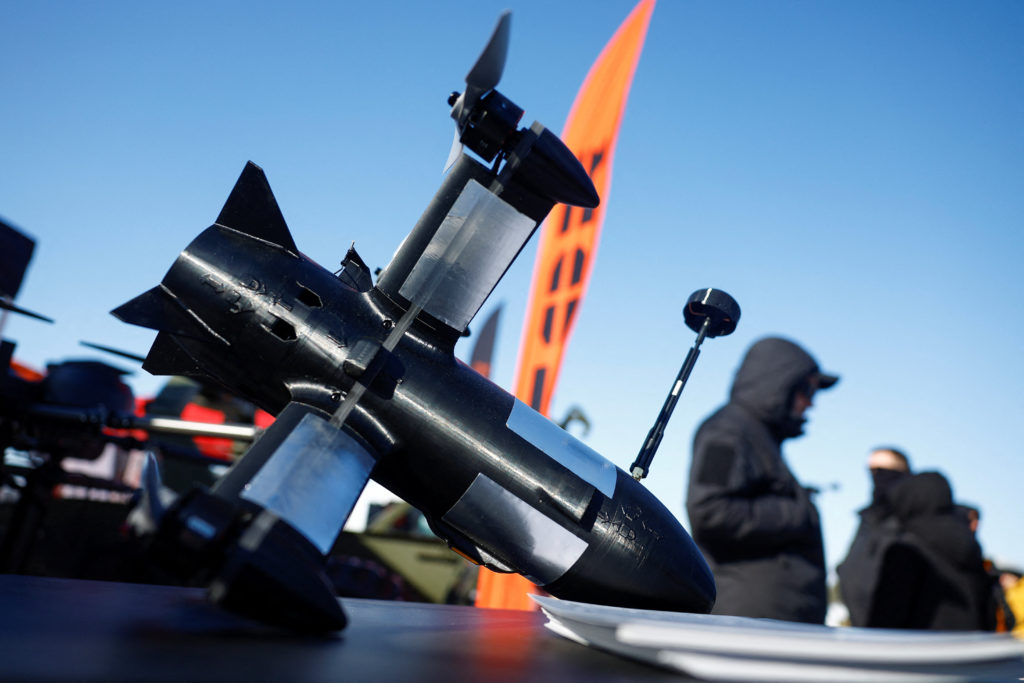
In the wake of Russia's full-scale invasion of its sovereign neighbor just over four years ago, Ukraine has emerged as a surprising pioneer in the realm of modern military innovation. Faced with a formidable adversary, Ukrainian forces have strategically embraced and rapidly advanced the development of highly effective, yet remarkably inexpensive, drone technology. These so-called 'cut-price drone killers,' reportedly costing as little as $1,000 per unit, represent a significant paradigm shift in contemporary warfare. Their widespread deployment and proven efficacy on the battlefield are fundamentally challenging established military doctrines and forcing a comprehensive reevaluation of air defense strategies across the globe. This groundbreaking approach to aerial combat, born out of necessity and ingenuity, has not only provided Ukraine with a crucial tactical advantage but has also captured the attention of military strategists and defense establishments worldwide, signaling a new era in the economics and execution of modern conflict.
The conflict, which commenced with a large-scale incursion into Ukrainian territory over four years ago, quickly highlighted the limitations of traditional military hardware against a numerically superior foe. In response to this existential threat, Ukraine's defense sector and civilian tech community rapidly pivoted towards developing asymmetric solutions. The strategic imperative was clear: find ways to counter advanced, expensive Russian military assets with accessible, mass-producible technology. This urgent need spurred an unprecedented period of innovation, leading to the rapid prototyping and deployment of drones that could perform critical tasks ranging from reconnaissance and target acquisition to direct engagement. This period marked a crucial evolution in military thinking, moving beyond reliance on multi-million dollar fighter jets and sophisticated missile systems to embrace agile, disposable, yet highly effective unmanned aerial vehicles, fundamentally altering the operational landscape of the conflict.
The effectiveness of these low-cost drone killers stems from several factors, including their affordability, ease of production, and adaptability. Reports indicate that many of these systems leverage readily available commercial components, which are then modified for military applications, allowing for rapid scaling and continuous iteration based on battlefield feedback. This decentralized development model has enabled Ukraine to deploy a diverse array of drones capable of various missions, from precision strikes against armored vehicles and personnel to overwhelming enemy positions through swarm tactics. The sheer volume and low individual cost of these drones present a significant challenge to conventional air defense systems, which are typically designed to intercept larger, more expensive threats. The economic disparity between a $1,000 drone and a multi-million dollar air defense missile means that traditional countermeasures often prove economically unsustainable in the face of sustained drone attacks, forcing militaries to reconsider their investment priorities and defensive postures.
This transformative shift in aerial warfare has profound implications for global military strategy and defense spending. The emergence of inexpensive, yet potent, drone technology is effectively 'rewriting the air defense rule book,' as traditional layered air defense systems designed to counter manned aircraft or ballistic missiles are proving vulnerable to these smaller, slower, and often harder-to-detect threats. Military analysts suggest that this development will necessitate a fundamental re-evaluation of national security doctrines, prompting countries to invest more heavily in counter-drone technologies, electronic warfare capabilities, and decentralized, adaptable defensive networks. Furthermore, the accessibility of such technology lowers the barrier to entry for state and non-state actors alike, potentially democratizing aspects of military power and increasing the complexity of future conflicts. The lessons learned from Ukraine's innovative approach are likely to shape military procurement, training, and strategic planning for decades to come, underscoring a global imperative for adaptation.
In conclusion, Ukraine's pioneering efforts in developing and deploying cost-effective drone killers since the Russian invasion over four years ago have irrevocably altered the landscape of modern warfare. The ability to field highly effective aerial assets for as little as $1,000 has not only provided a critical advantage in the ongoing conflict but has also sent ripples across international defense establishments. This innovation highlights a significant shift from capital-intensive, high-tech military solutions to more agile, distributed, and economically viable alternatives. As nations worldwide continue to observe and analyze the profound impact of these developments, the future of air defense and military strategy will undoubtedly be shaped by the imperative to adapt to this new era of accessible, disruptive drone technology. The ongoing evolution of these systems and their countermeasures will remain a critical area of focus for military planners and observers alike.