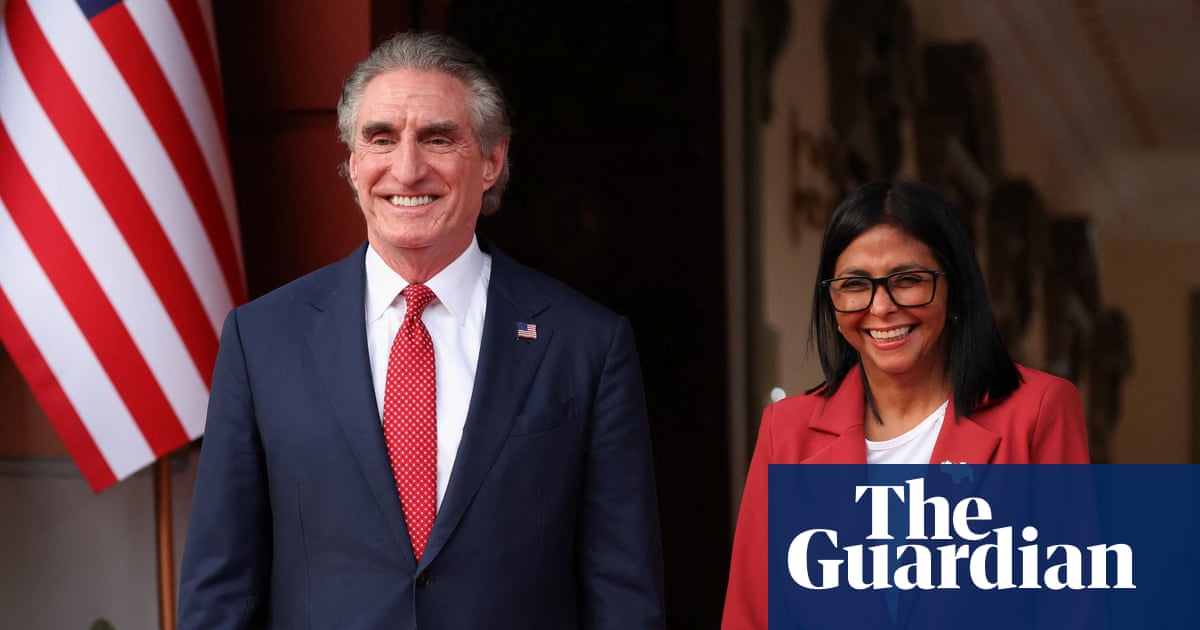
In a significant geopolitical shift, the United States and Venezuela have reportedly initiated steps to fully restore diplomatic relations, marking a potential turning point after years of profound estrangement. This pivotal announcement, made on Thursday, follows a two-day visit to Venezuela by U.S. Secretary of the Interior Doug Burgum, signaling a high-level commitment from Washington to re-engage with the South American nation. The move comes approximately two months after the reported ouster of Nicolás Maduro from power, a development that, according to various international sources, has paved the way for a new political landscape in Venezuela. Officials from the U.S. State Department have indicated that re-establishing these diplomatic channels is expected to bolster Venezuela's economy, while the broader initiative aligns with U.S. President Donald Trump's stated objective of securing greater access to the country's rich mineral resources. This re-engagement is seen by observers as a pragmatic approach from both sides, aiming to stabilize a volatile region and address pressing economic and humanitarian concerns that have long been exacerbated by a lack of formal communication.
The reported decision to re-establish diplomatic ties represents a dramatic departure from the contentious relationship that has characterized U.S.-Venezuelan interactions for over a decade. Formal diplomatic relations between the two nations had been severely degraded, with the U.S. withdrawing its diplomatic personnel and closing its embassy in Caracas, a measure reciprocated by Venezuela. This deterioration was largely fueled by Washington's consistent refusal to recognize the legitimacy of the Maduro government, citing profound concerns over democratic processes, widespread human rights abuses, and political repression within Venezuela. Furthermore, the U.S. had imposed extensive economic sanctions on Venezuela's vital oil sector and key individuals, measures that, according to numerous reports, significantly exacerbated Venezuela's severe economic crisis and contributed to a mass exodus of its citizens seeking stability elsewhere. The previous U.S. administration had actively supported opposition movements within Venezuela, deepening the political chasm and making formal dialogue virtually impossible, underscoring the magnitude of the current diplomatic thaw.
The recent visit by U.S. Interior Secretary Doug Burgum to Venezuela, a key component of President Trump's broader strategy, underscores the renewed focus on resource access. While the U.S. State Department has emphasized the economic benefits for Venezuela, suggesting that restored ties will support the nation's struggling economy, the underlying interest in Venezuela's substantial mineral wealth is a significant driver. This high-level engagement marks a tangible shift in U.S. foreign policy towards Venezuela, moving from a stance of isolation to one of direct, albeit carefully managed, interaction. The reported political transition within Venezuela, including the departure of Nicolás Maduro, is widely seen as the primary catalyst enabling this diplomatic re-opening. This profound internal shift has created an environment conducive to dialogue, potentially reshaping regional dynamics and opening avenues for cooperation on critical issues that have long been stalled due to deep-seated political disagreements and a complete lack of formal communication channels between the two nations.
Observers and geopolitical analysts suggest that this re-engagement signifies a pragmatic approach from both Washington and Caracas, prioritizing stability and mutual interests over long-standing ideological divides. The potential for renewed diplomatic relations offers a pathway to address pressing economic and humanitarian concerns within Venezuela, which has faced severe challenges including hyperinflation, widespread shortages, and a significant migration crisis. Beyond immediate humanitarian relief, the restoration of ties could pave the way for increased foreign investment and trade, potentially revitalizing Venezuela's economy, particularly its crucial energy and mining sectors. From a broader geopolitical perspective, the U.S. re-establishing a formal presence could help stabilize a region prone to volatility, while also potentially counterbalancing the influence of other global powers that have deepened their ties with Venezuela in recent years. However, challenges remain, including navigating the complexities of Venezuela's internal political landscape and ensuring that any economic benefits are widely distributed and contribute to genuine democratic reforms.
In conclusion, the initiation of steps to restore full diplomatic relations between the United States and Venezuela represents a pivotal moment following years of intense friction and a complete breakdown of formal communication. Driven by Venezuela's recent political transition and the reported ouster of Nicolás Maduro, coupled with the U.S.'s strategic interest in mineral resources and a stated aim to support Venezuela's economy, this development signals a significant shift towards engagement. The two nations are moving from a period of severe estrangement to one of potential cooperation, with the visit of U.S. Interior Secretary Doug Burgum serving as a tangible symbol of this renewed commitment. The coming months will be crucial in observing how these re-established ties translate into concrete actions, impacting Venezuela's economic recovery, regional stability, and the broader geopolitical landscape.