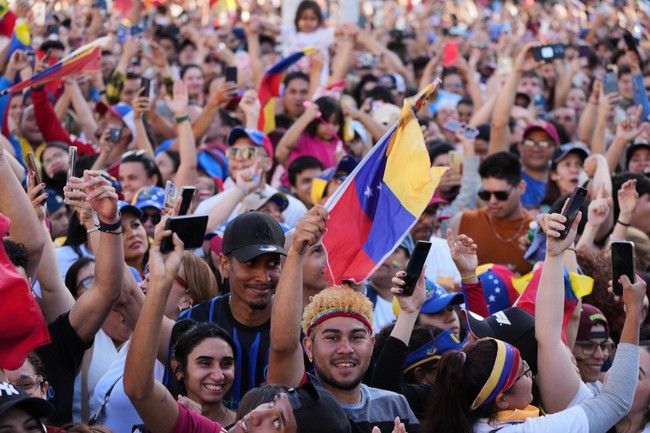
In a significant development for the South American nation, the United States and Venezuela's provisional leadership have reportedly reached an agreement to re-establish diplomatic and consular connections. The initial reports of this breakthrough emerged on March 5, 2026, from News Nation White House Correspondent Kellie Meyer, who shared a concise update via a social media post on X. This was quickly followed by a more detailed report from U.S. News & World Report, which cited a statement from the U.S. State Department. According to the State Department's confirmation issued on Thursday, a central focus of this renewed engagement is to cultivate conditions that facilitate a peaceful transition towards a democratically elected government in Venezuela. This commitment from Washington underscores a broader objective beyond mere diplomatic normalization, signaling an emphasis on fundamental political reform within the nation.
This agreement marks a pivotal moment, given the extended period of strained relations and political instability that has characterized Venezuela for years. The country has not experienced a system of democratically elected governance for an extended duration, a situation that dates back to the tenure of former President Hugo Chavez. The political landscape has been further complicated by the removal of Nicolás Maduro from power and the subsequent swearing-in of Delcy Rodríguez, formerly Maduro's vice president, as the provisional president. The U.S. State Department's explicit mention of a 'peaceful transition to a democratically elected government' is particularly noteworthy, as it highlights a long-standing point of contention and a key demand from international observers regarding Venezuela's political future. The resumption of diplomatic channels, therefore, carries the weight of not just bilateral relations but also the potential for internal political transformation.
Further details from the U.S. State Department's statement, as reported by U.S. News & World Report, reiterate Washington's commitment to fostering an environment conducive to democratic change. While the agreement to restore diplomatic and consular relations is clear, the path towards achieving the stated goal of a democratically elected government remains less defined. Reports indicate that this is currently the sole mention of potential elections in Venezuela, with no specific timeline or anticipated date having been provided by either party. This lack of a concrete schedule stands in contrast to the Venezuelan constitution, which, according to reports, mandates a new election within a 30-day period should a president become absent during the initial four years of their term. The current political structure, with Delcy Rodríguez serving as the provisional president, adds another layer of complexity to the implementation of any future electoral processes.
The implications of this diplomatic thaw are far-reaching, signaling a potential shift in the international community's approach to Venezuela. While the resumption of ties offers a glimmer of hope for stability and dialogue, the U.S. State Department's emphasis on democratic transition introduces a significant conditionality. Experts suggest that the success of this initiative will hinge on the willingness of Venezuela's interim authorities to genuinely engage in reforms that pave the way for free and fair elections. The absence of a clear electoral roadmap presents a considerable challenge, raising questions about how quickly and effectively democratic processes can be established. This development could represent a strategic move by the United States to leverage diplomatic engagement as a tool for promoting human rights and democratic governance, rather than relying solely on isolationist policies. The coming months will likely reveal the true extent of commitment from both sides to these stated objectives.
In summary, the agreement between the United States and Venezuela's interim authorities to re-establish diplomatic and consular relations marks a significant, albeit cautiously optimistic, turning point. While the immediate goal is the normalization of bilateral ties, the U.S. has clearly articulated its long-term objective of supporting a peaceful transition to a democratically elected government in Venezuela. The path forward remains complex, particularly concerning the lack of a defined timeline for elections and the existing constitutional provisions. Observers will be closely monitoring the subsequent actions of both nations, looking for concrete steps that demonstrate progress towards genuine political reform and the fulfillment of the aspirations for a more democratic future in Venezuela.