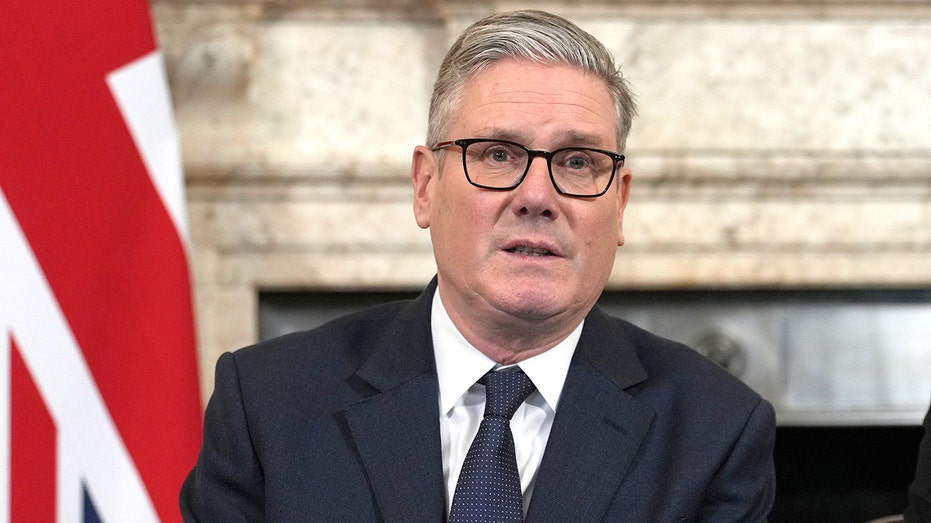
The United States has secured authorization to deploy from British military installations for a series of precisely defined and restricted defensive operations targeting Iran's missile infrastructure. This significant development follows an endorsement from Prime Minister Keir Starmer, who publicly affirmed the strategic initiative. Concurrently, UK Defense Secretary John Healey underscored Britain's commitment to supporting American efforts, stating on Sunday that the nation had "stepped up alongside the Americans." Prime Minister Starmer, in a recorded address to the nation, articulated that neutralizing the perceived threat necessitated targeting the missile capabilities directly at their origin, specifically within their storage facilities or the launch platforms utilized for deployment. He explicitly stated, "The U.S. has requested permission to use British bases for that specific and limited defensive purpose," confirming, "We have taken the decision to accept this request." This pivotal decision unfolds against a backdrop of intensifying hostilities across the Middle East, fueling widespread concerns about the potential for a broader regional conflagration.
This critical authorization emerges amidst a period of heightened instability throughout the Middle East, characterized by a dangerous cycle of military actions and retaliations. The current escalation follows a series of offensive actions undertaken by the United States and Israel against Iranian targets, which were subsequently met with reciprocal missile and drone assaults launched by Tehran. These tit-for-tat exchanges have significantly amplified fears of a wider, more destructive conflict engulfing the region. On February 28, in the immediate aftermath of a military operation designated as Operation Epic Fury, Prime Minister Starmer had already confirmed the active deployment of British aircraft across the Middle East. These aerial missions, he clarified, were an integral component of "coordinated regional defensive operations to protect our people, our interests and our allies," signaling an earlier, proactive posture by the United Kingdom in safeguarding its strategic assets and personnel within the volatile geopolitical landscape.
Further details regarding the immediate threats and defensive responses were disclosed by Defense Secretary Healey on Sunday, who revealed that two projectiles originating from Iran had been launched in the direction of Cyprus. This island nation is strategically vital for the United Kingdom, as it maintains key sovereign military base areas there. In a separate but related incident, the Royal Air Force (RAF) confirmed a successful interception involving its assets. Typhoon fighter jets, operating from Qatar as part of the collaborative U.K.-Qatar Typhoon Squadron, effectively intercepted an unmanned aerial vehicle (UAV) of Iranian origin. This drone was confirmed to be en route to Qatari airspace, highlighting the active and ongoing nature of aerial threats in the region. The stated objective of the newly approved American strikes from British bases remains narrowly focused on a "limited defensive purpose," specifically targeting the source of Iran's missile capabilities, including their storage depots and launch systems, to preempt future attacks.
The United Kingdom's decision to grant the United States access to its sovereign bases for targeted strikes against Iranian missile capabilities marks a significant deepening of the transatlantic alliance's engagement in the Middle East. This move, while framed as a "limited defensive purpose," carries substantial strategic implications, potentially redefining the parameters of Western intervention in regional conflicts. Experts suggest that by enabling strikes "at source," the UK and US aim to degrade Iran's ability to project power through its extensive missile arsenal, thereby mitigating future retaliatory actions or proxy attacks. However, this strategy also raises critical questions regarding the potential for unintended escalation, as direct strikes on Iranian territory, even if limited, could provoke further responses from Tehran. Analysts will closely monitor how this decision impacts regional stability, the delicate balance of power, and the broader diplomatic efforts to de-escalate tensions, particularly given the explicit targeting of missile infrastructure rather than broader military assets.
In summary, the United Kingdom has formally authorized the United States to conduct targeted, defensive strikes against Iranian missile capabilities from British bases, a decision personally approved by Prime Minister Keir Starmer and affirmed by Defense Secretary John Healey. This move is presented as a necessary measure to neutralize missile threats at their origin, coming amidst a period of intense regional escalation following reciprocal U.S./Israeli and Iranian military actions. The deployment of British aircraft for regional defensive operations and the recent interception of Iranian projectiles underscore the immediate and tangible nature of the threats. Moving forward, international observers will be keenly watching for the operationalization of these strikes, any subsequent reactions from Tehran, and the broader impact on the already fragile security landscape of the Middle East, as the alliance seeks to manage and contain the escalating crisis.