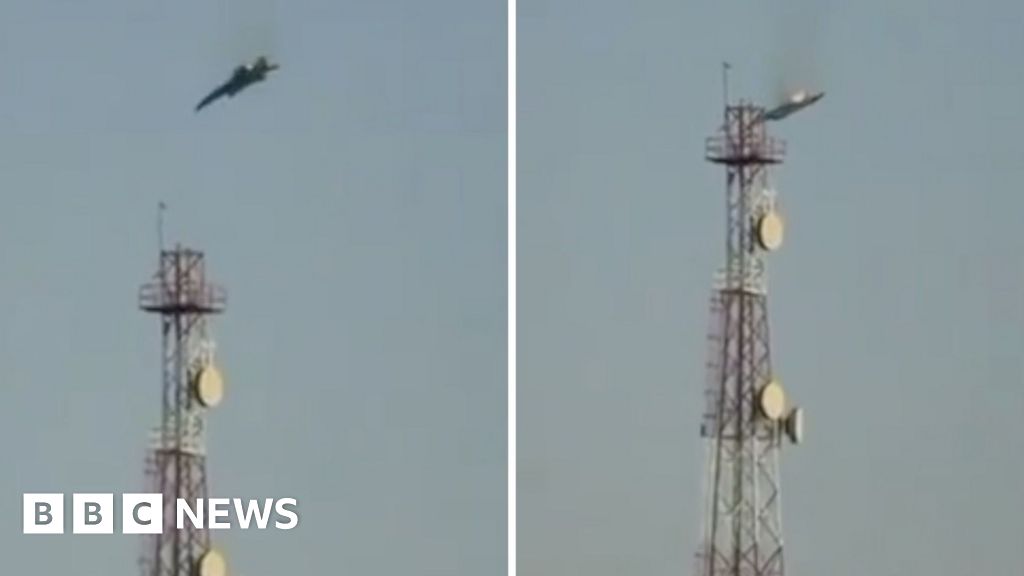
Three United States fighter jets were reportedly shot down over Kuwait in what officials are describing as an "apparent friendly fire incident," according to statements released by US Central Command (Centcom). The F-15 aircraft were flying in support of ongoing US-Israeli military operations against Iran when they were mistakenly engaged by Kuwaiti air defense systems on Monday. Authorities confirmed that all six crew members aboard the downed jets successfully ejected from their aircraft and have since been safely recovered. The precise circumstances leading to this critical incident are currently under thorough investigation, as military officials work to ascertain the full sequence of events that resulted in the loss of the American warplanes. This development adds a complex layer to an already tense regional security landscape, where US and allied forces are operating amidst heightened hostilities.
This incident unfolds against a backdrop of intensifying US-Israeli military actions targeting Iran, a conflict that has seen a recent escalation in direct engagements. Monday witnessed renewed attacks from both sides, underscoring the volatile nature of the regional standoff. Concurrently, Iranian authorities have publicly refuted suggestions from President Trump regarding their readiness for fresh negotiations with the United States, indicating a continued impasse in diplomatic efforts. The friendly fire incident also comes as US Central Command announced the death of a fourth American service member on Monday, who succumbed to injuries sustained during initial Iranian attacks. This follows the earlier confirmation on Sunday of three other US fatalities, similarly resulting from retaliatory strikes by Iran, with five additional personnel reported to have suffered serious wounds in the ongoing hostilities. The names of those killed and injured have not yet been publicly disclosed by military authorities.
Further details emerging from the incident confirm that the three F-15 fighter jets, integral to US air superiority, were downed by Kuwaiti air defenses during their operational flight. Officials have emphasized that the six pilots and weapon systems officers aboard the aircraft were able to safely eject and were subsequently recovered without further incident, a testament to the robust safety protocols in place. The ongoing investigation aims to meticulously examine communication protocols, identification systems, and operational coordination between allied forces to prevent future occurrences of such a critical error. President Trump, in announcing the joint US-Israeli operation against Iran on Saturday, had cautioned that "the lives of American heroes may be lost, and we may have casualties. That often happens in war," acknowledging the inherent risks of military engagement. In subsequent telephone interviews with reporters on Sunday, President Trump also indicated that the joint strikes on Iran, conducted in conjunction with Israel, could potentially extend for approximately four weeks, signaling a prolonged period of military activity.
The occurrence of a friendly fire incident involving advanced US fighter jets and a key regional ally's air defense system carries significant implications, potentially complicating an already delicate geopolitical situation. Such an event necessitates an immediate and comprehensive review of operational procedures, command and control mechanisms, and identification friend or foe (IFF) systems to prevent recurrence, especially in a densely contested airspace. While investigations are underway, the incident could strain diplomatic relations between the United States and Kuwait, requiring careful management to maintain alliance cohesion. Furthermore, it highlights the inherent dangers and complexities of multi-national military operations, particularly in high-tension environments where rapid decision-making under pressure is paramount. This operational setback occurs as the broader conflict with Iran continues to unfold, marked by a cycle of attacks and retaliations, and a persistent refusal by Iran to engage in proposed negotiations, suggesting a protracted period of instability in the region.
In summary, the downing of three US F-15 fighter jets by Kuwaiti air defenses in an apparent friendly fire incident represents a serious operational mishap amidst escalating US-Israeli hostilities with Iran. While all six crew members were safely recovered, the event underscores the critical challenges of military coordination in a volatile region. This incident adds to a grim tally of US casualties, with four service members now confirmed dead and five seriously wounded from recent Iranian attacks. As investigations into the friendly fire incident proceed, the focus will remain on understanding the root causes and implementing measures to prevent future occurrences. The broader conflict with Iran, characterized by ongoing military actions and a lack of diplomatic breakthrough, suggests that regional tensions are likely to persist, demanding close monitoring of both military developments and diplomatic efforts in the coming weeks.