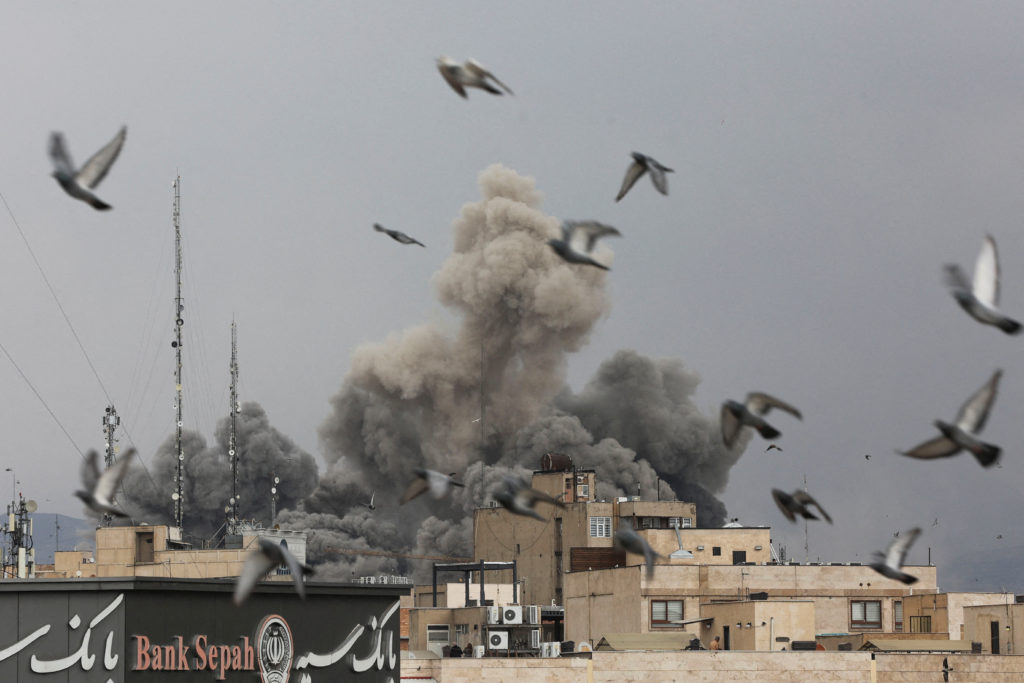
In a volatile Middle East landscape marked by persistent geopolitical friction, Iran has consistently articulated a severe retaliatory doctrine, warning of a comprehensive regional conflict should its sovereignty or interests face direct military aggression. According to long-standing reports, Tehran’s strategic posture includes explicit threats to escalate any confrontation into what it terms 'total war,' a scenario that would profoundly destabilize an already fragile region. This declared response is not confined to immediate adversaries but explicitly encompasses key regional players, notably Israel and the Gulf Arab states, which are critical to global energy stability. Furthermore, officials have indicated that a central component of this retaliatory strategy involves disrupting the flow of crude oil, a commodity indispensable to international energy markets. Such a move, if actualized, would not only ignite a devastating regional conflagration but also trigger severe global economic repercussions, underscoring the high stakes involved in the delicate balance of power in the Middle East.
The genesis of Iran's assertive defensive posture can be traced back decades, rooted in its revolutionary ideology and a perceived need to deter external aggression following historical conflicts and ongoing geopolitical pressures. This consistent messaging, reiterated by various Iranian officials over many years, serves as a cornerstone of its national security doctrine, aiming to project an image of formidable deterrence. The critical qualifier, 'if attacked,' is central to understanding this stance, implying a reactive rather than pre-emptive strategy, yet leaving the precise definition of 'attack' open to interpretation, which itself contributes to regional uncertainty. Analysts suggest that an 'attack' could range from direct military strikes on Iranian soil or assets to significant covert operations or even severe economic warfare, depending on Tehran's assessment. The historical backdrop of tensions with the United States, Israel, and several Gulf Arab nations, coupled with Iran's development of asymmetric warfare capabilities and its network of regional proxies, provides the broader context for these warnings, framing them within a complex web of strategic rivalries and security dilemmas that have long characterized the Middle Eastern geopolitical landscape.
The explicit targeting of Israel, Gulf Arab states, and global crude oil flows highlights the multi-faceted nature of Iran's threatened response. For Israel, a long-standing ideological adversary, any escalation would likely involve missile strikes from various fronts, potentially leveraging Iran's advanced ballistic missile arsenal and its regional allies, such as Hezbollah in Lebanon. The Gulf Arab states, particularly those with close ties to Western powers and significant oil infrastructure, represent another critical vector for potential retaliation. These nations, home to vital energy facilities and strategic waterways, could face direct targeting or destabilization efforts through proxy forces, according to various security assessments. Crucially, the threat to disrupt the flow of crude oil underscores the global economic leverage Iran perceives itself to possess. The Strait of Hormuz, a narrow chokepoint through which a significant portion of the world's seaborne oil passes, is frequently cited as a potential flashpoint. Any attempt to impede transit through this vital artery would not only send shockwaves through global energy markets, causing prices to skyrocket and potentially triggering a worldwide recession, but also invite a robust international response, transforming a regional conflict into a crisis of global proportions. These specific threats are designed to maximize the cost of any perceived aggression against Iran, aiming to deter potential adversaries by demonstrating the catastrophic consequences of such actions.
Security analysts and international relations experts widely debate the credibility and precise implications of Iran's 'total war' threats. While some view them as primarily deterrent rhetoric, designed to prevent pre-emptive strikes, others warn against underestimating Tehran's capacity and willingness to execute such a strategy, particularly if its core interests or regime survival are perceived to be at stake. The concept of 'total war' in this context suggests a conflict without conventional boundaries, potentially involving cyber warfare, asymmetric tactics, and widespread use of proxy forces across multiple theaters, rather than a conventional state-on-state confrontation. The broader implications for global stability are profound; a regional conflict involving Iran, Israel, and Gulf states, with potential U.S. involvement, could trigger a humanitarian catastrophe, massive refugee flows, and severe disruptions to international trade and supply chains beyond just energy. The risk of miscalculation remains exceptionally high, as differing interpretations of 'attack' or 'red lines' could inadvertently trigger a devastating chain reaction. Furthermore, the potential for non-state actors to exploit such a chaotic environment adds another layer of complexity, making de-escalation incredibly challenging once hostilities commence. Experts emphasize that these threats are not merely rhetorical flourishes but reflect a deeply ingrained strategic calculus aimed at safeguarding national security through the credible threat of unacceptable costs to adversaries.
In conclusion, Iran's long-standing threats to unleash 'total war' across the Middle East, specifically targeting Israel, Gulf Arab states, and critical global oil flows 'if attacked,' represent a deeply entrenched and highly consequential element of regional geopolitics. These declarations, consistently articulated over decades, underscore Tehran's strategic resolve to deter aggression by signaling its capacity and willingness to impose severe, far-reaching costs on its adversaries and the international community. The potential actualization of such threats carries the gravest implications, promising not only a devastating regional conflict but also profound global economic disruption through the targeting of vital energy infrastructure. As tensions in the Middle East remain perpetually elevated, understanding the full scope and historical context of Iran's retaliatory doctrine becomes paramount. The international community continues to monitor the delicate balance of power, with diplomatic efforts focused on preventing any scenario that could trigger these catastrophic warnings, emphasizing the urgent need for de-escalation and dialogue to avert a wider conflict with unparalleled consequences for global stability and prosperity.