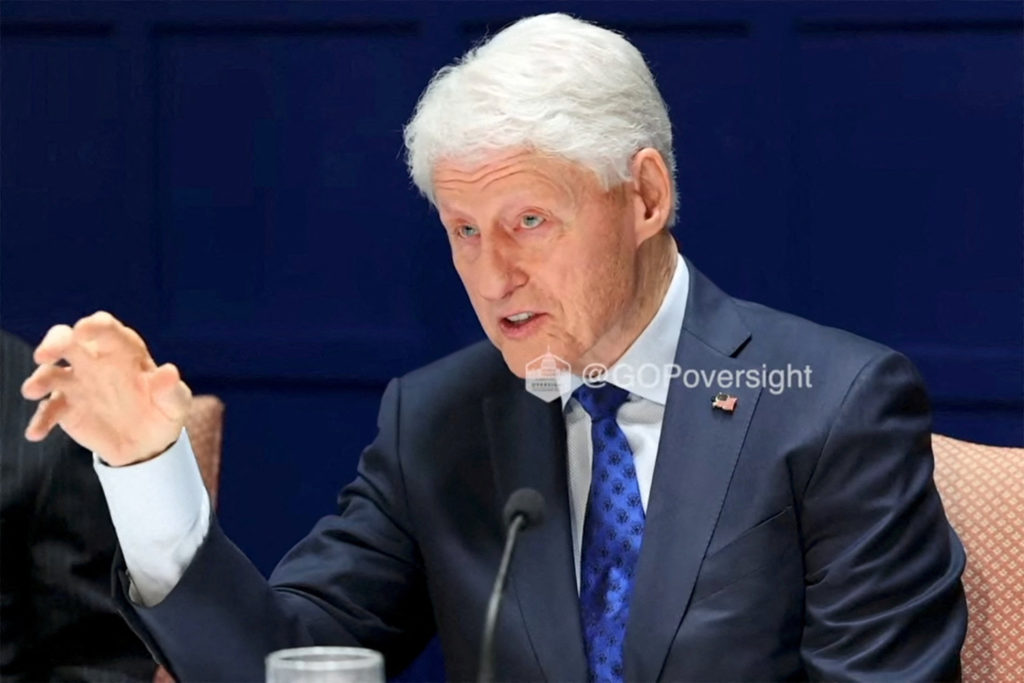
Former President Bill Clinton recently underwent extensive questioning by members of Congress concerning his past association with the late financier Jeffrey Epstein. During a deposition last week, Clinton asserted his innocence, stating he "did nothing wrong" in his interactions with Epstein and observed no indications of the sexual abuse Epstein was later convicted for. This significant event, held in Chappaqua, New York, marked a historic occasion as it was the first time a former U.S. president had been compelled to provide testimony to a congressional committee. The closed-door session, which lasted over six hours, saw Clinton address numerous inquiries from lawmakers probing his connections to Epstein, which date back more than two decades. According to reports, Clinton maintained he would have reported Epstein had he been aware of any criminal activity, emphasizing his lack of knowledge regarding the financier's illicit conduct. He shared an opening statement on social media Friday, reiterating his position.
The congressional inquiry into former President Clinton's ties to Jeffrey Epstein forms part of a broader national reckoning regarding accountability for individuals who maintained relationships with Epstein, particularly after his initial conviction in 2008 for soliciting prostitution from an underage girl in Florida. This deposition, which occurred in the Clintons' hometown, followed closely on the heels of similar testimony provided by former Secretary of State Hillary Clinton to lawmakers just a day prior. The intense scrutiny reflects ongoing efforts by legislative bodies to understand the extent of Epstein's network and the potential complicity or ignorance of powerful figures who associated with him. The historical precedent set by a former president being compelled to testify underscores the gravity of the investigation and the public demand for transparency surrounding Epstein's activities and his high-profile connections. The committee's focus extends to understanding how such a figure could operate for so long, and what responsibilities, if any, those in his orbit held, especially given that many high-powered individuals globally have faced repercussions for their continued association with Epstein post-2008.
During his lengthy testimony, which spanned more than six hours, former President Clinton reportedly answered every question posed by the congressional panel. He reiterated his stance in an opening statement, later shared on social media, affirming, "I saw nothing, and I did nothing wrong." He further asserted that if he had possessed any knowledge of Epstein's criminal activities, he "would have turned him in." Clinton also clarified that his association with Epstein had ceased well before the financier's 2008 guilty plea in Florida. Acknowledging the passage of time, Clinton noted the inherent difficulty in recalling precise details of events from over two decades ago but expressed unwavering certainty regarding his lack of involvement in or awareness of any illicit conduct. Republican members of the House Oversight Committee, upon departing Chappaqua, did not immediately issue any accusations against either Bill or Hillary Clinton, indicating their intention to review the extensive depositions before making further statements. Their immediate focus, according to reports, appears to be shifting towards other individuals implicated in the broader investigation.
The unprecedented nature of a former U.S. president being compelled to testify before Congress highlights the profound societal impact of the Jeffrey Epstein scandal and the persistent calls for accountability, irrespective of an individual's past stature. While Republican lawmakers have not yet leveled formal accusations against the Clintons, the very act of their depositions signals a significant moment in congressional oversight. The committee's stated intention to review the extensive testimony and shift focus to other individuals suggests a methodical approach to unraveling Epstein's network rather than a singular pursuit of the Clintons. This ongoing investigation could have far-reaching implications for how high-profile individuals are scrutinized for their associations, particularly in an era where public figures are increasingly held to account for past connections. The challenge for lawmakers lies in distinguishing between casual acquaintances and those who may have had deeper knowledge or involvement, especially given the difficulty of recalling events from decades past, as noted by Clinton himself. The outcome of this review will likely shape future discussions on the responsibilities of public figures and the scope of congressional investigative powers.
In summary, former President Bill Clinton's recent deposition before the House Oversight panel marked a historic moment, with him denying any wrongdoing or knowledge of Jeffrey Epstein's sexual abuse during his past association. His testimony, following that of his wife, Hillary Clinton, underscores the ongoing congressional efforts to thoroughly investigate Epstein's network and hold individuals accountable. While Clinton maintained his innocence and stated his association with Epstein ended before the 2008 conviction, lawmakers are now reviewing the extensive hours of testimony. The lack of immediate accusations from Republican committee members suggests a careful, deliberative process ahead. The broader implications of these depositions will continue to unfold as the committee shifts its attention to other figures, signaling a sustained commitment to understanding the full scope of the Epstein scandal and ensuring accountability where due. The public will be watching closely for the committee's next steps and any further revelations.