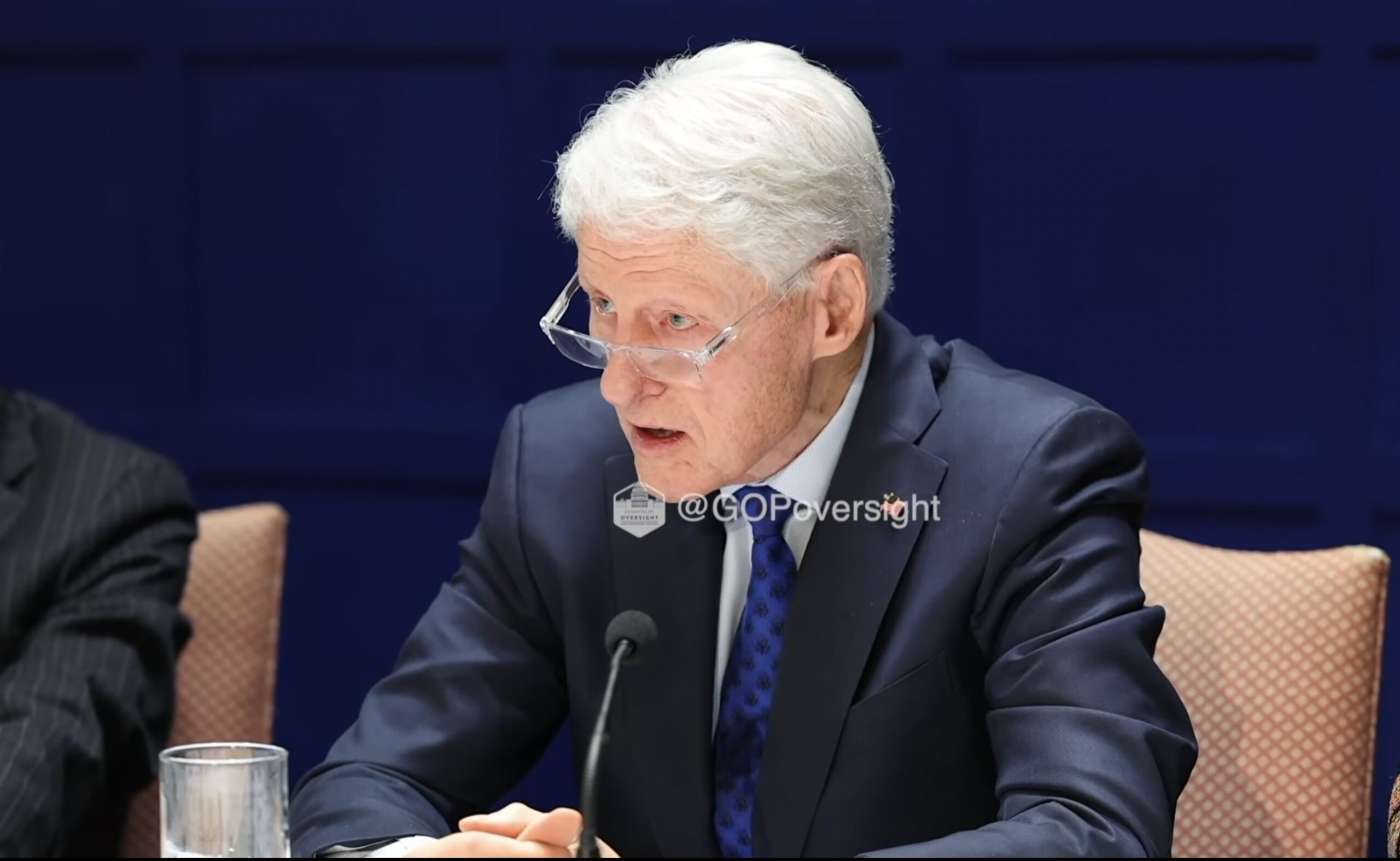
The House Oversight Committee made public on Monday afternoon video recordings of depositions given by former President Bill Clinton and former Secretary of State Hillary Clinton. These extensive interviews, which collectively spanned more than nine hours, delved into their associations with the late convicted sex offender Jeffrey Epstein. The release of this footage occurred less than a week after both Clintons had appeared before congressional lawmakers to provide testimony. Key moments captured in the recordings include a notable interruption during Hillary Clinton's session, where she reportedly expressed significant frustration, and Bill Clinton's responses concerning Epstein's numerous visits to the White House during his presidency, as well as a controversial photograph. This public disclosure by the House GOP aims to shed further light on the nature and extent of the Clintons' interactions with Epstein, a figure whose criminal activities and high-profile connections have been the subject of intense public and legal scrutiny for years, according to statements accompanying the release. The committee's action underscores an ongoing effort to ensure transparency regarding individuals linked to Epstein's illicit network, prompting renewed public discussion and analysis of the testimonies.
The public release of these deposition videos is a significant development within the broader, long-running investigation into Jeffrey Epstein's extensive network and the individuals connected to his illicit activities. For years, the public and various legal bodies have sought greater clarity regarding the high-profile figures who interacted with Epstein, particularly given the gravity of his crimes. Congressional committees, like the House Oversight Committee, play a crucial role in governmental oversight and in bringing transparency to matters of public interest, often by compelling testimony and releasing relevant documentation. The decision to make these specific depositions public follows previous testimonies and a sustained public demand for accountability from anyone associated with Epstein. This move is particularly noteworthy as it provides direct insight into the Clintons' perspectives on their relationship with Epstein, offering a detailed account that goes beyond previously reported summaries. The context of this release is rooted in the persistent questions surrounding Epstein's ability to cultivate relationships with powerful individuals, and the implications these connections may have had on his criminal enterprise, making the full scope of these interactions a matter of considerable public and legal significance.
During her testimony, approximately eighty minutes into the proceedings, Hillary Clinton reportedly reacted strongly when informed that photographs pertinent to her deposition were being released. According to the footage, she vocally expressed her displeasure, stating her intention to discontinue her participation and challenging the committee to hold her in contempt if they proceeded with the photo release. She characterized the situation as "typical behavior," indicating her perception of the committee's tactics. Despite this initial heated exchange, she subsequently returned to the deposition and continued to provide testimony for an additional three hours. The following day, Bill Clinton's deposition also contained notable exchanges. Roughly fifty minutes into his session, he was questioned about reports indicating Jeffrey Epstein had visited the White House seventeen times during his tenure as president. While he did not dispute the reported frequency of these visits, he conveyed uncertainty regarding their specific purpose. He explained that numerous individuals, including lobbyists, frequently entered and exited the White House, often multiple times, but asserted he was unaware of Epstein's specific visits or their objectives. Furthermore, the former president addressed a photograph depicting him in a hot tub, clarifying that no individuals under the age of eighteen were present, his time in the hot tub was brief, lasting about five minutes, and he did not engage in any sexual activity that evening. More than three hours into his testimony, Bill Clinton characterized his relationship with Epstein as "friendly" but explicitly stated he did not consider him a "friend," and added that Epstein never attempted to "monetize" their association.
The release of these extensive depositions is expected to ignite further public debate and scrutiny, offering both legal and political ramifications. From a legal standpoint, the detailed testimonies could provide new avenues for investigators or inform ongoing civil litigation related to Epstein's victims, potentially revealing previously undisclosed information about the network's operations or the knowledge of its high-profile associates. Politically, the footage places the Clintons back in the spotlight concerning a highly sensitive and controversial issue, potentially impacting their public image and the narratives surrounding their careers. Experts suggest that while the depositions offer a direct account, their interpretation will likely vary widely depending on existing political leanings and public sentiment. The committee's decision to release the footage, rather than just transcripts, emphasizes a commitment to transparency, but also opens the door to heightened media analysis of body language and tone, which can influence public perception. This move also highlights the persistent efforts by some political factions to keep the Epstein scandal, and the involvement of prominent figures, at the forefront of public discourse, underscoring the broader implications for accountability and the justice system in cases involving powerful individuals.
In summary, the House Oversight Committee's decision to release over nine hours of deposition footage from Bill and Hillary Clinton marks a significant moment in the ongoing public examination of Jeffrey Epstein's connections. The recordings provide an unvarnished look into their testimonies, featuring Hillary Clinton's strong reaction to the mention of photographs and Bill Clinton's explanations regarding Epstein's White House visits and a controversial hot tub image. These disclosures are poised to fuel further discussion about the extent of Epstein's influence among the elite and the responsibilities of those who associated with him. Moving forward, observers will be watching for any new investigative leads or public reactions that might emerge from a deeper analysis of these testimonies. The release reinforces the commitment to transparency in a case that continues to demand answers and accountability, ensuring the public remains engaged with the complex web of relationships surrounding one of the most infamous figures of recent times.