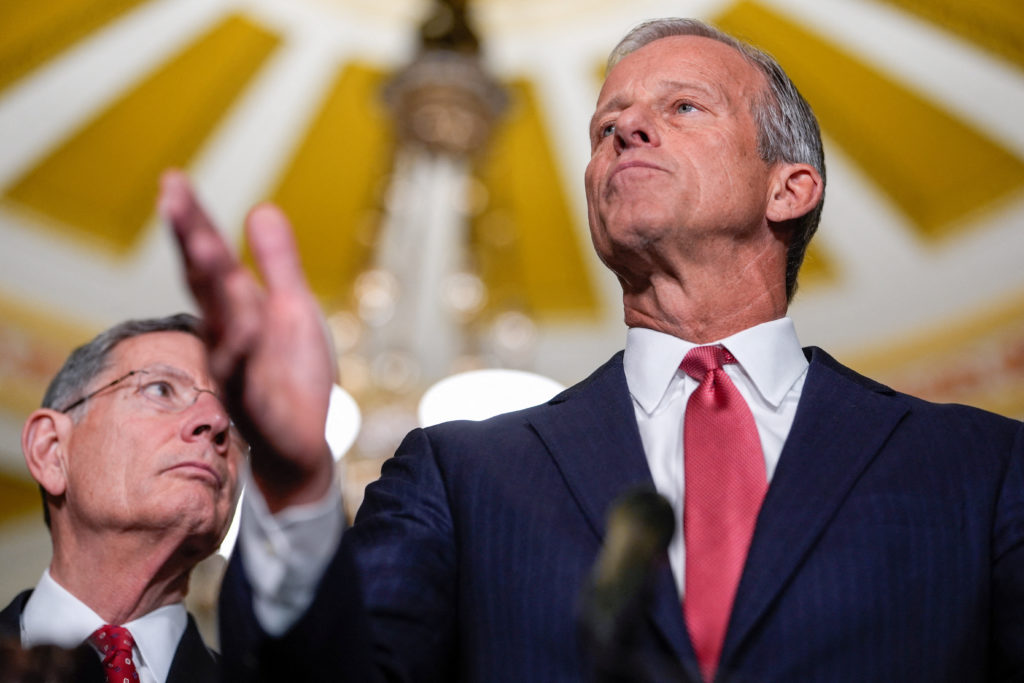
Lawmakers in the Senate are reportedly preparing for crucial votes on Thursday concerning a funding package for the Department of Homeland Security (DHS). According to recent reports, Republican members are actively emphasizing the ongoing conflict involving Iran, characterizing it as a 'war,' and highlighting the heightened potential for retaliatory terrorist actions. This strategic invocation of international tensions and domestic security threats is being used to galvanize support for the vital legislative measure. The impending vote underscores a significant moment for national security policy, as the legislative body grapples with allocating resources to an agency at the forefront of protecting the nation from various threats. The debate is framed by a perceived escalation of global instability, with proponents arguing that robust funding for DHS is an immediate necessity to safeguard the homeland against potential repercussions stemming from overseas conflicts. This legislative push reflects a pressing concern among a segment of policymakers regarding the interconnectedness of foreign policy developments and domestic security imperatives, setting the stage for a contentious but critical parliamentary session.
The Department of Homeland Security, established in the wake of the September 11, 2001, terrorist attacks, serves as a cornerstone of the nation's defense against a wide array of threats, ranging from terrorism and cyberattacks to natural disasters and border security challenges. Its annual funding bill is a critical piece of legislation that dictates the operational capacity and strategic initiatives of numerous federal agencies under its umbrella, including Customs and Border Protection, the Transportation Security Administration, and the Secret Service, among others. Historically, debates surrounding DHS appropriations often become focal points for broader discussions on immigration policy, national security priorities, and the balance between civil liberties and surveillance. The current legislative context, where a 'war in Iran' and the 'prospect of retaliatory terrorist attacks' are being explicitly cited, elevates the stakes considerably. This framing positions the funding bill not merely as routine budgetary allocation but as an urgent response to an evolving geopolitical landscape, aiming to ensure that the department possesses the necessary resources to adapt to and counter emerging dangers effectively.
Reports indicate that Republican legislators are specifically drawing a direct correlation between the perceived conflict in Iran and the potential for domestic security vulnerabilities. By invoking the specter of 'retaliatory terrorist attacks,' these lawmakers are underscoring the necessity for enhanced vigilance and robust defensive capabilities within the United States. While specific details of the 'war in Iran' or the nature of potential attacks are not elaborated upon in the available information, the emphasis is clearly on the heightened threat environment. This argument suggests that the current international situation necessitates a proactive and well-resourced DHS to prevent hostile actors from exploiting any perceived weaknesses. The funding bill, therefore, is being presented as a critical investment in intelligence gathering, border protection, infrastructure security, and emergency response mechanisms. This strategic alignment of a foreign policy concern with a domestic spending bill highlights a deliberate effort to frame the legislative agenda through the lens of immediate national security imperatives, aiming to secure bipartisan consensus on what is typically a complex and often divisive budgetary process.
The political strategy of linking a domestic funding bill to an international conflict and the threat of terrorism carries significant implications for both legislative outcomes and public discourse. Analysts suggest that by framing the DHS funding bill as a direct response to a 'war in Iran' and potential 'retaliatory terrorist attacks,' Republicans aim to create a sense of urgency and national unity, potentially overcoming partisan divides that often plague appropriations processes. This approach can be effective in rallying support, as national security concerns frequently transcend traditional political lines. However, it also raises questions about the broader implications for foreign policy discussions and the potential for such rhetoric to shape public perception of international events. The emphasis on an external threat could influence the scope and nature of DHS's future operations, potentially leading to increased focus on counter-terrorism initiatives and border security measures. The outcome of Thursday's vote will not only determine the financial health of a critical federal agency but also serve as a barometer for how deeply international geopolitical tensions are influencing domestic legislative priorities in the current political climate.
As the Senate prepares for its Thursday votes on the Department of Homeland Security funding bill, the central argument being advanced by Republicans remains the critical link between the ongoing 'war in Iran' and the heightened risk of 'retaliatory terrorist attacks' on U.S. soil. This framing positions the legislation as an indispensable measure for national defense and domestic security in an increasingly volatile global environment. Observers will be closely watching the legislative proceedings to see how this urgent appeal to national security concerns influences the passage of the bill. The debate underscores the complex interplay between international events and domestic policy, highlighting how perceived threats from abroad can directly shape budgetary allocations for vital federal agencies. The decisions made this week will have lasting consequences for the operational capabilities of DHS and the broader national security posture of the United States, setting a precedent for how future international crises might impact domestic legislative agendas.