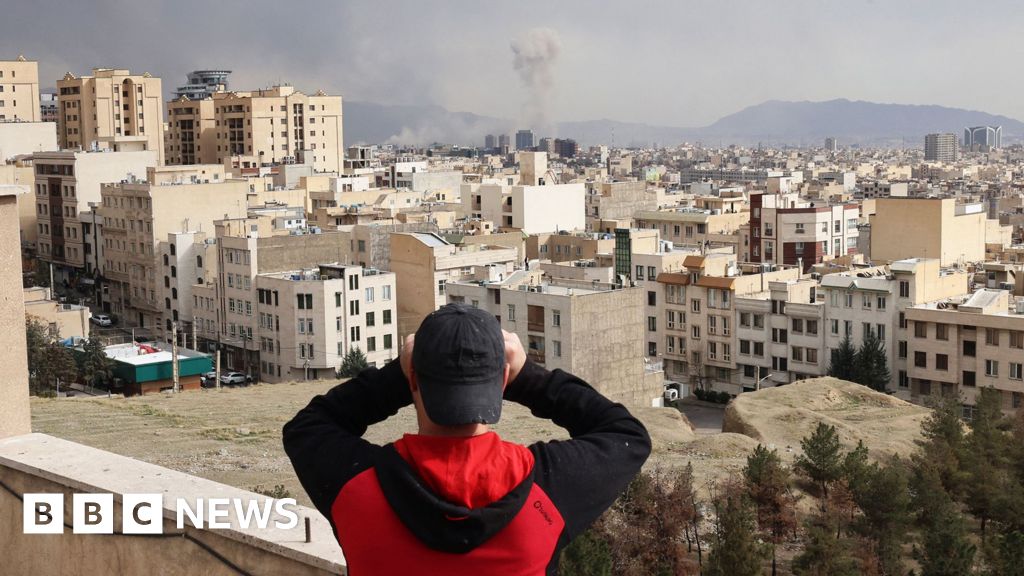
A profound escalation of hostilities has gripped the Middle East following a series of coordinated military strikes launched by the United States and Israel on Saturday, which reportedly resulted in the death of Iran's Supreme Leader, Ayatollah Ali Khamenei. The unprecedented assaults targeted critical Iranian infrastructure, military installations, and senior leadership, igniting a swift and aggressive response from Tehran. Immediately after the strikes, US President Donald Trump issued a public call for the Iranian populace to overthrow their government, further intensifying the volatile situation. In retaliation, Iranian forces have reportedly unleashed a barrage of missiles and drones across a broad swathe of the region, striking targets in Israel, Bahrain, Kuwait, Qatar, the United Arab Emirates, Jordan, Saudi Arabia, and Cyprus, as well as threatening vital shipping lanes through the Strait of Hormuz. This rapid sequence of events has plunged the region into a state of widespread conflict, with major international implications.
The initial wave of assaults on Saturday specifically focused on dismantling Iran's missile capabilities, military strongholds, and key figures within its command structure. Reports indicate that Ayatollah Ali Khamenei, who had governed Iran since 1989, was killed when his compound in Tehran was reportedly leveled during the first phase of these strikes. This development marks a monumental shift in Iranian leadership and regional dynamics. The Israel Defense Forces (IDF) subsequently claimed that dozens of other high-ranking Iranian political figures and commanders from the powerful Islamic Revolution Guard Corps (IRGC) were also among the casualties. These reportedly included Ali Shamkhani, secretary of the Defence Council; Brigadier General Aziz Nasirzadeh, the Defence Minister; and General Mohammad Pakpour, a prominent IRGC commander. In a rapid succession, the IRGC has since announced the appointment of Ahmad Vahidi as its new commander-in-chief, signaling an immediate effort to maintain operational continuity amidst the crisis.
Following the devastating initial strikes and the reported loss of its Supreme Leader, Iran swiftly initiated a broad retaliatory campaign. According to various reports, Iranian forces launched an extensive array of missiles and drones, targeting multiple nations across the Middle East. Specific targets included sites within Israel, the Persian Gulf states of Bahrain, Kuwait, Qatar, and the United Arab Emirates, as well as Jordan, Saudi Arabia, and the island nation of Cyprus. Furthermore, shipping vessels navigating the strategically crucial Strait of Hormuz were also reportedly targeted, underscoring Iran's intent to disrupt global trade and exert pressure on international maritime activity. The conflict further escalated on Monday when Hezbollah, a powerful Iran-backed Shia militia group based in Lebanon, officially joined the hostilities. Officials stated that Hezbollah launched rockets into Israeli territory from its positions in southern Lebanon, opening another significant front in the rapidly expanding regional confrontation.
The rapid progression from targeted strikes to widespread regional conflict underscores a perilous new chapter in Middle Eastern geopolitics. The elimination of a long-standing leader like Ayatollah Ali Khamenei, coupled with the US President's explicit call for regime change, suggests a profound shift in strategic objectives and a significant escalation of tensions. Iran's immediate and geographically extensive retaliation, targeting numerous nations and critical maritime routes, indicates a willingness to project power and destabilize the broader region in response to perceived aggression. The entry of proxy forces like Hezbollah into the fray further complicates the conflict, threatening to draw more actors into a multi-front war and potentially leading to a prolonged period of instability. Experts suggest that the breadth of Iranian targets reflects an attempt to demonstrate capability and deter further attacks, while simultaneously punishing perceived allies of the US and Israel. The immediate future of the region hinges on how international powers and regional actors respond to this rapidly evolving and highly volatile situation.
In summary, the Middle East is grappling with an unprecedented surge in conflict, ignited by US and Israeli strikes that reportedly killed Iran's Supreme Leader, Ayatollah Ali Khamenei. This pivotal event was swiftly followed by a call from President Trump for the Iranian people to overthrow their government, setting the stage for a dramatic escalation. Iran's subsequent widespread missile and drone attacks across multiple regional states and vital shipping lanes, coupled with the entry of Hezbollah into the conflict, have transformed localized tensions into a broader, multi-faceted confrontation. The swift appointment of a new IRGC commander signals Iran's resolve to maintain its operational capacity amidst the crisis. As the region braces for further developments, the international community watches closely to see how this rapidly spreading conflict will impact global stability and what further actions might be taken by the involved parties.