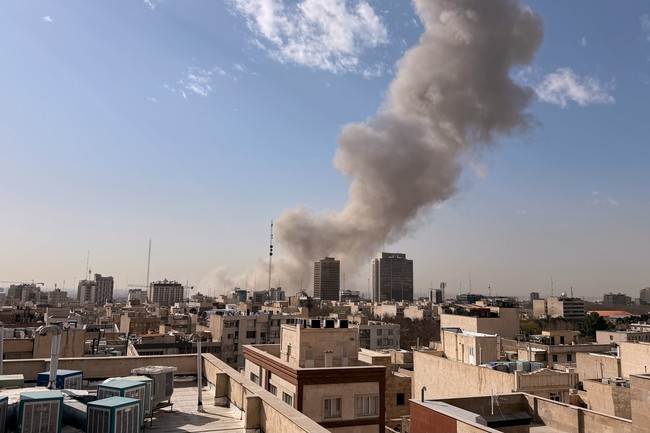
The United States initiated Operation Epic Fury early Saturday, a coordinated military action alongside Israel's Operation Roaring Lion, which culminated in significant leadership changes within Iran. Reports confirm that Iran's Supreme Leader, Ayatollah Ali Khameini, was among several prominent Iranian figures neutralized during the strikes, with his compound reportedly demolished. This decisive intervention by the U.S. and its ally has been attributed to critical intelligence indicating an imminent threat. President Donald Trump addressed the nation regarding the operations on Saturday morning and later provided additional commentary via a Truth Social post, underscoring the gravity and necessity of the actions taken. The swift and targeted nature of the strikes suggests a strategic response to escalating regional tensions, with officials emphasizing the preventative nature of the military engagement.
While regional tensions between the U.S. and Iran have been a persistent concern, the specific timing of Operation Epic Fury has now been clarified by senior administration officials. According to information shared by Salem Radio host and CNN contributor Scott Jennings, high-ranking Trump Administration officials conveyed that the U.S. had obtained credible intelligence detailing Iran's intentions to launch preemptive missile strikes. These planned attacks were reportedly aimed at both U.S. military installations and civilian targets situated within the region. Officials underscored the severe consequences of inaction, asserting that a failure to respond proactively would have resulted in a substantial number of American casualties, compelling the U.S. to authorize the preemptive strikes to mitigate this grave threat.
Further details emerging from the administration reinforce the critical nature of the intelligence that prompted Operation Epic Fury. A senior administration official, as cited by the Times of Israel, indicated that strategic analysis unequivocally demonstrated that a passive stance, waiting for Iran to initiate its planned attacks, would have led to an unacceptable level of casualties and widespread damage. This assessment solidified the decision for a preemptive military response. The operations successfully targeted and eliminated not only Ayatollah Khameini but also numerous other key Iranian leaders, effectively dismantling a significant portion of the country's command structure. The observation, shared by Amy Curtis of Townhall, suggested that the elimination of this perceived threat would allow both the international community and the Iranian populace to experience a greater sense of security.
The implications of Operation Epic Fury are profound, signaling a dramatic shift in the geopolitical landscape of the Middle East. The targeting and elimination of a supreme leader, a figure of immense religious and political authority, represents an unprecedented move that will undoubtedly reshape Iran's internal dynamics and its external relations. Analysts suggest that the U.S. decision to act preemptively, based on intelligence of impending Iranian strikes, underscores a strategic doctrine focused on preventing catastrophic outcomes rather than merely reacting to them. This assertive posture, while aimed at safeguarding U.S. interests and personnel, also carries the potential for significant regional instability or, conversely, a re-evaluation of power balances. The long-term effects on proxy conflicts and the broader security architecture of the Gulf region remain a critical area for observation.
In summary, Operation Epic Fury marks a pivotal moment in U.S.-Iran relations, driven by credible intelligence indicating Iran's preparation for preemptive missile strikes against U.S. military and civilian targets. The swift, coordinated actions by the U.S. and Israel, resulting in the death of Ayatollah Ali Khameini and other Iranian leaders, were presented by officials as a necessary measure to avert mass American casualties. The coming days and weeks will be crucial in observing the internal response within Iran, the reactions from regional and international actors, and the potential for a recalibration of geopolitical strategies across the Middle East. Observers will be closely watching for any signs of retaliation or, conversely, a shift towards de-escalation in the wake of these significant events.