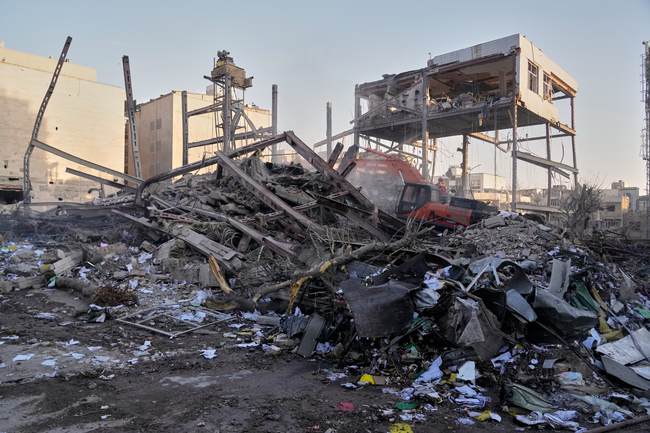
In a significant escalation of their strategy concerning Iran, the United States and Israel are now reportedly focusing their military actions on the Islamic Republic's internal security infrastructure. According to a recent report by The Wall Street Journal, these operations specifically target the forces responsible for suppressing domestic dissent, a move intended to pave the way for a new popular uprising capable of challenging the current government. This strategic shift follows a period of heightened tensions and comes approximately two months after a critical declaration by former President Donald Trump, which set a 'red line' for intervention. Israeli military officials have indicated their specific intent to strike command centers belonging to the Basij paramilitary force and the Islamic Revolutionary Guard Corps (IRGC), both of which were implicated in the severe crackdown on protesters earlier this year. The overarching goal, as sources suggest, is to dismantle the regime's capacity for internal repression, thereby creating an environment conducive to widespread public revolt in Tehran and other major Iranian cities, potentially leading to the overthrow of the clerical establishment.
This intensified approach by Washington and Jerusalem represents a notable evolution in their long-standing efforts to counter the Iranian regime. The 'promised escalation' mentioned in various reports now appears to be materializing through direct engagement with the very institutions that uphold the government's authority domestically. The Basij and the IRGC have historically served as the primary instruments of state control, ruthlessly quashing any significant opposition movements. Their involvement in the January massacres of anti-government protesters was particularly brutal, with reports indicating that these forces opened fire on unarmed crowds, resulting in thousands of fatalities. This event stands as one of the deadliest political crackdowns observed globally in recent decades, drawing international condemnation and arguably prompting the current strategic re-evaluation by the US and Israel. By targeting these internal security apparatuses, the allied nations aim to systematically weaken the regime's ability to maintain order through force, thereby empowering the populace to challenge its rule more effectively.
The specifics of the reported operations highlight a concerted effort to dismantle the Iranian police state from within. Israeli airstrikes, according to military statements, have been directed at individuals and facilities crucial to Iran's internal security, ranging from rank-and-file members of the Basij paramilitary force to high-ranking intelligence officials. This precise targeting seeks to incapacitate the personnel and infrastructure vital for the regime's repressive activities. Concurrently, the United States has also engaged in strikes against key domestic-security entities. Notably, the Tehran headquarters of the Islamic Revolutionary Guard Corps, a powerful organization central to both defending and perpetuating the current government, has been among the targets. These coordinated actions underscore a clear intent to disrupt the operational capabilities of the Revolutionary Guard and Basij militants, who were identified as the principal perpetrators of the bloody suppression against anti-government demonstrations in January, where they were responsible for firing upon crowds and causing widespread casualties.
Analysts suggest that this strategic shift carries significant implications for the future stability of the region and the trajectory of the Iranian regime. By directly targeting the instruments of internal repression, the US and Israel are taking a calculated risk, betting on the potential for a popular uprising to succeed once the regime's coercive power is diminished. This approach moves beyond traditional military strikes against external threats or nuclear facilities, focusing instead on the very foundation of the government's domestic control. While such a strategy could theoretically empower the Iranian people to rise, it also introduces considerable uncertainty and potential for heightened instability. Experts caution that while weakening the regime's security apparatus might create an opening, the success of a popular revolt is far from guaranteed and could lead to unforeseen consequences, including a humanitarian crisis or a broader regional conflict if the situation spirals out of control. The effectiveness of this strategy hinges on the Iranian populace's willingness and ability to mobilize in the face of a still-present, albeit weakened, security state.
In summary, the United States and Israel have reportedly embarked on a new phase of their engagement with Iran, characterized by direct military action against the regime's internal security forces, including the Basij and the Islamic Revolutionary Guard Corps. This strategy, as reported by The Wall Street Journal, is designed to undermine the government's capacity for suppressing dissent and to foster an environment conducive to a popular uprising aimed at regime change, particularly in the wake of the brutal crackdowns witnessed in January. The coming months will be critical in observing the impact of these targeted operations, the response from the Iranian leadership, and crucially, the potential for renewed public mobilization. The success of this high-stakes endeavor will depend on a complex interplay of internal dynamics within Iran and the continued resolve of external actors, with significant implications for regional geopolitics.