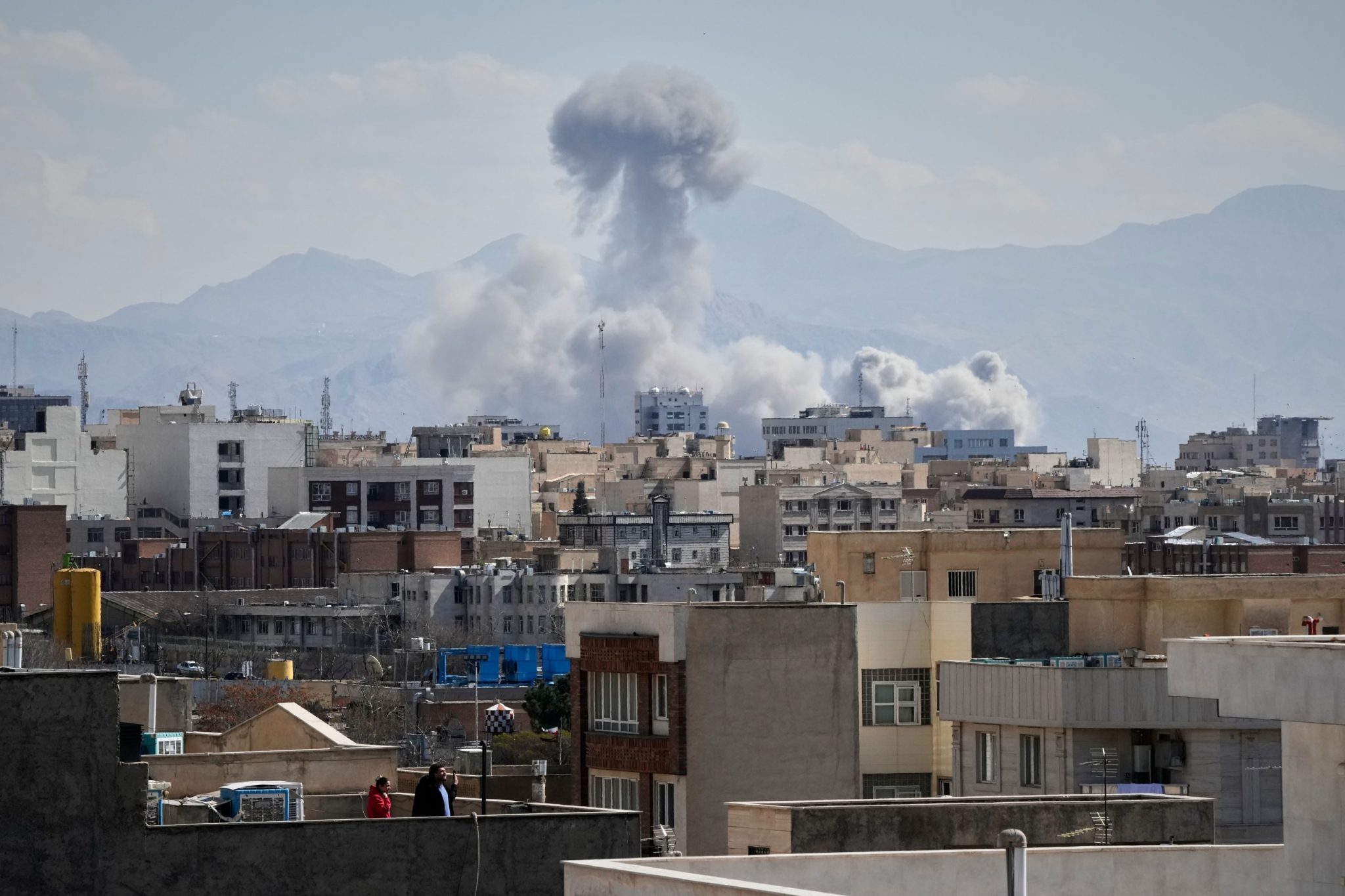
The United States military has confirmed the deaths of three American service members and serious injuries to five others amidst ongoing U.S. operations targeting Iran. This tragic development, announced by U.S. Central Command (CENTCOM) on Sunday, marks the first reported American fatalities in a major offensive that has seen significant retaliation from the Islamic Republic. Several additional personnel also sustained minor shrapnel injuries and concussions, though officials anticipate their return to duty. The incident underscores the escalating tensions in the Middle East, a situation President Donald Trump had previously acknowledged could lead to American casualties. In an address released Saturday, the Republican president had cautioned that "the lives of courageous American heroes may be lost, and we may have casualties," framing the operation as a long-term strategic move. The precise timing and location of these casualties have not yet been disclosed by military authorities, who described the situation as dynamic and fluid.
These casualties emerge against a backdrop of intense military confrontation following a series of U.S.-Israeli strikes that reportedly eliminated Iran's Supreme Leader, Ayatollah Ali Khamenei, and other high-ranking Iranian officials. In the wake of these initial strikes, Iran launched counterattacks, with reports indicating that U.S. bases in Bahrain and the United Arab Emirates have been targeted. The paramilitary Revolutionary Guard of Iran has subsequently issued stern warnings, threatening to unleash its "most intense offensive operation" ever against both Israeli and American military installations across the region. Prior to the recent escalation, President Trump had overseen a substantial build-up of American military assets in the Middle East, establishing the largest U.S. military presence in decades. This significant reinforcement included the deployment of the USS Abraham Lincoln aircraft carrier and three accompanying guided-missile destroyers to the region at the close of January, further bolstering the naval presence. Additionally, the USS Gerald R. Ford, recognized as the world's largest aircraft carrier, along with its four escorting destroyers, was dispatched from the Caribbean Sea to the area, signaling a robust and prepared American posture.
U.S. Central Command, responsible for military operations in the Middle East, utilized its platform on X to disseminate the news of the fatalities and injuries but refrained from specifying the exact circumstances or geographical coordinates of the incident. Officials stated that the identities of the deceased service members would be withheld for a period of 24 hours following the notification of their next of kin, adhering to standard military protocol. Beyond the three confirmed deaths and five serious injuries, a number of other service members experienced less severe wounds, including shrapnel impacts and concussions, with expectations that they would soon be fit to resume their duties. In a separate development, the U.S. military explicitly refuted claims made by Iran suggesting that the USS Abraham Lincoln aircraft carrier had been successfully struck by ballistic missiles. Through a statement also posted on X, military sources categorically denied these assertions, indicating that "the missiles launched didn’t even come close" to hitting the vessel, thereby dismissing the Iranian claim as unfounded. President Trump's earlier televised remarks had prepared the nation for such potential outcomes, acknowledging the inherent risks of military engagement.
The confirmation of American casualties marks a critical turning point in the ongoing confrontation, potentially signaling a new phase of direct and costly engagement. Expert observers suggest that these fatalities could significantly heighten domestic pressure on the U.S. administration, influencing future strategic decisions and the scope of military operations. The incident also underscores the effectiveness and resolve of Iran's retaliatory capabilities, despite U.S. denials regarding specific claims like the USS Abraham Lincoln strike. The Revolutionary Guard's explicit threat of an "most intense offensive operation" against U.S. and Israeli targets now carries even greater weight, raising concerns about a potential cycle of escalation that could destabilize the entire region. The substantial U.S. military buildup, including multiple carrier strike groups, while intended as a deterrent, has now become a direct participant in a conflict that has moved beyond proxy engagements. The challenge for policymakers will be to manage the immediate fallout from these casualties while navigating the broader strategic imperative to prevent a wider regional war, balancing deterrence with de-escalation in an increasingly volatile environment.
As the U.S. military grapples with its first fatalities in the current offensive against Iran, the immediate focus remains on supporting the affected service members and their families, with identities expected to be released shortly. The tragic loss of life and serious injuries sustained by American personnel underscore the perilous nature of the escalating conflict in the Middle East, a situation that President Trump had forewarned. With Iran's Revolutionary Guard threatening further intense operations and U.S. forces already having suffered direct hits, the international community watches closely for any signs of de-escalation or, conversely, a deepening of hostilities. The coming days will likely reveal more details about the incident and could dictate the immediate trajectory of U.S.-Iran relations, demanding careful diplomatic and military responses to prevent a broader regional conflagration. The robust American military presence, while formidable, is now directly engaged in a conflict with tangible human costs.