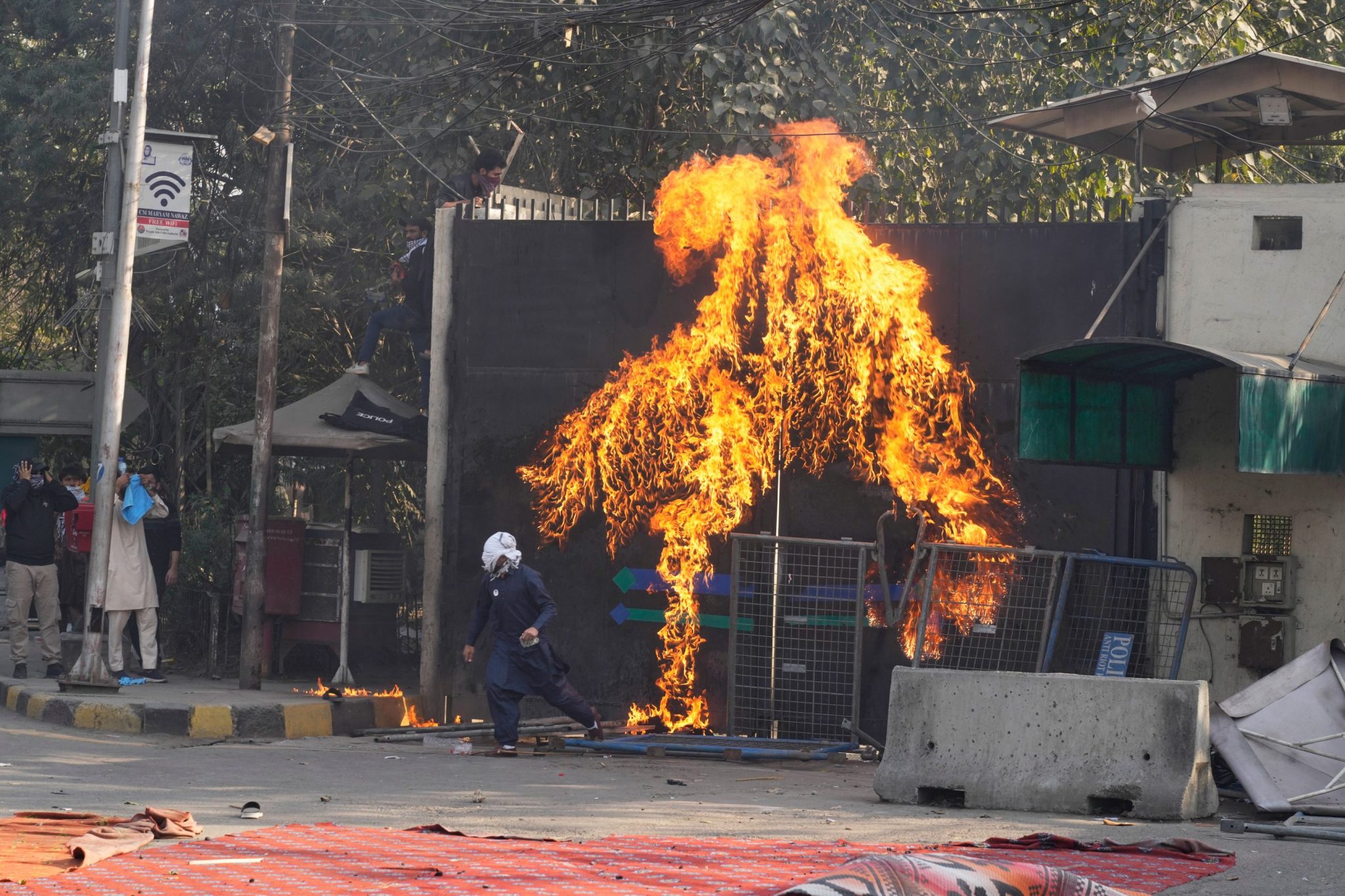
Deadly confrontations erupted across Pakistan on Sunday, resulting in at least 22 fatalities and over 120 injuries, as demonstrators expressing solidarity with the Iranian government clashed violently with security forces. The unrest primarily unfolded in the southern port city of Karachi, where protesters reportedly attempted to breach the U.S. Consulate, and in the country's northern territories, where United Nations and governmental facilities came under attack. These widespread disturbances, as confirmed by various authorities, were a direct response to recent military actions attributed to the United States and Israel against Iran, which reportedly led to the death of Iran's Supreme Leader, Ayatollah Ali Khamenei. The intensity of the clashes underscores the profound regional impact of the escalating geopolitical tensions, with Pakistani officials and medical personnel working to manage the aftermath of the widespread violence and provide care for the numerous wounded. The incident highlights the volatile nature of public sentiment in the region following significant international events, prompting immediate security responses and calls for calm from various stakeholders.
The catalyst for Sunday's widespread violence was the reported demise of Ayatollah Ali Khamenei, Iran's revered Supreme Leader, following an alleged assault by U.S. and Israeli forces. Khamenei's death represents a monumental event for Iran, given his pivotal role as the nation's highest authority since 1989, wielding ultimate power over its foreign and domestic policies, military, and nuclear program. His passing, particularly under such contentious circumstances, has ignited fervent anger among his supporters globally, including within Pakistan, a neighboring Muslim-majority nation with historical and cultural ties to Iran. The targeting of U.S. diplomatic missions and international organizations like the United Nations in Pakistan reflects a deep-seated anti-Western sentiment among segments of the population, fueled by perceptions of foreign aggression against a prominent Islamic leader. This incident not only underscores the immediate repercussions of the alleged attack on Iran but also highlights the complex geopolitical landscape of the region, where internal stability can be profoundly affected by external conflicts and long-standing international rivalries.
Detailed reports from the affected areas paint a grim picture of the day's events. In Karachi, police and medical officials at a major city hospital indicated that approximately 50 individuals sustained injuries during the clashes, with several admitted in critical condition. A police surgeon at the city's primary government medical facility, Summaiya Syed Tariq, initially confirmed the arrival of six deceased individuals and numerous injured, later updating the death toll to ten after four critically wounded patients succumbed to their injuries. Meanwhile, the northern Gilgit-Baltistan region experienced even more severe violence, with local police official Asghar Ali confirming that twelve people were killed and over eighty wounded. Here, thousands of demonstrators, enraged by the U.S. and Israeli actions, targeted the offices of the U.N. Military Observer Group and the U.N. Development Programme (UNDP). A government spokesperson, Shabir Mir, reassured that all staff members of these organizations were safe, despite protesters repeatedly engaging security forces, damaging a local charity's premises, and setting police offices ablaze. Mir further stated that authorities had deployed military troops, successfully bringing the volatile situation under control. Amidst the chaos, President Asif Ali Zardari of Pakistan conveyed his profound sorrow over Khamenei's passing, expressing condolences to Iran and affirming Pakistan's solidarity with the Iranian nation in its moment of grief, according to a statement from his office. The U.S. Embassy in Pakistan, via a post on social media, indicated it was actively monitoring reports of ongoing demonstrations near its Consulates General in Karachi and Lahore.
The violent protests in Pakistan carry significant implications for regional stability and international relations. Analysts suggest that the swift and deadly reaction among Iranian sympathizers in Pakistan underscores the deep emotional and ideological connections many in the Muslim world feel towards Iran's leadership, particularly in the face of perceived external aggression. This incident could further complicate Pakistan's delicate diplomatic balancing act between its long-standing alliance with the United States and its relationship with neighboring Iran, a key regional player. The targeting of U.N. facilities, alongside U.S. diplomatic missions, signals a broader rejection of international institutions by some protest factions, potentially posing challenges for humanitarian and development efforts in the region. Observers believe that the events highlight the potential for the U.S.-Iran conflict to destabilize other nations, drawing them into a wider regional confrontation. Furthermore, the need for Pakistani authorities to deploy military forces to quell the unrest points to the severe internal security challenges that can arise when external geopolitical tensions ignite strong public sentiment, testing the government's capacity to maintain law and order while navigating complex international pressures.
In the wake of Sunday's deadly clashes, Pakistan faces the immediate task of managing the aftermath of widespread violence that claimed at least 22 lives and left over 120 injured. The protests, fueled by the reported death of Iran's Supreme Leader Ayatollah Ali Khamenei following alleged U.S. and Israeli attacks, saw demonstrators target critical infrastructure, including the U.S. Consulate and U.N. offices. While authorities in Gilgit-Baltistan have stated the situation is now under control with military deployment, the underlying tensions remain palpable. The events underscore the fragility of regional stability and the potential for international conflicts to ignite significant unrest in neighboring countries. Moving forward, the international community will be closely watching for any further escalation of U.S.-Iran tensions and how Pakistan navigates its complex foreign policy objectives amidst strong domestic sentiments. The long-term implications for Pakistan's internal security and its relationships with both the U.S. and Iran will undoubtedly be a focal point in the coming days and weeks.