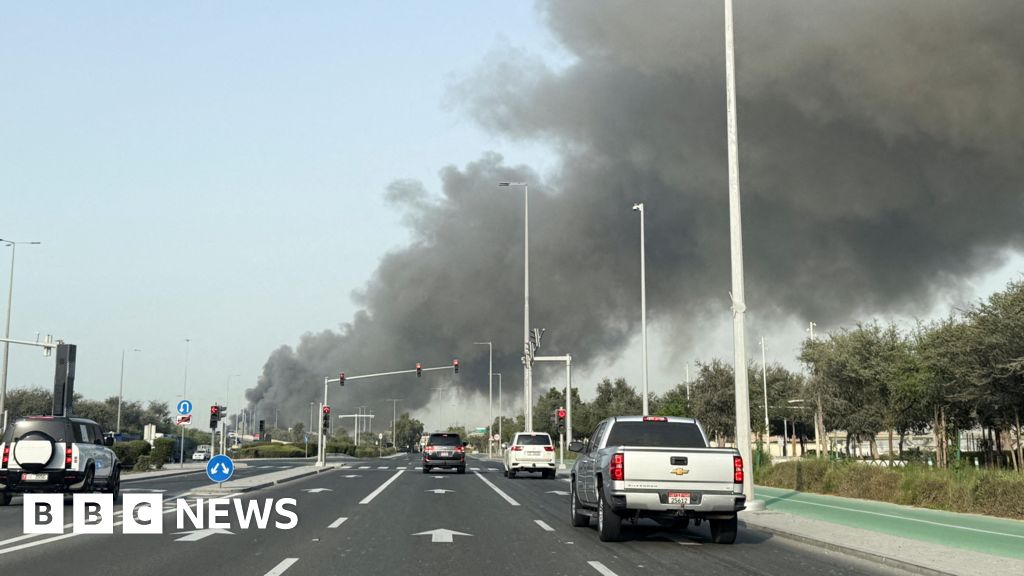
The United Arab Emirates and Bahrain, key American allies in the Arabian Gulf, are currently experiencing a significant escalation in hostilities, with reports indicating a surge in missile and drone attacks originating from Iran. This recent wave of assaults, which commenced on Saturday morning, marks a concerning shift in targeting strategy, moving beyond traditional military installations to encompass civilian infrastructure. According to official statements from the UAE defense ministry, as of Sunday afternoon, their air defense systems had successfully intercepted or "dealt with" an unprecedented volume of incoming threats: 165 ballistic missiles, two cruise missiles, and 541 Iranian drones. This aggressive posture has seen residential areas, luxury accommodations, major shopping centers, and crucial transportation hubs, such as international airports, increasingly become targets, raising alarms across the region about the safety of residents and the stability of critical services. The attacks underscore a new phase in regional tensions, compelling Gulf nations to bolster their defensive capabilities against a persistent and evolving threat.
The current conflict represents a dramatic intensification of long-standing regional tensions. Initially, the focus of Iranian-backed aggression appeared to be primarily directed at military assets, including the strategically vital US Navy's 5th Fleet headquarters situated in Bahrain. However, the events unfolding since Saturday morning suggest a deliberate expansion of Iran's operational scope. The sophisticated urban landscapes of the Gulf states, characterized by their modern high-rise buildings, luxurious hotels, and state-of-the-art airport terminals, were developed without the anticipation of becoming direct targets for ballistic missiles and unmanned aerial vehicles. This lack of inherent defensive design for civilian areas now presents a critical vulnerability. Historically, Iran has communicated its intentions regarding its military actions in advance, yet the current scale and nature of these attacks, particularly against non-military sites, signify a profound shift in the dynamics of regional conflict, placing immense pressure on the stability and security of these US-aligned nations.
Eyewitness accounts and official reports paint a vivid picture of the ongoing aerial bombardment. In the skies above Abu Dhabi, residents have observed white contrails, starkly different from those left by commercial aircraft, indicating the trajectory of incoming ballistic missiles. Similarly, in Bahrain, a local source described a harrowing Sunday morning, reporting a sleepless night punctuated by "huge bangs and wailing sirens," followed by approximately "20 booms and bangs" and at least "two confirmed hits" in the vicinity of the airport. While some damage to civilian structures can be attributed to falling debris from intercepted projectiles, the sheer number of direct attacks on airports in both Bahrain and the UAE suggests a deliberate targeting strategy rather than mere collateral damage. Iran's Foreign Minister, Abbas Aragchi, in an interview with Al Jazeera, publicly refuted claims of targeting neighboring Gulf states, asserting instead that his country's actions were aimed solely at the "presence of the US in these countries." He urged affected neighbors to address their grievances to the "decision-makers of this war," effectively deflecting responsibility for civilian impact.
The strategic implications of Iran's apparent shift towards targeting civilian infrastructure are profound, signaling a dangerous escalation that could further destabilize an already volatile region. Experts suggest this tactic aims to exert maximum pressure on the US and its Gulf allies, demonstrating Iran's capability to inflict economic and social disruption beyond military engagements. The sporadic nature of hits on high-value civilian targets, coupled with the sheer volume of intercepted threats reported by the UAE, indicates that while air defense systems are active, "gaps" are emerging in the protective umbrella over these urban centers. This raises critical questions about the long-term sustainability and effectiveness of current defensive measures against a persistent and multi-pronged aerial assault. Such attacks not only pose an immediate physical threat but also carry significant psychological and economic consequences, potentially deterring investment, tourism, and daily life in these thriving hubs. The move could also be interpreted as a calculated attempt to fracture the alliances between the US and its regional partners by demonstrating the costs of hosting American military assets.
In summary, the Arabian Gulf is currently witnessing an unprecedented phase of conflict, with US allies like the UAE and Bahrain bearing the brunt of intensified Iranian missile and drone attacks. The shift from purely military targets to civilian infrastructure, including airports and residential areas, represents a significant and concerning escalation. While the UAE defense ministry has reported successfully intercepting a substantial number of projectiles, the sustained nature of these assaults and the emerging vulnerabilities in air defenses highlight the persistent threat. Iran, through its Foreign Minister, maintains that its actions are directed at American military presence rather than its neighbors, a claim that does little to assuage fears among the affected populations. As the region grapples with these evolving dynamics, the international community will be closely watching for diplomatic responses, potential enhancements to defensive capabilities, and any further developments that could shape the future stability of the Middle East.