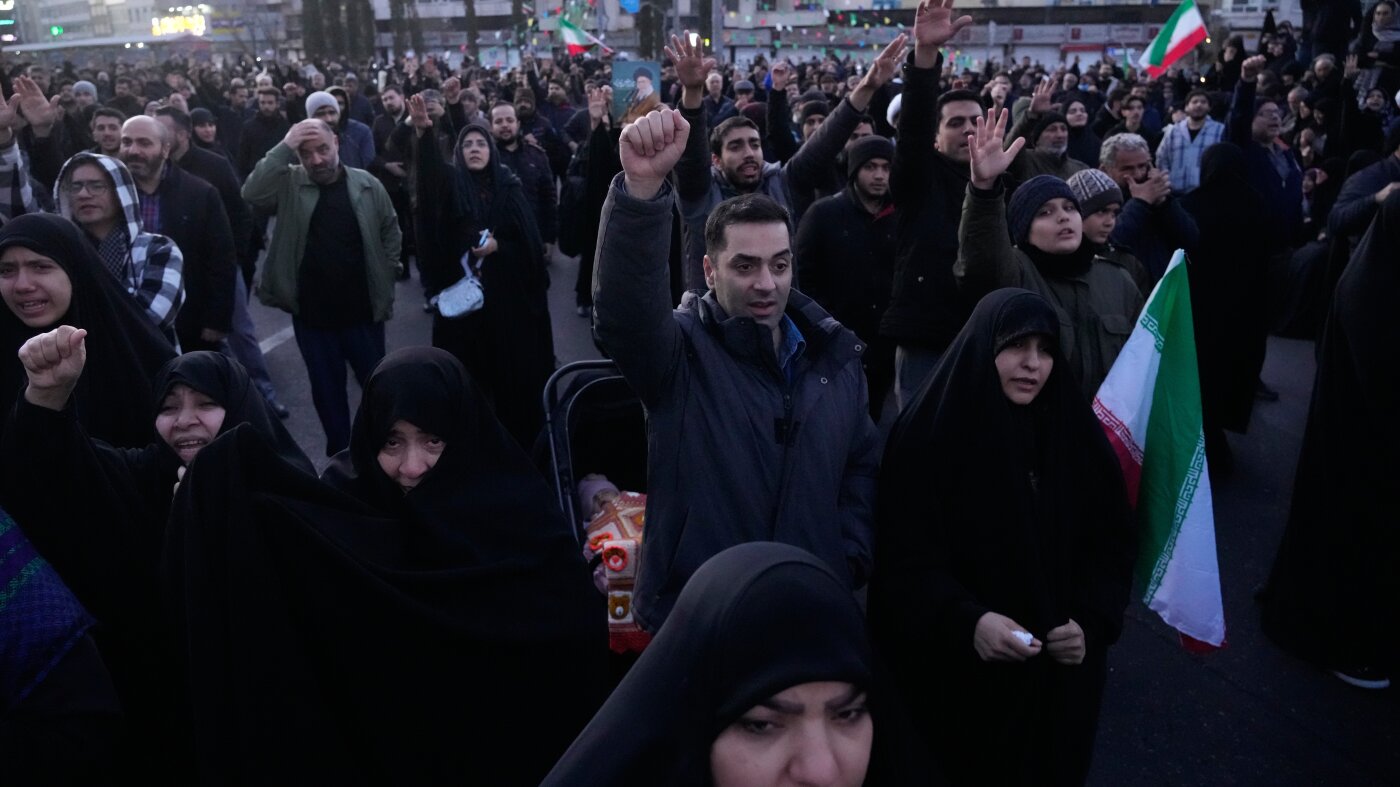
In a dramatic escalation of Middle East tensions, Iran reportedly launched missile attacks against targets in Israel and several Gulf Arab states on Sunday. This aggressive action came as a direct and swift retaliation for the killing of Supreme Leader Ayatollah Ali Khamenei, who was reportedly assassinated in a joint United States-Israeli airstrike on Saturday. The 86-year-old spiritual and political leader of Iran was reportedly targeted at his office in Tehran, an event that has plunged the Islamic Republic into an unprecedented crisis and significantly heightened the risk of widespread regional instability. Following Iran's immediate vows of
The death of Ayatollah Ali Khamenei marks a pivotal and potentially transformative moment for Iran and the broader Middle East. As the second Supreme Leader of the Islamic Republic, Khamenei's passing, reportedly at the age of 86, leaves a profound power vacuum at the apex of Iran's political and religious establishment. His assassination in a coordinated American-Israeli operation, described as a strike on his Tehran office, is an unprecedented act against Iran's highest authority. This event immediately casts a shadow over the future stability and leadership succession within the Islamic Republic, raising critical questions about its internal cohesion and external policies. The swift and forceful missile response from Iran underscores the gravity of the situation, signaling a direct challenge to the US-Israeli alliance and indicating a readiness for immediate confrontation, fundamentally altering the regional security landscape.
Iran's official response to the killing of its Supreme Leader was both unequivocal and defiant. According to reports, the Iranian Cabinet declared the assassination an "enormous crime" that would "never go unanswered," signaling an intent for severe retribution. The paramilitary Revolutionary Guard further intensified the rhetoric, threatening to initiate its "most intense offensive operation" ever, specifically targeting Israeli and American military installations across the region. In a televised address on Sunday, Iran's parliamentary speaker, Mohammad Bagher Qalibaf, issued a stark warning, stating, "You have crossed our red line and must pay the price," and promised, "We will deliver such devastating blows that you yourselves will be driven to beg." President Trump, responding via social media, acknowledged Iran's threats to "hit very hard today, harder than they have ever hit before," but countered with a severe caution: "THEY BETTER NOT DO THAT, HOWEVER, BECAUSE IF THEY DO, WE WILL HIT THEM WITH A FORCE THAT HAS NEVER BEEN SEEN BEFORE!" Beyond the Supreme Leader, other high-ranking Iranian officials were reportedly targeted in separate, coordinated airstrikes. An attack on a meeting of the country's defense council resulted in the deaths of Iran's army chief of staff, General Abdol Rahim Mousavi, and Defense Minister General Aziz Nasirzadeh. Also killed in that strike were Major General Mohammad Pakpour, who had recently assumed command of the Revolutionary Guard after his predecessor was killed by Israel in June, and Ali Shamkhani, a prominent security adviser to Khamenei.
The coordinated strikes, particularly the assassination of Supreme Leader Ayatollah Ali Khamenei and other senior military and security figures, represent an extraordinary escalation in the long-standing, often covert, conflict between Iran, the United States, and Israel. This operation, reportedly part of a broader initiative identified as "Operation Epic Fury," appears strategically designed to decapitate Iran's leadership and military command structure, potentially aiming to cripple its ability to project power and influence. The immediate and forceful Iranian missile response confirms the extremely high stakes of this confrontation, underscoring a direct challenge to the perceived US-Israeli dominance in the region. Analysts suggest that the simultaneous loss of such critical figures could severely disrupt Iran's strategic planning and operational capabilities, at least in the short term. However, this aggressive action also carries significant risks, potentially galvanizing internal support for the Iranian regime and provoking further, more severe retaliatory actions, which could spiral into a wider, devastating regional conflict. President Trump's strong rhetoric, including his statement that this is "the single greatest chance for the Iranian people to take back their Country," indicates a US objective that may extend beyond mere deterrence, possibly aiming for significant internal destabilization or even regime change within Iran. The precise targeting of a defense council meeting further suggests high-level intelligence gathering and a deliberate effort to cripple Iran's immediate response capacity, marking a new and dangerous phase in the conflict.
The recent events, characterized by Iran's retaliatory missile strikes following the targeted killing of Supreme Leader Ayatollah Ali Khamenei and other key officials, have undeniably plunged the Middle East into an unprecedented state of heightened alert. This direct and overt confrontation between Iran and the US-Israel alliance signals a dangerous new chapter in regional geopolitics, with profound implications for global stability. With both sides issuing severe threats of further escalation and promising devastating consequences, the international community is now closely monitoring the situation for any signs of de-escalation or, conversely, a full-blown military conflict. The long-term implications for Iran's leadership, its internal stability, and the broader balance of power in the Middle East remain profoundly uncertain, with the immediate future hinging on the next moves from Tehran, Washington, and Jerusalem as the region teeters on the brink.