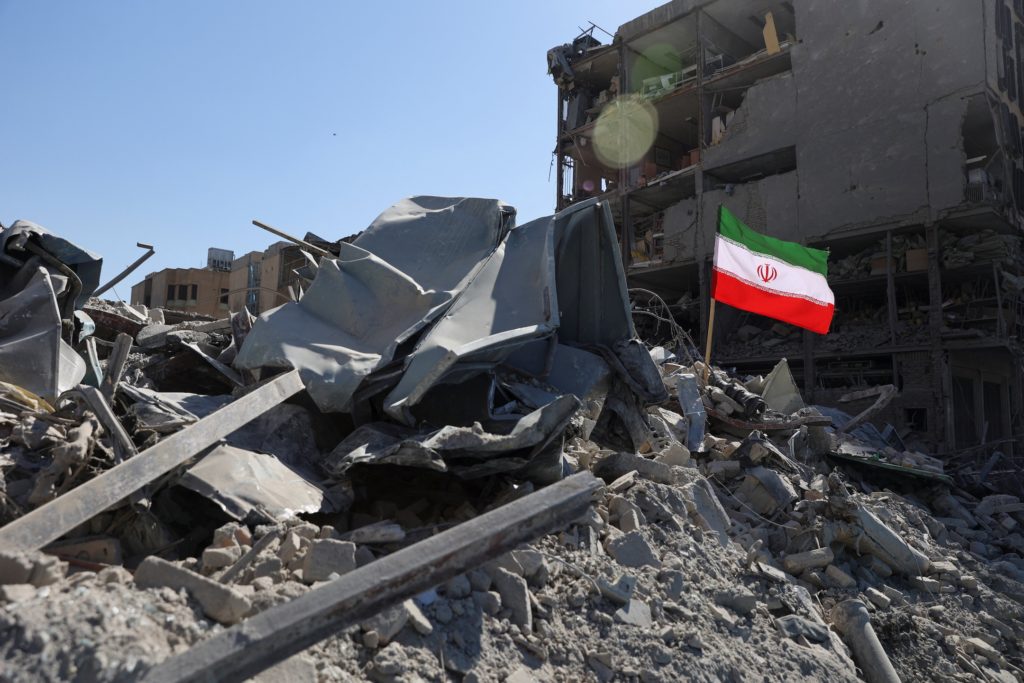
The volatile security landscape of the Middle East has entered a new, perilous phase as Iran reportedly escalated its retaliatory actions, striking American diplomatic facilities across the Gulf region overnight. This significant development comes as the Islamic Republic widens its targeting scope to include various sites throughout the Arab states of the Gulf and against Israel, according to reports from Nick Schifrin. The aggressive expansion of Iranian operations is understood to be a direct response to what officials describe as ongoing and 'punishing attacks' by U.S. and Israeli forces deep within Iranian territory. The immediate aftermath of these intensified hostilities has seen a dramatic disruption to regional stability, with nearly all civilian airspace across the affected areas now closed, signaling a severe and rapidly deteriorating security environment that poses significant risks to international travel and regional commerce. This direct targeting of American diplomatic interests marks a critical turning point, moving beyond proxy engagements to a more overt confrontation with potentially far-reaching consequences for global security and energy markets.
This latest surge in hostilities is rooted in a deeply entrenched history of geopolitical friction between Iran, the United States, and Israel, characterized by decades of strategic competition, proxy conflicts, and covert operations. The 'punishing attacks' reportedly conducted by U.S. and Israeli jets inside Iran represent a significant escalation of a long-simmering shadow war, pushing the boundaries of conventional deterrence. Iran's decision to strike American diplomatic targets in the Gulf, coupled with its broadened targeting strategy against Israel and other Gulf Arab states, indicates a calculated shift in its response doctrine. Historically, Iran has often relied on regional proxies to project power and respond to perceived aggressions; however, these recent actions suggest a move towards more direct and overt engagement. This shift underscores a heightened willingness by Tehran to directly challenge its adversaries, raising the specter of a broader regional conflagration that could draw in multiple international actors and destabilize an already fragile global economy reliant on Middle Eastern oil supplies.
Reports indicate that the overnight strikes on American diplomatic targets in the Gulf represent a profound challenge to international norms and diplomatic immunity, potentially signaling a dangerous precedent in regional conflicts. While specific details regarding the nature and extent of the damage to these facilities remain limited, the mere act of targeting such sites carries immense symbolic and strategic weight, designed to send a clear message of Tehran's resolve. Concurrently, the widespread closure of civilian airspace throughout the region has immediate and tangible consequences, disrupting thousands of flights, stranding travelers, and severely impacting air cargo operations crucial for global supply chains. This measure reflects an acute assessment of risk by aviation authorities, suggesting a credible and pervasive threat to air traffic, likely from missile activity or aerial engagements. The expansion of Iranian targets across the Gulf Arab states and against Israel, as reported, suggests a multi-front retaliatory strategy, aiming to exert pressure on multiple adversaries simultaneously and demonstrate Iran's capacity to project power beyond its borders in response to perceived threats.
Analysts and regional observers are closely scrutinizing these developments, warning that the direct targeting of U.S. diplomatic assets and the expansion of Iranian strikes represent a dangerous escalation that significantly increases the probability of a wider, more direct military confrontation. Experts suggest that Iran's actions are likely intended to deter further U.S. and Israeli attacks on its territory by demonstrating a credible capacity for retaliation against high-value targets. However, this strategy carries inherent risks, potentially provoking a more robust response from Washington and Jerusalem, who may view these strikes as a direct challenge to their regional interests and security. The closure of airspace, while a necessary safety measure, also serves as a stark visual indicator of the region's descent into a heightened state of alert, impacting not only immediate travel but also long-term investor confidence and economic stability. The international community now faces the urgent task of de-escalation, though pathways to dialogue appear increasingly narrow amidst the escalating military exchanges.
In summary, the Middle East is currently grappling with a significant escalation of hostilities, marked by Iran's direct strikes on American diplomatic targets in the Gulf and an expanded targeting strategy against Israel and other regional states. These actions are presented as a direct response to ongoing U.S. and Israeli military operations within Iran, pushing the long-standing regional tensions into a new, more dangerous phase of overt confrontation. The immediate impact, including the widespread closure of civilian airspace, underscores the severity of the situation and the palpable risk of further military engagement. As the region braces for potential counter-responses, the international community remains on high alert, watching for any signs of de-escalation or, conversely, a further deepening of the conflict that could have profound global repercussions. The coming days will be critical in determining whether diplomatic efforts can avert a full-scale regional war or if the cycle of retaliation will continue unabated.