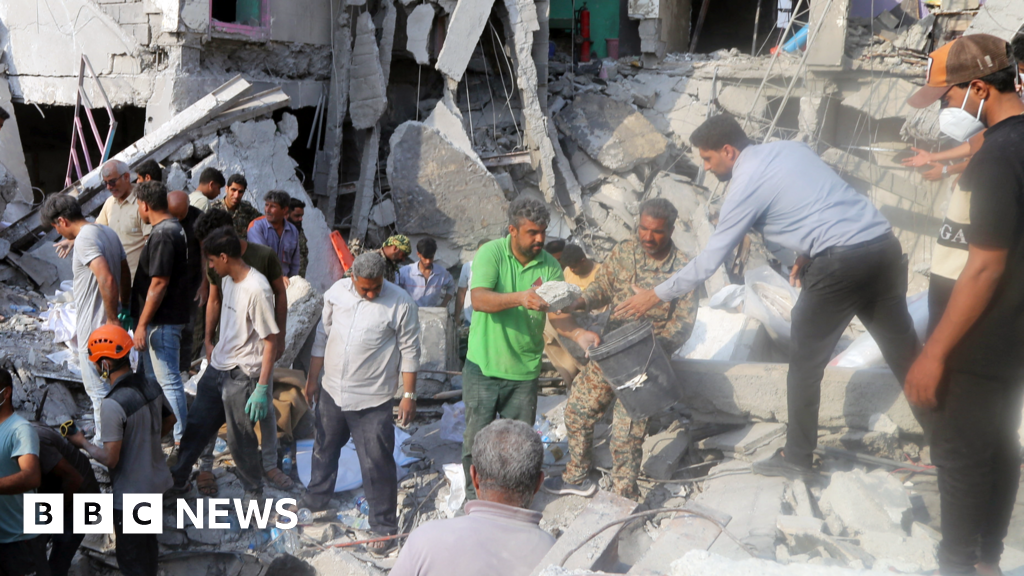
A devastating incident in southern Iran has reportedly claimed the lives of at least 153 individuals, including numerous children, following a strike on a school. Iranian officials have attributed responsibility for the attack to both the United States and Israel. The US military's Central Command (Centcom) has acknowledged the gravity of these reports and stated it is actively investigating the claims. Conversely, Israel's military has indicated it possesses no information regarding any operations by the Israel Defense Forces (IDF) in the vicinity where the strike occurred. The affected educational facility, identified as a girls' school, is situated in Minab, a location in close proximity to a base belonging to the Islamic Revolutionary Guard Corps (IRGC), an area that has reportedly been targeted in previous military actions. This tragic event unfolds amidst a broader context of escalating tensions and a series of recent strikes across Iran, contributing to a significant humanitarian toll.
The reported strike on the school in Minab adds a grim chapter to an already volatile regional landscape. According to the Iranian Red Crescent, the nation has experienced a surge in casualties, with at least 201 fatalities and 747 injuries documented from various air strikes since the preceding Saturday. The location of the girls' school, near an IRGC base, is particularly significant, as such military installations have historically been points of contention and targets in regional conflicts. Given Iran's standard six-day work week, which extends from Saturday through Thursday, with Friday being the sole official day of rest, it is highly probable that the school was occupied by students and staff when the strike reportedly took place. This detail underscores the potential for widespread civilian casualties, amplifying the humanitarian concerns surrounding the incident and drawing international attention to the protection of non-combatants in conflict zones.
In the immediate aftermath of the incident, Iranian President Masoud Pezeshkian strongly condemned the strike, characterizing it as a "barbaric act" and denouncing it as "another black page in the record of countless crimes committed by the aggressors." This forceful statement from the highest levels of Iranian leadership highlights the profound anger and sorrow within the country. Meanwhile, Centcom spokesman Tim Hawkins, in remarks reported by US media outlets, affirmed the US military's commitment to thoroughly examining the allegations. He emphasized that "The protection of civilians is of utmost importance, and we will continue to take all precautions available to minimise the risk of unintended harm." Following the strike on Saturday, Red Cross and Red Crescent officials based in Geneva confirmed that their respective societies had mobilized emergency response teams, dispatching them to the school site to provide aid and assess the full extent of the devastation and humanitarian needs.
The conflicting accounts from Iran, the United States, and Israel regarding the Minab school strike underscore the profound challenges in verifying information amidst active regional hostilities. Iran's swift attribution of blame to its adversaries, coupled with the denials or investigations from Washington and Tel Aviv, creates a complex narrative that demands careful scrutiny. The proximity of the targeted school to an IRGC base introduces a layer of strategic ambiguity, raising questions about potential military objectives versus the tragic reality of civilian harm. This incident, occurring within a broader pattern of recent strikes and casualties across Iran, risks further exacerbating already heightened tensions in the Middle East. The international community faces the imperative of advocating for transparent investigations and adherence to international humanitarian law, particularly concerning the protection of civilian infrastructure and non-combatants in conflict-affected areas, to prevent further escalation and loss of innocent lives.
The reported strike on the girls' school in Minab represents a deeply tragic event, resulting in a significant loss of life, including many children. As Iranian officials continue to assign blame to the US and Israel, both nations have either denied involvement or initiated investigations, leaving the precise circumstances of the incident shrouded in conflicting claims. The broader context of ongoing regional tensions and a series of recent strikes across Iran further complicates the situation, underscoring the urgent need for de-escalation and verifiable information. Moving forward, the focus will remain on the progress of official investigations, the international community's response to the humanitarian crisis, and any potential diplomatic efforts to mitigate further conflict and ensure accountability for civilian casualties. The protection of vulnerable populations, especially children, remains a paramount concern amidst these unfolding events.