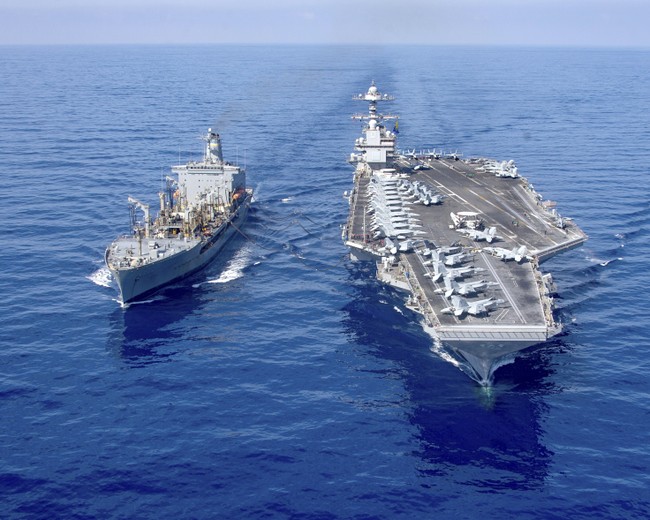
U.S. Central Command (CENTCOM) has publicly and emphatically refuted recent claims from the Iranian regime regarding naval engagements during what U.S. forces refer to as "Operation Epic Fury." According to a statement issued by CENTCOM on March 2, 2026, Iranian state messaging has falsely asserted the sinking of a U.S. aircraft carrier. CENTCOM directly contradicted these allegations, clarifying that both American aircraft carriers operating in the region remain fully operational and above water. In a pointed counter-statement, U.S. officials confirmed that the only carrier reported to have been struck in recent operations was the Iranian drone carrier, the Shahid Bagheri. This vessel, according to CENTCOM, was targeted and hit by U.S. forces within hours of the commencement of Operation Epic Fury, underscoring a significant disparity between Iranian narratives and the operational realities reported by the United States. The exchange highlights an ongoing information battle accompanying the military actions in the region, with U.S. forces actively challenging what they characterize as Tehran's pattern of misinformation.
The current dispute over naval engagements unfolds against a backdrop of decades-long tensions and a history of alleged strategic deception attributed to the Iranian government by various international observers. Since the 1979 revolution, the ruling theocracy in Iran has been characterized by some analysts as employing a governing philosophy that permits, and at times encourages, the dissemination of misleading information, particularly when dealing with foreign adversaries. This pattern, according to reports, has been observed in critical negotiations, including those concerning Iran's nuclear ambitions and its alleged sponsorship of various militant groups across the Middle East. The ongoing "Operation Epic Fury" represents the latest chapter in this complex relationship, with military actions on the ground and at sea now accompanied by a robust information campaign. The U.S. military's direct engagement in fact-checking Iranian claims signals a heightened level of public confrontation, moving beyond traditional diplomatic channels to directly address perceived falsehoods in real-time operational contexts, aiming to control the narrative surrounding the conflict.
The specific refutation from CENTCOM came via a public statement, which directly addressed the Iranian regime's assertions. On March 2, 2026, CENTCOM utilized its official channels to declare the Iranian claim of sinking a U.S. aircraft carrier as unequivocally false. The U.S. military command emphasized that its two aircraft carriers deployed in the operational area remain fully functional and have not sustained any damage. In stark contrast to the Iranian narrative, CENTCOM provided details of its own successful operations, confirming that U.S. forces had struck the Iranian drone carrier Shahid Bagheri. This strike reportedly occurred shortly after the initiation of Operation Epic Fury, indicating a swift and decisive action by American forces. The U.S. statement implicitly suggested that the operational status of a significant portion of Iran's naval assets might be compromised, drawing a clear distinction between the reported capabilities and losses of both sides in the ongoing conflict. This direct challenge to Iran's claims serves to counter potential propaganda and maintain clarity regarding the military situation.
The public fact-checking by CENTCOM carries significant strategic implications, extending beyond mere clarification of military events. By directly and publicly debunking Iranian claims, the U.S. military aims to undermine the credibility of the Iranian regime's information apparatus, both domestically and internationally. This approach suggests a recognition that modern conflicts are fought not only on battlefields but also in the information space. Expert perspectives suggest that such transparency from CENTCOM can serve multiple objectives: it can reassure allies, deter adversaries by demonstrating a firm grasp of operational realities, and prevent the spread of misinformation that could destabilize the region further. The pattern of alleged Iranian deception, as characterized by some observers, historically complicates diplomatic efforts and trust-building. Therefore, CENTCOM's assertive stance on information integrity could be seen as an attempt to establish a clearer, more factual baseline for understanding the ongoing military engagements and their broader implications for regional security and international relations.
In summary, the ongoing military operations, dubbed "Operation Epic Fury" by U.S. forces, are accompanied by a notable information campaign, with U.S. Central Command actively countering what it describes as false narratives from the Iranian regime. CENTCOM's explicit refutation of Iranian claims regarding the sinking of a U.S. aircraft carrier, coupled with its confirmation of a strike on the Iranian drone carrier Shahid Bagheri, highlights the dual nature of modern conflict. This public exchange underscores the importance of controlling the narrative amidst military engagements and a long history of alleged misinformation. As Operation Epic Fury continues, observers will be watching not only the military developments but also the ongoing information struggle, which plays a crucial role in shaping perceptions and influencing regional dynamics.