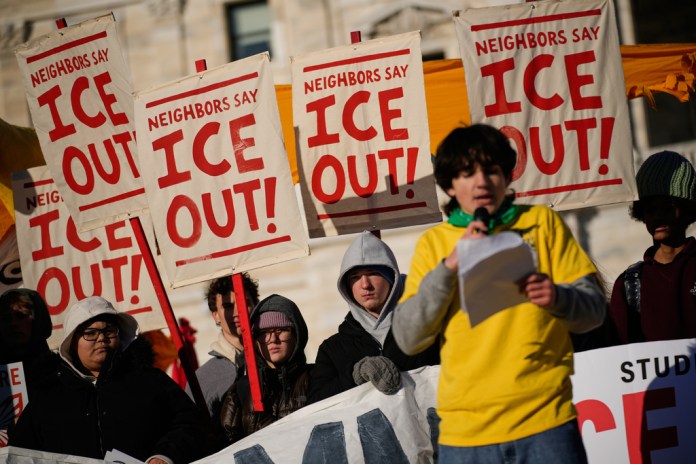
The American Association of University Professors (AAUP), a prominent organization representing faculty across the United States, has reportedly collaborated with the youth division of the Democratic Socialists of America (DSA) and the environmental advocacy group Sunrise Movement to develop a strategic "toolkit." This resource is designed to instigate widespread disruptions on college campuses, with the explicit aim of impeding federal immigration law enforcement efforts, according to an exclusive investigation by the Washington Examiner. The joint initiative reportedly seeks to mobilize students who share specific ideological viewpoints, encouraging them to organize and rally peers to participate in these disruptive actions. This partnership marks a significant development, bringing together an established academic professional body with two influential progressive activist organizations in a concerted effort to influence national policy through campus-based direct action. The reported objective is to create an environment on university grounds that actively challenges and complicates the operations of immigration authorities, thereby "hamstringing" their enforcement capabilities.
University campuses have historically served as crucial epicenters for social and political movements, often reflecting broader societal tensions and acting as incubators for activism. From civil rights protests to anti-war demonstrations, student-led initiatives have frequently sought to challenge established norms and government policies. The reported collaboration between the AAUP, the youth wing of the DSA, and the Sunrise Movement, as detailed by the Washington Examiner, positions this new toolkit within a long tradition of campus-based advocacy, yet with a distinct focus on immigration enforcement. This particular alliance is notable given the AAUP's role as a professional association dedicated to academic freedom and shared governance, now reportedly engaging directly in a strategy aimed at disrupting federal operations. The context for this initiative is the ongoing national debate surrounding immigration policy and the enforcement activities of agencies like Immigration and Customs Enforcement (ICE). By reportedly encouraging "ideologically motivated students" to create campus disruptions, the groups appear to be leveraging the unique environment of higher education institutions to exert pressure on a contentious national issue, aiming to make it more difficult for immigration laws to be enforced effectively within and around academic communities.
The "toolkit" developed through this unique partnership is reportedly designed to empower students to organize and execute actions intended to "hamstring the enforcement of immigration laws," as indicated by the Washington Examiner's findings. While the specific contents of the toolkit were not fully detailed in the initial report, its stated purpose suggests a focus on strategies that generate significant campus-level interference with immigration operations. This could encompass a range of activities aimed at raising awareness, mobilizing opposition, and creating logistical challenges for authorities, all driven by the collective action of "ideologically motivated students." The initiative specifically calls for these students to "rally like-minded individuals," implying a structured approach to building a broad base of support for disruptive campaigns. The involvement of the AAUP, an organization traditionally focused on academic standards and faculty rights, alongside the youth-oriented activist groups like the DSA's youth wing and the Sunrise Movement, underscores a strategic decision to integrate academic influence with grassroots organizing. This joint effort reportedly seeks to transform university spaces into active fronts for challenging federal immigration policies, signaling a coordinated attempt to leverage the academic community's resources and student body for political ends.
The emergence of such a toolkit, reportedly designed to foster campus disruptions to impede immigration enforcement, carries significant implications for the landscape of higher education and political activism. This strategy raises questions about the balance between academic institutions as forums for open discourse and as platforms for direct political action. For universities, the potential for organized disruptions could present administrative challenges, requiring careful navigation between supporting student expression and maintaining order, safety, and operational continuity. From a broader perspective, the effectiveness of campus-based activism in directly "hamstringing" federal enforcement agencies remains a subject of debate. While such actions can certainly draw media attention and galvanize public opinion, their direct impact on the operational capacity of federal agencies is often indirect. This reported collaboration suggests a calculated effort by the involved organizations to utilize the unique vulnerabilities and public visibility of university settings to amplify their message and create localized pressure points against federal immigration policies, potentially aiming to provoke a response that further highlights their cause.
In conclusion, an exclusive report by the Washington Examiner has brought to light a significant collaborative effort involving the American Association of University Professors, the youth branch of the Democratic Socialists of America, and the Sunrise Movement. These groups have reportedly developed a "toolkit" specifically aimed at orchestrating disruptions on college campuses with the explicit goal of impeding federal immigration law enforcement. This initiative encourages "ideologically motivated students" to mobilize their peers, transforming university grounds into active sites of protest against immigration policies. The partnership represents a notable convergence of academic advocacy and progressive activism, signaling a strategic shift in how these organizations intend to influence national debates. As this toolkit reportedly begins to circulate, its implementation could lead to heightened tensions and increased activism across higher education institutions, with potential ramifications for campus administrations, student bodies, and the broader discourse surrounding immigration enforcement in the United States. The full impact of this coordinated effort remains to be observed.