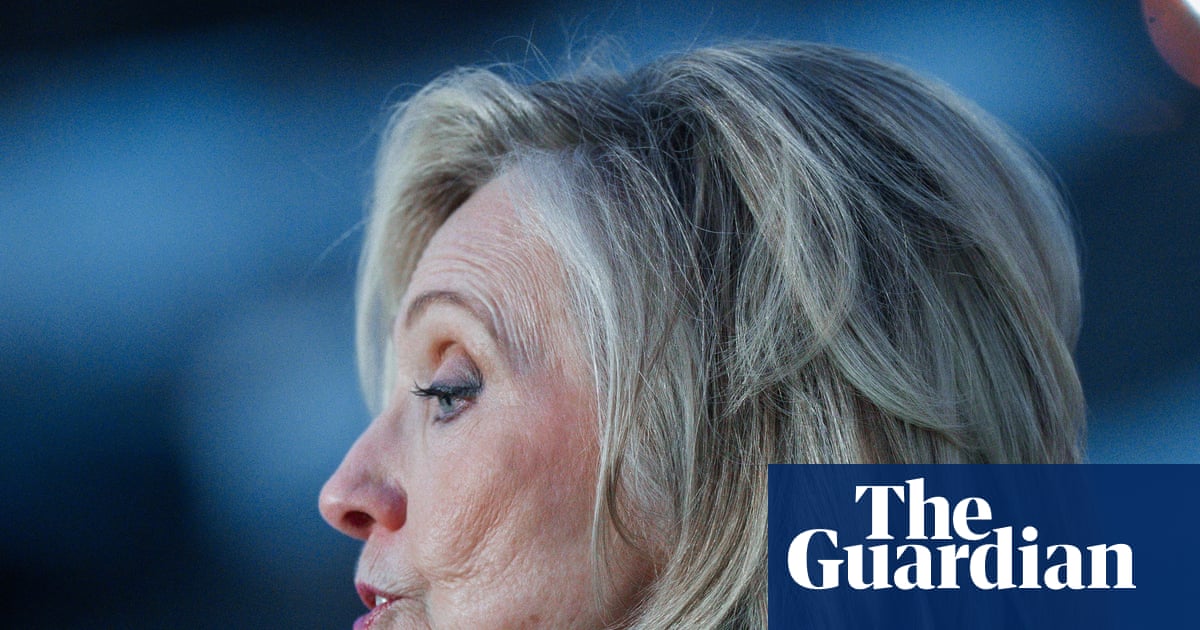
Former Secretary of State Hillary Clinton recently appeared before a House of Representatives oversight committee, where her testimony regarding the late financier Jeffrey Epstein was marked by sharp criticism of the Republican-led panel, unusual lines of questioning, and a procedural breach involving a leaked photograph. According to reports, Clinton vehemently asserted her lack of connection to Epstein, repeatedly denying any knowledge of him or visits to his properties. She contended that the proceedings were not genuinely aimed at uncovering truth or delivering justice for the victims of Epstein’s crimes, but rather constituted a 'fishing expedition' by the majority party. The session reportedly took an unexpected turn when queries veered into highly unconventional territory, including questions about unidentified flying objects (UFOs) and the debunked 'Pizzagate' conspiracy theory, further fueling Clinton's claims of political motivation behind the inquiry. This high-profile deposition, intended to shed light on Epstein's network, instead became a focal point for broader concerns about congressional conduct and partisan agendas.
The context of Clinton's appearance before the House oversight committee is rooted in the ongoing public and political scrutiny surrounding Jeffrey Epstein, a convicted sex offender whose extensive network of powerful acquaintances has been a subject of intense investigation. While the committee's stated objective was to pursue truth and justice for Epstein's victims and survivors, Clinton's opening statement, as reported, immediately challenged this premise. She accused the Republican majority of diverting attention from substantive issues, questioning their true intentions by asking, "What is being held back? Who is being protected? And why the cover-up?" These remarks underscore a deep-seated political tension, with Clinton suggesting that the committee's focus was misdirected, potentially serving a partisan agenda rather than a genuine pursuit of justice related to Epstein's illicit activities. Her repeated public denials of any association with Epstein, his island, homes, or offices, form a crucial backdrop to her frustration with what she described as unproductive and politically motivated questioning.
During the closed-door deposition, Clinton characterized the questioning as 'repetitive,' indicating a perceived lack of progress or genuine inquiry into the matters at hand. However, the session reportedly took a bizarre turn when, late into the proceedings, the line of questioning dramatically shifted. Clinton informed reporters that she 'started being asked about UFOs' and subsequently faced a 'series of questions about Pizzagate,' which she condemned as 'one of the most vile bogus conspiracy theories.' This conspiracy theory, widely disseminated in 2016, falsely alleged that a Washington D.C. pizzeria served as a front for a child sex ring linked to Clinton and other Democrats. Further disrupting the already contentious session, the proceedings were abruptly halted when a photograph taken inside the closed-door hearing was reportedly disseminated by a Republican member of the committee, Lauren Boebert. This image was subsequently published on social media platform X by conservative influencer Benny Johnson, who commented that Clinton 'does not look happy.' Clinton's legal team promptly requested a suspension, citing a breach of the agreed-upon rules for closed congressional hearings, which explicitly prohibit taking pictures.
The events surrounding Hillary Clinton's testimony raise significant questions about the conduct and purpose of congressional oversight committees, particularly when highly politicized figures are involved. Clinton's assertion that the committee's proceedings were not designed to seek truth and justice, but rather constituted 'fishing expeditions,' suggests a broader concern about the weaponization of legislative power for partisan ends. The reported shift in questioning to topics like UFOs and the discredited Pizzagate conspiracy theory, as described by Clinton, could be interpreted by some as an attempt to discredit her or to inject sensationalism into a serious investigation, rather than pursuing relevant facts related to Jeffrey Epstein. Furthermore, the unauthorized leaking of a photograph from a closed-door hearing represents a serious breach of protocol and trust, undermining the integrity of the legislative process itself. Such incidents can erode public confidence in congressional investigations, making it difficult to distinguish legitimate oversight from politically motivated attacks, and potentially setting a precedent for future procedural violations in high-stakes testimonies.
In conclusion, Hillary Clinton's recent testimony before the House oversight committee regarding Jeffrey Epstein was a contentious and unusual affair, marked by her strong condemnation of the committee's approach, the introduction of highly unconventional topics like UFOs and the Pizzagate conspiracy, and a significant procedural breach involving a leaked photograph. Clinton's consistent denials of any connection to Epstein and her accusations of a politically motivated 'fishing expedition' highlight the deep partisan divisions influencing such high-profile inquiries. The incident of the leaked photo further underscores concerns about adherence to established rules and the integrity of congressional proceedings. As investigations into Epstein's network continue, the public will be watching closely to see whether future hearings prioritize substantive inquiry and justice for victims, or if they will continue to be overshadowed by political maneuvering and procedural controversies.