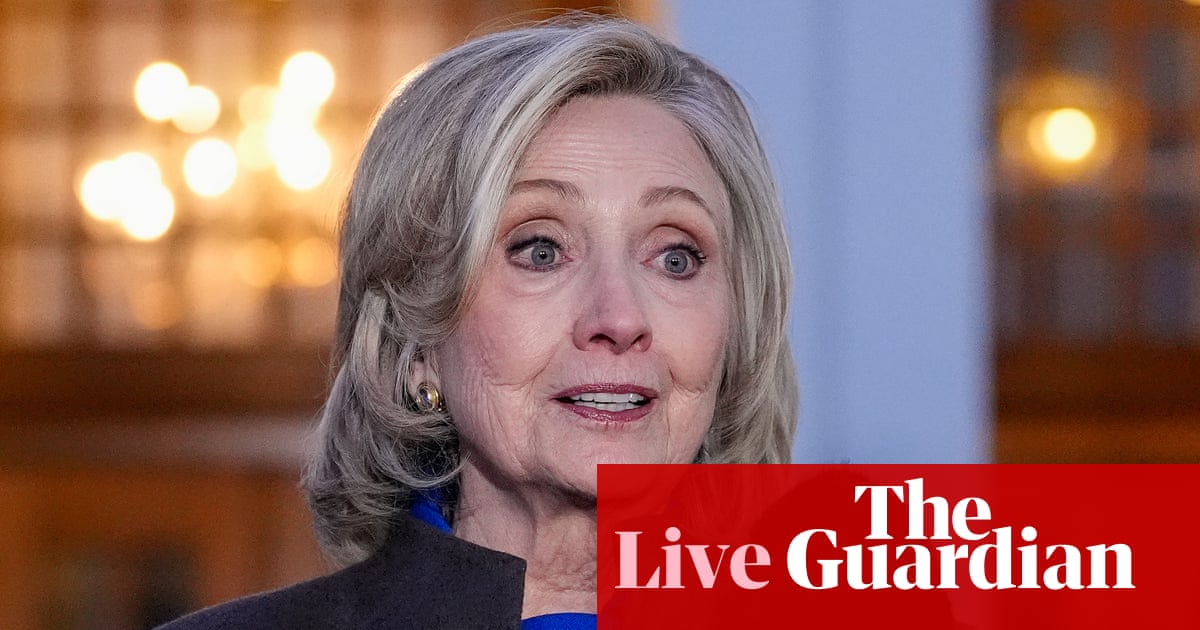
Former Secretary of State Hillary Clinton recently concluded a significant session of closed-door testimony before the House Oversight Committee, where she addressed long-standing inquiries regarding her potential connections to the late financier Jeffrey Epstein. Following the private hearing, Clinton addressed members of the media, asserting that she had provided comprehensive responses to every inquiry posed by the congressional panel. According to reports from the scene, the former First Lady emphasized her commitment to transparency, stating her desire for the complete truth regarding Epstein’s activities to be made public. During her remarks, Clinton reiterated a firm denial of any personal or professional relationship with Epstein, a figure whose criminal history and high-society connections have fueled years of intense public scrutiny and political speculation. Officials present at the hearing noted that Clinton’s testimony was intended to clarify her historical interactions, or lack thereof, with the disgraced figure. By addressing the committee directly, Clinton sought to dismantle persistent rumors that have linked her name to Epstein’s controversial social circle. The session marks a pivotal moment in the ongoing legislative effort to uncover the full extent of Epstein’s influence and the network of individuals who may have been aware of his illicit operations over several decades.
The investigation into Jeffrey Epstein has remained a focal point of American political discourse since his 2019 death in a federal lockup. For years, various public figures have faced scrutiny over their proximity to the financier, who was known for hosting powerful individuals on his private island and at his various residences. Hillary Clinton’s involvement in this inquiry stems from broader efforts by the House Oversight Committee to map out the social and professional networks that Epstein maintained. While Clinton has long maintained that she never had any dealings with Epstein, her casual acquaintance with Ghislaine Maxwell—Epstein’s long-time associate who was later convicted of sex trafficking—has frequently been cited by political opponents as a point of concern. This background of suspicion has led to repeated calls for formal testimony to establish a clear record of her interactions. The significance of this event lies not only in the specific details of the Epstein case but also in the broader context of how high-profile political figures are held accountable for their social associations. Historically, the Clintons have been the subject of numerous investigations, and this latest testimony represents another chapter in the long-standing tension between the former First Family and their critics in the Republican party who seek to link them to Epstein’s legacy.
During the course of the hearing, Clinton reportedly faced a wide array of questions that extended beyond the immediate scope of the Epstein investigation. Sources indicate that Republican members of the committee utilized the session to probe Clinton on unconventional topics, including the phenomenon of unidentified flying objects (UFOs) and the widely debunked Pizzagate conspiracy theory. Clinton confirmed to reporters that these subjects were indeed raised during the questioning, expressing a degree of disappointment that the committee chose to focus on such fringe narratives rather than sticking to more substantive issues. Regarding her specific ties to the Epstein case, Clinton clarified that while she knew Ghislaine Maxwell as a casual acquaintance, she had never engaged in any form of communication or meetings with Epstein himself. This distinction is critical, as investigators have sought to determine if Maxwell served as a bridge between Epstein and various political elites. According to statements made after the session, Clinton maintained that she had no knowledge of Epstein’s criminal enterprises and was never part of his inner circle. The inclusion of questions regarding Pizzagate—a conspiracy theory that has been thoroughly discredited by law enforcement—highlights the highly polarized atmosphere of the proceedings and the diverse motivations of the committee members involved in the interrogation.
The decision to question a former presidential candidate on matters such as UFOs and Pizzagate suggests a complex intersection of legitimate oversight and political theater. Analysts suggest that the inclusion of these topics may be an attempt by certain lawmakers to appeal to specific segments of their base who remain invested in alternative narratives. From a legal and political standpoint, Clinton’s willingness to testify and her subsequent public statements are seen as a strategic move to neutralize long-standing accusations by placing her denials on the official record. However, the partisan divide within the committee remains evident, as the focus of the inquiry often shifted between factual discovery regarding Epstein’s victims and the pursuit of politically charged leads. Experts in congressional procedure note that such high-profile testimonies often serve as a platform for both the witness and the interrogators to shape public perception. By answering every question, as she claimed, Clinton aims to project an image of cooperation that contrasts with the narrative of evasion often pushed by her detractors. Moving forward, the implications of this testimony will likely depend on how the committee chooses to present its final findings and whether any new evidence emerges to challenge the accounts provided during these closed-door sessions.
In summary, Hillary Clinton’s appearance before the House Oversight Committee serves as a definitive attempt to address and dismiss the various theories linking her to Jeffrey Epstein. By providing testimony on the record and speaking directly to the media, she has reinforced her position that no relationship ever existed between her and the disgraced financier. The revelation that she was questioned on peripheral topics like UFOs and Pizzagate adds a layer of controversy to the proceedings, reflecting the current state of political discourse in Washington. As the committee continues its work, the public will be watching to see if any further disclosures are made or if this testimony marks the end of this specific line of inquiry. For now, the primary takeaway remains Clinton’s emphatic denial of involvement and her stated desire for the truth regarding Epstein’s crimes to be fully revealed to the American people. The next steps for the oversight panel will involve synthesizing this testimony into their broader investigation into the systemic failures that allowed Epstein to operate for so long.