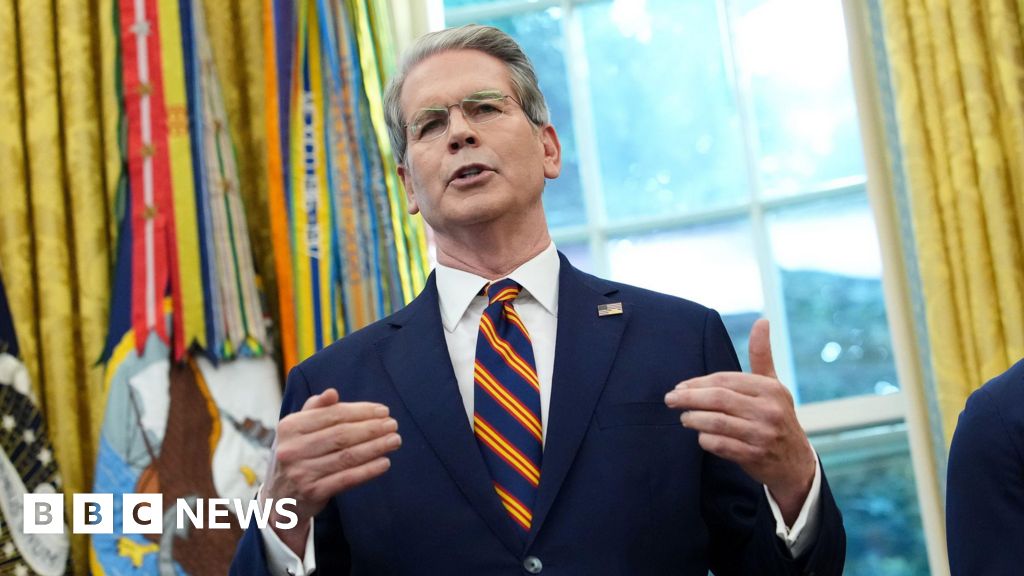
US Treasury Secretary Scott Bessent has indicated that the United States is poised to implement a 15% global tariff within the current week. This anticipated measure aims to supersede the comprehensive import duties previously enacted by President Donald Trump's administration last year, which were recently invalidated by a Supreme Court decision. The announcement by Secretary Bessent seeks to provide clarity amidst a period of considerable global uncertainty, stemming from conflicting public statements regarding the tariff rate. Following the Supreme Court's ruling, the White House initially moved to impose a 10% levy, despite President Trump's subsequent assertions on social media that the rate would be 15%. This discrepancy had previously triggered widespread confusion among international businesses and world leaders, who had called for definitive guidance on the administration's trade policy.
The impending tariff adjustment marks the latest development in the administration's ongoing efforts to reshape global trade dynamics. The original broad import taxes, which were a cornerstone of President Trump's economic agenda, faced a significant legal setback when the nation's highest court deemed them unlawful. In the immediate aftermath of this judicial decision, the White House introduced a 10% tariff, a move that was quickly overshadowed by President Trump's personal declaration of a higher 15% rate via social media platforms. This divergence in official and presidential communication led to considerable international bewilderment, prompting numerous calls for a clear and unified stance from Washington. Officials within the White House had previously acknowledged their work on administrative procedures to align the tariff rates with the President's public pronouncements, signaling their intent to solidify the higher rate.
To implement the initial 10% tariff following the Supreme Court's ruling, the White House utilized an unconventional trade authority known as Section 122. This particular provision grants the US president the power to declare tariffs of up to 15% for a period of 150 days without requiring explicit congressional approval, under specific conditions. White House officials have consistently downplayed the long-term impact of the Supreme Court's decision, asserting their capacity to leverage alternative legal mechanisms to reinstate their desired tariff policies. They maintain that these import duties are crucial for rebalancing international trade relationships, stimulating American manufacturing sectors, and contributing to the reduction of the national debt. Secretary Bessent further reinforced the administration's resolve, stating in an interview with CNBC that he holds a "strong belief" that the tariff rates will revert to their previous levels within approximately five months, indicating a sustained commitment to their trade strategy. The administration has also signaled its intention to explore other legal avenues to establish a more permanent tariff regime beyond the temporary scope of Section 122.
The administration's reliance on Section 122, an "untested trade authority," introduces a layer of legal and economic uncertainty. While it provides a temporary mechanism for implementing tariffs, its novel application could potentially invite further legal challenges or scrutiny regarding the extent of presidential power in trade policy without direct congressional oversight. The stated goals of rebalancing trade, boosting manufacturing, and reducing national debt through tariffs are ambitious and have been subjects of extensive debate among economists. Critics often argue that tariffs can lead to higher consumer prices, retaliatory measures from other nations, and disruptions to global supply chains, potentially offsetting any domestic benefits. The persistent back-and-forth regarding the specific tariff rate, coupled with the White House's determination to restore these duties despite judicial setbacks, underscores a firm commitment to a protectionist trade agenda. This approach signals to international partners that the US is prepared to use executive authority to pursue its trade objectives, potentially leading to continued friction in global trade relations.
In summary, the United States appears poised to implement a 15% global tariff this week, as confirmed by Treasury Secretary Scott Bessent, marking a critical step in the administration's ongoing trade policy. This move follows a period of significant confusion and legal challenges, including a Supreme Court decision that invalidated previous broad import taxes. The White House's determination to restore these tariffs, initially through the untested Section 122 authority and with plans for more permanent legal tools, highlights its unwavering commitment to its stated goals of rebalancing trade, bolstering domestic manufacturing, and addressing national debt. As the new tariffs take effect, global businesses and international partners will be closely observing the economic repercussions and any potential retaliatory actions. The situation underscores the complex interplay of executive power, judicial review, and international trade, with the full implications of this renewed tariff regime set to unfold in the coming months.