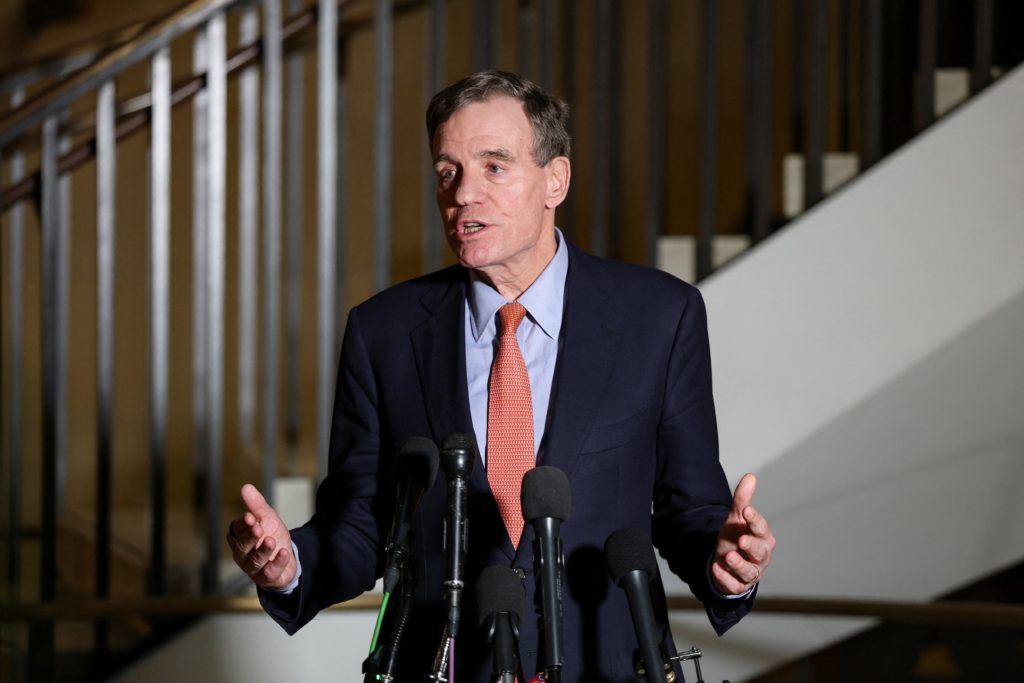
On Tuesday, members of the United States Congress received a comprehensive briefing from Trump administration officials regarding the ongoing situation described as 'the war with Iran.' This high-level informational session, which took place amidst escalating regional tensions, aimed to update legislators on the complex dynamics and potential implications of the United States' engagement with the Islamic Republic. Concurrently, both chambers of Congress are actively preparing for crucial votes on a War Powers Act measure, a legislative initiative designed to potentially restrict President Trump's executive authority in initiating military strikes without explicit congressional approval. The developments underscore a significant moment for legislative oversight concerning foreign policy and military action, prompting widespread discussion among lawmakers and the public alike. Reports indicate that Senator Mark Warner of Virginia, who serves as the leading Democrat on the influential Senate Intelligence Committee, engaged in further discussions following the briefing, highlighting the gravity of the situation and the legislative branch's role in national security decisions.
The context surrounding these events is deeply rooted in the historical tension between the executive and legislative branches over the authority to commit the nation to armed conflict, a debate that has intensified in recent years. The War Powers Resolution of 1973, often referred to as the War Powers Act, was enacted in the aftermath of the Vietnam War as a congressional effort to reassert its constitutional prerogative to declare war and to limit the president's ability to engage in prolonged military actions without legislative consent. This act generally requires the president to notify Congress within 48 hours of deploying armed forces into hostilities and prohibits forces from remaining for more than 60 days without congressional authorization or a declaration of war, with a 30-day withdrawal period. The current move to invoke this measure reflects growing concerns among some legislators about the potential for unilateral executive action regarding Iran, particularly in light of recent escalations and the administration's assertive stance in the Middle East. The significance of these impending votes cannot be overstated, as they represent a direct challenge to presidential war-making powers and a potential rebalancing of constitutional authority.
The Tuesday briefing, described by sources as a critical update on 'the war with Iran,' provided congressional members with insights into the administration's strategic assessments and intelligence regarding the complex geopolitical landscape. While specific details of the classified discussion were not immediately made public, the very framing of the situation as 'war' underscores the seriousness with which the administration views the ongoing tensions. Legislators from across the political spectrum are now tasked with evaluating this information as they prepare for the imminent votes on the War Powers Act measure. This legislative action seeks to reinforce Congress's role in authorizing military force, potentially setting a precedent for future executive actions. The bipartisan nature of concerns over unchecked presidential authority in military matters has often emerged during periods of heightened international tension, and the current legislative push reflects a renewed effort to ensure that any significant military engagement receives the explicit approval of the people's representatives. The involvement of key figures like Senator Mark Warner, a prominent voice on intelligence matters, further emphasizes the critical nature of these deliberations.
Analysts suggest that the impending votes on the War Powers Act measure could have profound implications for the balance of power between the executive and legislative branches, as well as for the trajectory of U.S. foreign policy concerning Iran. Should Congress successfully pass a resolution limiting the president's authority, it would signal a significant legislative pushback against executive prerogative in military decision-making, potentially constraining future unilateral actions. Conversely, a failure to pass such a measure could be interpreted as an endorsement of the administration's current approach or a reluctance by Congress to assert its constitutional powers. Experts in constitutional law and international relations are closely watching these developments, noting that the outcome could redefine the parameters of presidential authority in deploying military force. The debate also highlights the ongoing tension between the need for swift executive action in national security crises and the democratic principle of congressional authorization for war, a foundational element of the U.S. system of checks and balances.
In summary, the recent briefing by Trump administration officials on 'the war with Iran' and the impending congressional votes on a War Powers Act measure mark a pivotal moment in American foreign policy and constitutional governance. These events underscore the heightened tensions surrounding Iran and the legislative branch's determination to assert its role in decisions of war and peace. The discussions involving key figures like Senator Mark Warner highlight the seriousness with which these matters are being approached on Capitol Hill. As both the House and Senate prepare to cast their votes, the outcomes will undoubtedly shape the future course of U.S.-Iran relations and the enduring debate over presidential versus congressional authority in military engagements. All eyes will now be on the legislative process to see how Congress ultimately responds to the administration's actions and the broader geopolitical challenges.