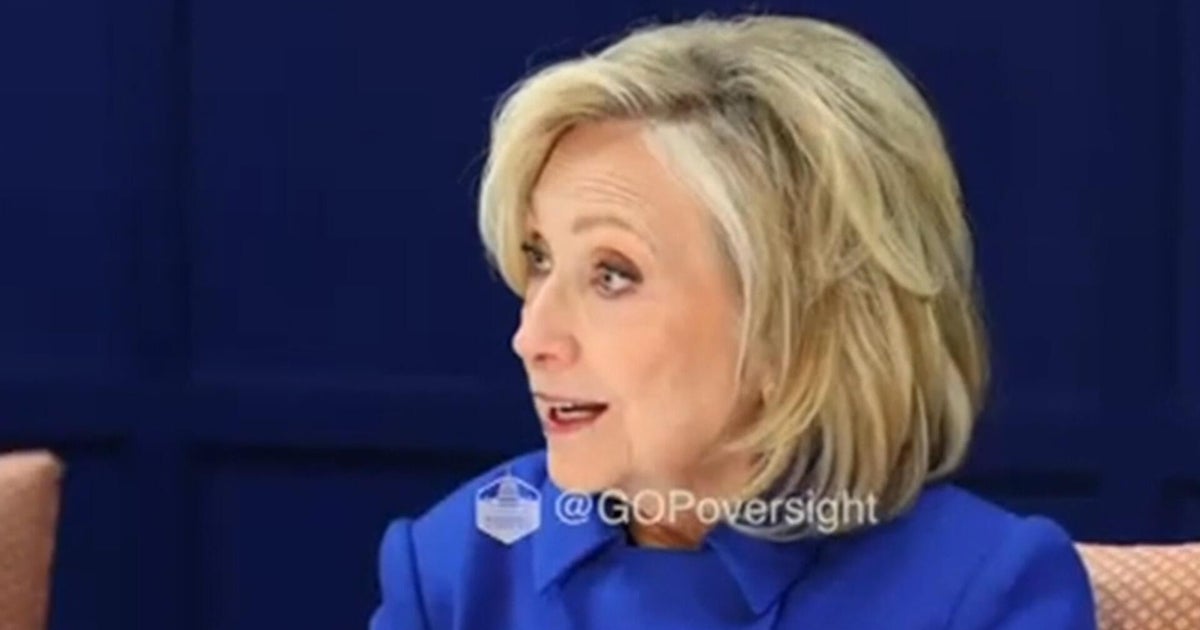
Former Secretary of State Hillary Clinton reportedly threatened to conclude her participation in a House Oversight Committee deposition prematurely, an incident now brought to light through a recently disseminated video. The contentious moment arose, according to reports from CBS News, after Ms. Clinton became aware that an image of her had been circulated across online platforms. This development introduces a new layer of scrutiny to the often-tense environment of congressional oversight proceedings, highlighting the immediate and disruptive impact of digital information sharing on high-stakes political encounters. The footage captures a rare glimpse into the dynamics of such closed-door sessions, where the decorum and procedural integrity are paramount, yet can be swiftly challenged by external factors. The specific nature of the photograph or the details surrounding its online distribution have not been extensively elaborated upon in initial reports, but its emergence was sufficient to prompt a significant reaction from the former diplomat during a formal governmental inquiry. This incident underscores the persistent challenges public figures face in maintaining privacy and control over their image, even within the confines of official duties.
Congressional depositions, such as the one involving former Secretary Clinton before the House Oversight Committee, are critical components of legislative oversight, designed to gather information and ensure accountability from government officials and private citizens alike. These proceedings typically occur behind closed doors, allowing for a thorough and often lengthy examination of witnesses without the immediate pressures of public spectacle. The House Oversight Committee, a powerful entity within the U.S. Congress, possesses broad authority to investigate 'waste, fraud, and abuse' in the federal government, making its depositions particularly significant. Witnesses are expected to cooperate fully, and any threat to withdraw can be seen as a serious challenge to the committee's authority and the integrity of the investigative process. The context of a high-profile figure like Hillary Clinton, who has been the subject of numerous congressional inquiries throughout her extensive career, amplifies the political sensitivity surrounding such an event. Her past roles as First Lady, U.S. Senator, and Secretary of State have consistently placed her under intense public and political scrutiny, making her interactions with oversight bodies a matter of considerable public interest and media attention. The gravity of a deposition requires witnesses to maintain composure and adherence to procedural rules, making any deviation noteworthy.
The catalyst for Ms. Clinton's reported threat to depart the proceeding was the revelation that a photograph of her had been disseminated online. While the precise content or origin of this image remains unspecified in initial accounts, its unauthorized or unexpected appearance during a sensitive official inquiry evidently caused significant disruption. The act of sharing a photo online, particularly one taken during a private or semi-private official event, raises questions about privacy, security protocols, and the potential for information leaks. For a figure of Ms. Clinton's stature, the sudden public exposure of an image during a deposition could be perceived as a breach of decorum, a distraction, or even a security concern, potentially influencing her willingness to continue cooperating under such conditions. The video, which CBS News' Katrina Kaufman highlighted, provides visual evidence of the tension and the immediate impact of this digital intrusion on the formal process. Such an incident underscores the pervasive nature of online media and its capacity to intersect with and influence even the most formal governmental functions, creating unforeseen challenges for participants and committees alike in maintaining focus and control over the proceedings. The decision to threaten withdrawal, regardless of whether it was ultimately carried out, signals a profound level of discomfort or protest regarding the circumstances.
This incident, as depicted in the recently surfaced video, offers a compelling illustration of the evolving challenges faced by public figures navigating official duties in an era dominated by instant digital communication. The swift dissemination of an image online, even if seemingly innocuous, can profoundly impact the atmosphere and progression of sensitive proceedings like a congressional deposition. Experts suggest that such occurrences highlight the ongoing struggle between transparency, privacy, and the control of narratives in the digital age. For a high-profile individual like former Secretary Clinton, whose public image is constantly under scrutiny, the unexpected appearance of a photo during a formal inquiry could be interpreted as an attempt to disrupt, distract, or even compromise the integrity of the process. This event also raises broader questions about the protocols governing information sharing during closed-door governmental sessions and the measures in place to prevent unauthorized disclosures. The reaction captured in the video serves as a stark reminder that even in highly controlled environments, the pervasive reach of online platforms can introduce unpredictable elements, forcing participants to contend with external pressures that can overshadow the primary purpose of the gathering. It underscores the delicate balance required to conduct serious governmental business while simultaneously managing the relentless demands and intrusions of the modern media landscape.
In summary, the recently unveiled video showing former Secretary of State Hillary Clinton threatening to exit a House Oversight Committee deposition after learning of an online photo sharing incident provides a vivid snapshot of the intersection between high-stakes political proceedings and the pervasive nature of digital media. As reported by CBS News, this moment underscores the inherent tensions that can arise when personal privacy and procedural decorum clash with the rapid, often uncontrollable, flow of information online. The incident serves as a pertinent reminder of the unique pressures faced by prominent public figures during official inquiries and the potential for external digital events to disrupt even the most formal governmental processes. Moving forward, observers will likely consider how such occurrences might influence future protocols for congressional depositions, particularly concerning witness privacy and the management of digital information within sensitive governmental contexts. The episode reinforces the notion that in today's interconnected world, the boundaries of official proceedings are increasingly permeable to the influence of online activities, demanding constant vigilance and adaptation from all involved parties.