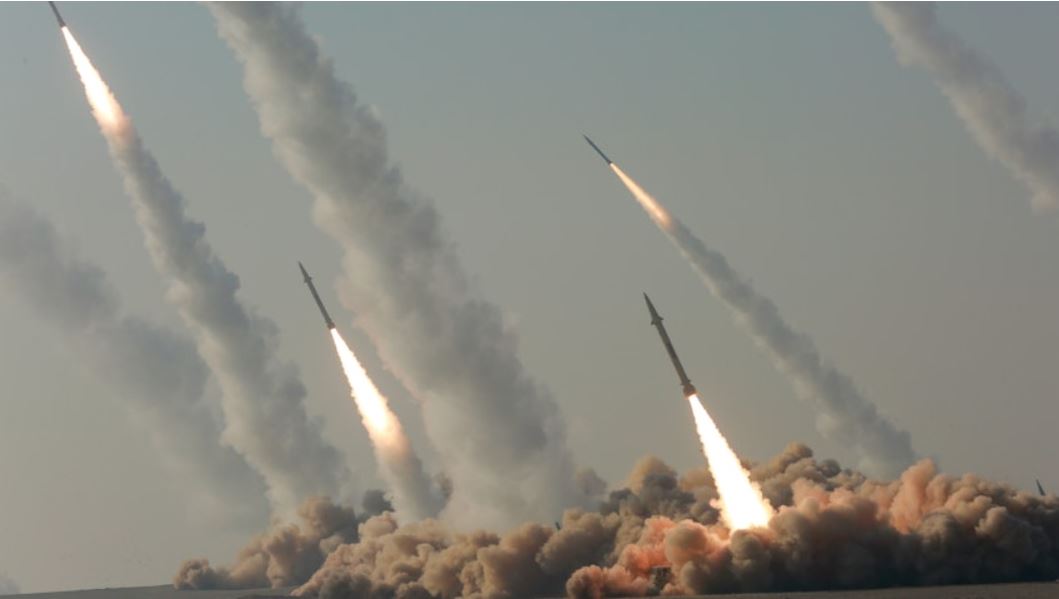
Iran's Islamic Revolution Guards Corps (IRGC) has recently asserted the elimination of a second Terminal High Altitude Area Defense (THAAD) battery, described as one of the world's most costly air defense systems, operating within West Asia. According to a statement disseminated via Sepah News, the IRGC's official media outlet, this sophisticated system was reportedly struck and neutralized by precision-guided missiles. This latest claim follows an earlier assertion by Iran regarding the destruction of the AN/TPY-2 radar component, integral to a THAAD Anti-Ballistic Missile (ABM) System, which was deployed in the United Arab Emirates' Al-Ruwais Industrial City. While official confirmation from the UAE remains pending, open-source intelligence derived from satellite imagery reportedly indicates evidence consistent with an impact at the site. These alleged strikes, coupled with reports of rapidly dwindling interceptor supplies in key regional nations, signify a potentially critical degradation of the advanced missile defense infrastructure in the region.
These recent developments unfold against a backdrop of heightened regional tensions, categorized under what is being referred to as 'Operation Epic Fury.' The alleged targeting of these high-value defense assets represents a significant escalation in the ongoing strategic competition in West Asia. The THAAD system, a cornerstone of modern missile defense, is designed to intercept short, medium, and intermediate-range ballistic missiles in their terminal phase. Its associated radar components, such as the AN/TPY-2 and AN/FPS-132, are critical for early warning and tracking, forming the backbone of a layered defense architecture. The deployment of such advanced systems by the United States and its allies, including the AN/FPS-132 phased array radar at Qatar's Al Udeid Air Base, which was constructed by the US in 2013, underscores Washington's commitment to bolstering regional security. The systematic targeting of these components, if confirmed, could fundamentally alter the balance of power and the perceived security landscape for nations reliant on these defenses.
Further detailing the extent of these alleged attacks, reports indicate the AN/TPY-2 radar component purportedly destroyed in the UAE is valued at an estimated US$500 million. This incident follows a separate, confirmed strike on February 28, the initial day of the conflict, where an Iranian ballistic missile hit the AN/FPS-132 early warning radar at Al Udeid Air Base in Qatar. Qatar has officially acknowledged that this US-built radar, valued at approximately US$1.1 billion, sustained damage from the strike. Collectively, these incidents represent a substantial and systematic undermining of the sophisticated, layered missile defense framework established by Washington across the region. The IRGC has explicitly stated that the neutralization of these advanced air-defense systems has 'opened the missile hand of the Islamic Republic of Iran for successful target hits,' suggesting an enhanced capability to conduct future drone and missile operations with greater efficacy. Adding to these concerns, numerous reports, including one from Bloomberg on March 2, suggest that West Asian nations like the UAE and Qatar are facing dangerously low inventories of interceptor missiles, with some estimates indicating only a few days' supply remaining. Qatar, for instance, was reportedly left with just four days' worth of Patriot interceptors and has sought urgent assistance from allied nations to counter drone threats.
The implications of these alleged and confirmed strikes are profound, signaling a significant shift in the regional security paradigm. The systematic degradation of advanced missile defense systems, particularly those designed to protect against ballistic missile threats, could leave nations like the UAE and Qatar considerably more vulnerable. Experts suggest that the removal of these high-value radar and interceptor assets not only diminishes the ability to detect and neutralize incoming threats but also creates a psychological advantage for the IRGC, potentially emboldening further aggressive actions. This situation highlights a critical challenge for Washington's regional defense strategy, as the effectiveness of its layered missile defense architecture appears to be under direct assault. The reported depletion of interceptor stockpiles further exacerbates this vulnerability, suggesting that even if radar systems remain operational, the capacity to engage multiple incoming threats might be severely compromised. This evolving threat landscape necessitates a re-evaluation of defensive postures and potentially an urgent re-supply effort to maintain regional stability.
In summary, the IRGC's claims of destroying a second THAAD battery, coupled with the confirmed strike on Qatar's crucial early warning radar and the unconfirmed but satellite-supported hit in the UAE, paint a concerning picture for West Asian security. These actions, if fully substantiated, represent a deliberate and effective strategy to dismantle key components of the region's advanced missile defense capabilities. The reported critical shortage of interceptor missiles in the UAE and Qatar further compounds this vulnerability, raising the specter of these nations becoming largely defenseless against sustained ballistic missile and drone attacks. As 'Operation Epic Fury' continues, the international community will be closely watching for further confirmations, the response from affected nations and their allies, and any efforts to replenish vital defense assets to mitigate the escalating risks in this volatile region.