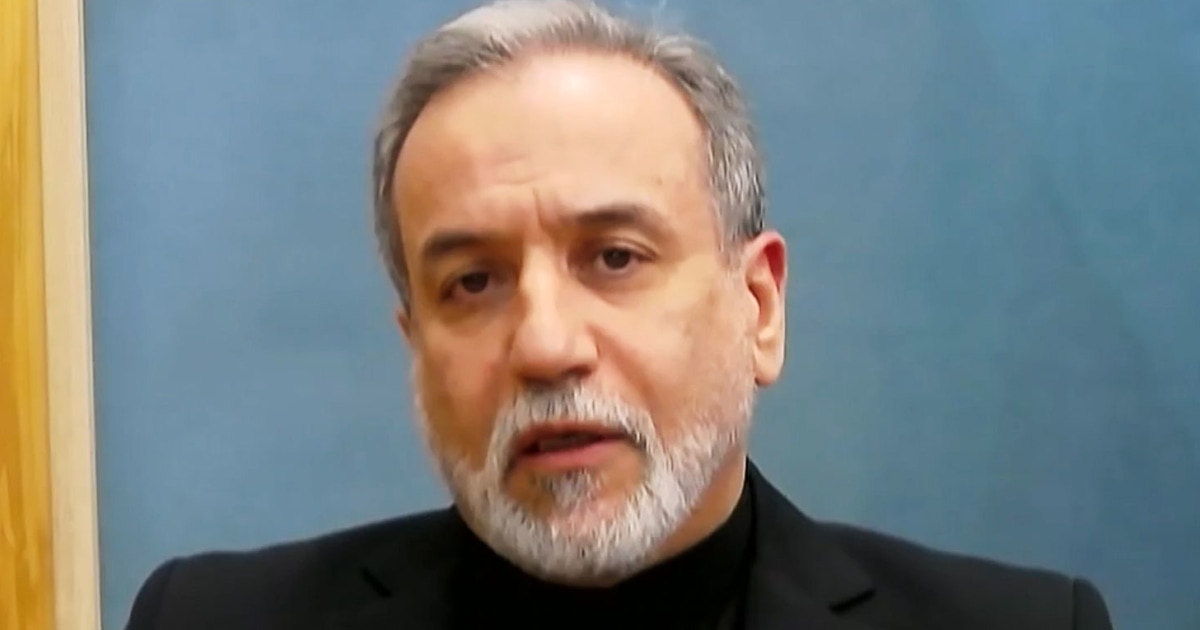
Iranian Foreign Minister Abbas Araghchi declared his nation's preparedness to confront a potential ground incursion by American forces, even as a conflict initiated by the United States and Israel escalates across the broader region. Speaking in a video interview from Tehran with "NBC Nightly News" anchor Tom Llamas on Thursday, Araghchi firmly rejected any prospect of negotiations with the U.S. and explicitly stated that Iran had not sought a cessation of hostilities. These pronouncements come amidst ongoing aerial bombardments by U.S. and Israeli militaries targeting Iranian territory, following a significant assault just days prior that reportedly crippled Iran's defensive capabilities and resulted in the death of its top religious and political authority, Supreme Leader Ayatollah Ali Khamenei. The minister's assertive posture underscores a deepening resolve within Tehran despite the severe recent setbacks and the widening scope of regional hostilities, signaling a defiant stance against perceived foreign aggression.
The current heightened tensions and military actions follow a critical turning point earlier in the week, specifically on Saturday, when combined U.S. and Israeli military operations launched a comprehensive attack on Iran. This offensive, according to reports, significantly degraded Iran's military infrastructure and, crucially, led to the demise of Ayatollah Ali Khamenei, who had served as the nation's Supreme Leader and ultimate decision-maker for decades. This event marks an unprecedented escalation in the long-standing animosity between Iran and its adversaries, fundamentally altering the geopolitical landscape of the Middle East. The conflict, which officials describe as having rapidly expanded throughout the region, has seen continuous U.S. and Israeli airstrikes, prompting deep concerns about regional stability and the potential for further widespread confrontation. Araghchi’s remarks, delivered from the Iranian capital, reflect a government grappling with profound losses while simultaneously projecting an image of unwavering resilience in the face of sustained military pressure.
When directly questioned by Tom Llamas about any apprehension regarding a possible U.S. ground invasion, Foreign Minister Araghchi adopted a distinctly challenging tone. According to the interview, he reportedly stated, "No, we are waiting for them," further asserting Iran's confidence in its ability to repel such an attack, predicting it "would be a big disaster for them." This declaration highlights a strategic calculation within Tehran, suggesting a belief in their capacity to inflict significant costs on any invading force. Furthermore, Araghchi addressed the issue of a ceasefire, clarifying that Iran has not requested one, even in the context of the ongoing U.S. and Israeli strikes. He drew a parallel to a previous 12-day conflict in June, where, he claimed, it was Israel that ultimately sought an unconditional ceasefire after Iran had "resisted against their aggression." That earlier engagement, as sources indicate, involved U.S. and Israeli military targeting Iran's nuclear facilities, illustrating a pattern of targeted strikes preceding the current broader conflict.
Araghchi's defiant statements, particularly his refusal to consider negotiations and his assertion of readiness for a ground invasion, carry significant implications for the trajectory of the ongoing conflict. The death of Supreme Leader Khamenei, a figure who embodied the continuity of the Islamic Revolution, creates a power vacuum and introduces an element of unpredictability into Iran's strategic decision-making. While Araghchi projects confidence, the reported decimation of military defenses and the loss of the top authority suggest a nation under immense pressure. Experts might interpret Araghchi's rhetoric as an attempt to bolster domestic morale and deter further aggression, rather than a literal invitation for a ground war. However, such strong declarations in a highly volatile environment raise the risk of miscalculation, potentially leading to an escalation beyond aerial bombardments. The historical reference to a previous ceasefire request by Israel also serves as a rhetorical tool, aiming to frame Iran as a resilient power that can withstand prolonged conflict, even as the current situation appears far more dire. The spreading nature of the conflict across the region, as noted by officials, indicates a complex web of engagements that could draw in other regional and international actors.
In summary, Iranian Foreign Minister Abbas Araghchi has articulated a resolute stance, expressing Iran's readiness to counter a potential American ground invasion and explicitly ruling out negotiations or a ceasefire request, even as U.S. and Israeli airstrikes continue to pound the nation. These declarations follow a devastating weekend attack that reportedly crippled Iran's defenses and resulted in the death of Supreme Leader Ayatollah Ali Khamenei, marking a severe escalation in regional hostilities. Araghchi’s defiant tone, recalling past conflicts where Iran claimed to have outlasted adversaries, underscores a determination to resist despite significant setbacks. The coming days will likely reveal how this rhetoric translates into action, with international observers closely watching for any signs of de-escalation or, conversely, further military engagement that could plunge the Middle East into a broader, more destructive conflict. The leadership transition in Iran and the ongoing military pressure will be critical factors shaping the immediate future of this volatile situation.