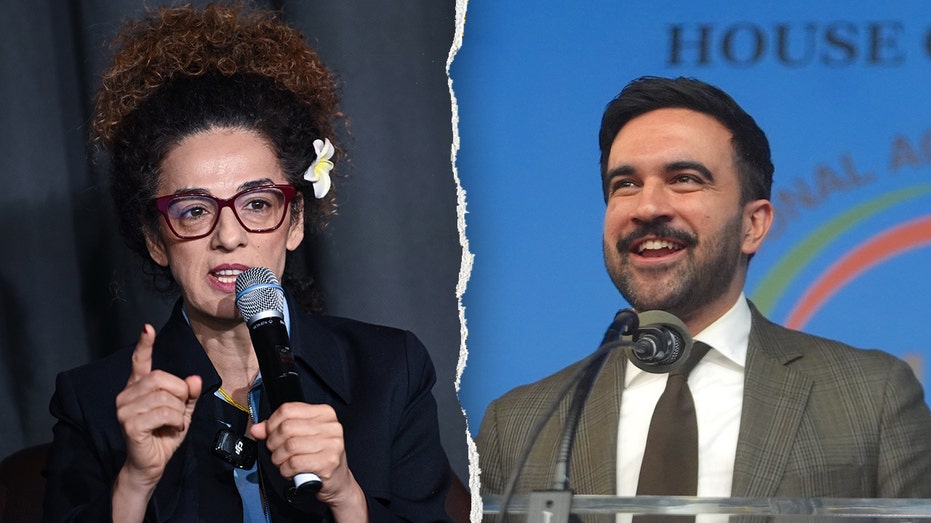
Prominent Iranian-American journalist Masih Alinejad recently issued a sharp rebuke to New York City Mayor Zohran Mamdani, publicly challenging his reaction to recent military actions undertaken by the United States and Israel against targets in Iran. The outspoken critic of the Iranian government took to the social media platform X on Saturday to voice her strong disagreement with Mamdani's public comments. According to reports, Alinejad accused the mayor of maintaining silence regarding numerous alleged massacres and assassination plots attributed to the Islamic Republic, including attempts reportedly orchestrated within New York City itself. She specifically referenced a 2024 assassination plot against her, highlighting the personal dimension of her critique. Alinejad urged Mamdani to refrain from lecturing Iranians on matters of peace, expressing a profound sense of insecurity in New York City due to what she perceives as his sympathetic leanings towards the Iranian regime. This public confrontation underscores the deep divisions and strong emotions surrounding the ongoing geopolitical tensions involving Iran.
The context for this heated exchange lies in the broader, long-standing tensions between Iran and Western powers, particularly the United States and Israel, which have recently manifested in military strikes. Masih Alinejad has established herself as a significant voice in the global discourse surrounding human rights in Iran, consistently advocating for democratic reforms and exposing alleged abuses by the current government. Her activism has, according to various sources, made her a target, culminating in a reported assassination plot against her on American soil in 2024. Mayor Zohran Mamdani, on the other hand, holds a prominent civic position in one of the world's most diverse cities. His public statements on international affairs, while reflecting a particular political viewpoint, often draw scrutiny, especially when they touch upon highly sensitive geopolitical conflicts. The incident highlights the complex interplay between local governance, international relations, and the passionate advocacy of diaspora communities, particularly when issues of war, peace, and human rights intersect.
In her pointed social media posts, Alinejad directly challenged Mamdani's perceived selective outrage, stating, "You stayed quiet when we have faced massacre, when Islamic Republic assassins were sent here in New York to kill us, stay quiet now! STOP lecturing us Iranians about peace." She further elaborated on her concerns, asserting that she does not feel safe in New York listening to someone like Mamdani, whom she believes sympathizes with a regime responsible for the deaths of "more than 30,000 unarmed Iranians in less than 24 hours," according to her claims. Mamdani's own statement, also shared on social media, condemned the strikes, describing them as a "catastrophic escalation in an illegal war of aggression." He characterized the actions as "bombing cities," "killing civilians," and "opening a new theater of war," further arguing that Americans do not desire another conflict aimed at "regime change," but rather seek "relief from the affordability crisis" and "peace." Alinejad countered Mamdani's focus on safety in the city, emphasizing that "safety without justice" holds no meaning, and reiterated that the people of Iran aspire for freedom, questioning Mamdani's solidarity during their times of need. She concluded by declaring that New York belongs to those who oppose terrorism, not those who excuse it.
The public confrontation between Alinejad and Mamdani illuminates the profound ideological chasm that often exists in discussions surrounding foreign policy, human rights, and the complex relationship with nations like Iran. Analysts suggest that this exchange underscores the tension between a pacifist, anti-war stance, as articulated by Mamdani, and the urgent call for justice and human rights, championed by Alinejad. For many within the Iranian diaspora, particularly those who have fled persecution, the perceived silence or perceived sympathy for the Iranian regime by public figures can be deeply unsettling, impacting their sense of security and belonging. The incident also highlights the increasing role of social media as a direct battleground for political and ideological debates, allowing public figures to engage in real-time, unmediated confrontations that quickly capture public attention. Observers note that such exchanges reflect the broader challenge faced by democratic societies in balancing geopolitical considerations with humanitarian imperatives, especially when dealing with authoritarian governments.
In summary, the recent social media exchange between Iranian-American journalist Masih Alinejad and New York City Mayor Zohran Mamdani has brought to the forefront a contentious debate regarding US-Israel military actions against Iran and the broader human rights situation within the Islamic Republic. Alinejad's critique stems from her personal experience as a target of the Iranian regime and her advocacy for Iranian freedom, contrasting sharply with Mamdani's condemnation of the strikes as an "illegal war of aggression." The incident underscores the divergent perspectives on how to approach complex international conflicts and the role of local officials in global discourse. Moving forward, this public disagreement is likely to fuel continued discussions about US foreign policy towards Iran, the responsibilities of public figures in addressing international human rights, and the ongoing struggle for justice and freedom for the Iranian people.