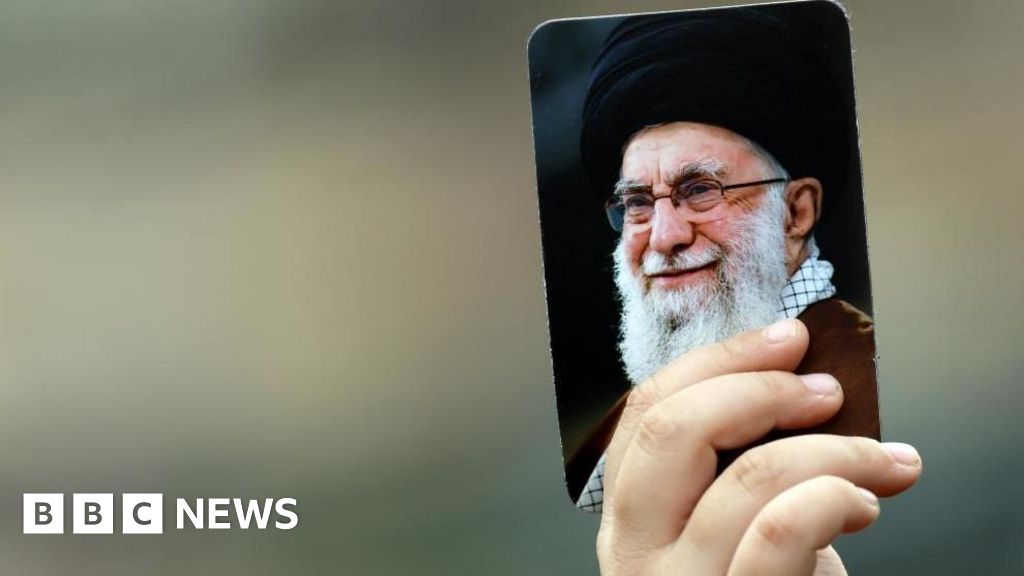
The Islamic Republic of Iran is currently navigating its most precarious period since the foundational events of 1979, following the reported demise of its Supreme Leader, Ali Khamenei. This significant development occurred during an initial wave of coordinated military operations conducted jointly by the United States and Israel. The strikes, which Washington characterized as a decisive endeavor to dismantle Iran's command infrastructure, specifically targeted high-ranking military and political figures. By Saturday evening, widespread reports confirming Khamenei's death began to circulate, triggering reactions across various communities that would have been unimaginable just days prior. Initial observations included instances of public jubilation in several major Iranian urban centers, mirroring similar scenes observed among significant segments of the Iranian diaspora globally. For many, the elimination of the supreme leader signified a profound historical turning point, potentially creating an opening that years of internal civil resistance movements had been unable to achieve independently.
The current instability marks a critical juncture for Iran, reminiscent of the revolutionary fervor that swept the nation over four decades ago. The strategic objective behind these joint US-Israeli military actions, according to official statements from Washington, was to severely cripple the operational capabilities of Iran's leadership. This operation unfolded against a backdrop of escalating regional tensions and long-standing international pressure on the Iranian regime. The immediate aftermath of the strikes has thrust the nation into a period of profound uncertainty, challenging the very foundations of its governance. The swiftness and apparent precision of the attacks, coupled with the high-profile casualty, have undeniably altered the geopolitical landscape, forcing both internal and external actors to reassess their positions and strategies concerning the future trajectory of the Islamic Republic.
Further details emerging from the operation, which the United States designated 'Operation Epic Fury,' indicate a tightly coordinated military effort, largely under American strategic command. Following the initial reports of the Supreme Leader's death on Saturday night, the international community witnessed direct and assertive public pronouncements from the leaders of the nations involved. According to reports, President Donald Trump of the United States issued a direct appeal to the Iranian populace, encouraging them to seize the present opportunity to assume control over their governmental structures. Echoing this sentiment, Israeli Prime Minister Benjamin Netanyahu reportedly articulated that a fundamental shift in Iran's leadership was both a desirable outcome and an achievable goal. These statements underscore the political dimension of the military action, aiming to leverage the internal repercussions of the strikes.
The immediate aftermath of these unprecedented strikes presents a complex and unpredictable scenario for Iran's future. While the military phase of 'Operation Epic Fury' demonstrated significant coordination and control, the subsequent political appeal directed at the Iranian public remains far less certain in its outcome. Experts suggest that the celebratory reactions observed in parts of Iran and among the diaspora reflect a deep-seated desire for change, viewing Khamenei's death as a potential 'historic rupture' that could pave the way for new political realities. However, the capacity of the current regime to consolidate power, suppress dissent, and manage the succession process will be crucial in determining the long-term impact. The coming days are expected to reveal whether the existing power structures can withstand this immense pressure and maintain their grip on authority, or if the strikes have indeed created an irreversible momentum towards significant internal transformation.
In conclusion, the reported death of Supreme Leader Ali Khamenei, resulting from joint US-Israeli military operations, has undeniably plunged Iran into an era of unprecedented instability. The strategic targeting of senior leadership, aimed at debilitating the nation's command structure, has ignited both international speculation and internal reactions ranging from apprehension to overt celebration. While the military execution of 'Operation Epic Fury' appears to have been meticulously planned, the political ramifications and the response of the Iranian populace remain highly unpredictable. The ability of the Islamic Republic to navigate this critical juncture, manage potential succession challenges, and address the calls for change will be closely watched by the global community as the situation continues to unfold in the coming days.