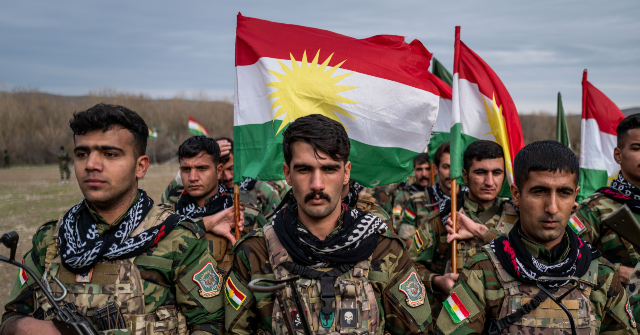
The Kurdistan Regional Government (KRG) in Iraq issued a categorical denial on Thursday, refuting widespread rumors that its Peshmerga forces were poised to launch an invasion into Iran in concert with the United States. This strong disavowal came amidst swirling reports suggesting that various Iranian Kurdish factions might be contemplating ground operations targeting what some sources have characterized as the 'Iranian terror state.' Officials within the KRG sought to unequivocally distance themselves from these allegations, underscoring their commitment to regional stability and non-interference in the internal affairs of neighboring countries. The emergence of such rumors highlights the volatile geopolitical landscape of the Middle East, where cross-border tensions and the activities of diverse armed groups frequently fuel speculation and necessitate swift official responses to prevent misunderstandings or escalation. The KRG's statement aimed to quell any misinterpretations regarding its strategic intentions and its relationship with both the United States and Iran, emphasizing its role as a stabilizing force within the broader Iraqi context.
The context surrounding these rumors is deeply rooted in the complex history of Kurdish populations spread across Iraq, Iran, Turkey, and Syria, all of whom share a common ethnic identity but are governed by different states and often harbor distinct political aspirations. For decades, Iranian Kurdish groups have engaged in varying degrees of opposition to the central government in Tehran, sometimes leading to cross-border skirmishes or the establishment of bases in neighboring territories. The KRG, while maintaining its autonomy within Iraq, has historically walked a delicate tightrope, balancing its relationships with Baghdad, regional powers like Turkey and Iran, and international allies such as the United States. Any suggestion of the Peshmerga, the official military forces of the KRG, participating in an offensive against Iran would represent a significant and unprecedented shift in regional dynamics, potentially destabilizing an already fragile equilibrium. The KRG's consistent policy has been to prevent its territory from being used as a launching pad for attacks against its neighbors, a stance crucial for its own security and economic stability.
Reports indicating potential ground operations by Iranian Kurdish groups, distinct from the KRG's Peshmerga, underscore the multifaceted nature of Kurdish political and military movements. While the KRG explicitly denied any involvement of its official forces, the existence of other, often independent, Iranian Kurdish organizations with grievances against Tehran is a well-documented fact. These groups have, at various times, sought to advance their objectives through armed struggle, operating from border regions. However, the scale and coordination implied by rumors of a 'ground invasion' would signify a major escalation, far beyond typical cross-border skirmishes. The KRG's swift and categorical denial, according to officials, serves to prevent any misattribution of actions by independent groups to the autonomous region's official military, thereby safeguarding its diplomatic standing and avoiding unintended provocations. The specific details surrounding the alleged plans of these unnamed Iranian Kurdish groups remain largely unconfirmed, with the KRG's focus primarily on refuting any connection to its own forces.
Analysts suggest that the emergence of such rumors, even if unsubstantiated, reflects the heightened geopolitical anxieties prevalent in the Middle East, particularly concerning Iran's regional influence and the ongoing tensions with Western powers. The notion of a coordinated ground invasion involving the United States and Kurdish forces would represent a dramatic shift in strategy, carrying immense risks of regional conflagration. Expert perspectives indicate that the KRG's prompt denial is a strategic move to de-escalate potential misunderstandings and reaffirm its commitment to a policy of non-aggression and neutrality in conflicts not directly involving its own defense. Such rumors could be deliberately propagated to sow discord, test reactions, or even to justify future actions by various state or non-state actors. The KRG's long-term stability hinges on its ability to maintain good relations with all its neighbors while preserving its hard-won autonomy, making any perceived involvement in an offensive against Iran highly detrimental to its strategic interests.
In conclusion, the Kurdistan Regional Government has firmly rejected claims of its Peshmerga forces preparing to invade Iran alongside the United States, responding to circulating rumors about potential ground operations by other Iranian Kurdish groups. This unequivocal denial highlights the KRG's commitment to regional stability and its policy of not permitting its territory to be used for hostile actions against neighboring states. The incident underscores the volatile nature of information and misinformation in a region fraught with historical grievances and ongoing geopolitical tensions. Moving forward, observers will be watching closely for any further developments regarding the activities of various Kurdish factions and the broader implications for regional security, as official statements continue to play a crucial role in managing perceptions and preventing unintended escalations in the complex Middle Eastern landscape.