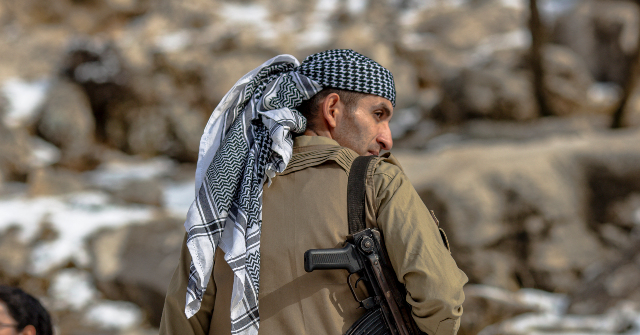
Multiple media outlets in the United States and Israel have recently published reports indicating that the U.S. government has approached Iranian Kurdish groups, urging them to participate in a confrontation against the current administration in Tehran. These reports suggest a strategic objective to potentially neutralize security forces operating in western Iran, thereby creating conditions conducive for a broader popular uprising within the country. Specifically, CNN reported on Tuesday, citing multiple individuals familiar with the alleged strategy, that the Central Intelligence Agency (CIA) is actively engaged in efforts to equip Kurdish forces with weaponry. The stated aim of this initiative, according to these sources, is to ignite a widespread popular revolt across Iran. A senior Iranian Kurdish official, speaking to CNN, characterized the plan as being in an advanced stage, suggesting that Kurdish forces could commence ground operations in the near future. This official expressed confidence that the Kurds perceive a significant opportunity to challenge and potentially overthrow a regime they believe has been weakened by extensive U.S. and Israeli aerial assaults.
The reported consultations between Iranian Kurdish militias and the United States unfold against a backdrop of long-standing geopolitical tensions and historical grievances. The Kurdish people, a significant ethnic minority, have historically sought greater autonomy and rights within Iran, often leading to friction with the central government. Western Iran, with its substantial Kurdish population, has frequently been a flashpoint for dissent and armed resistance. The current reports suggest a potential escalation of this dynamic, with external support aimed at leveraging internal discontent. The Times of Israel (TOI) also corroborated accounts of discussions between Iranian Kurdish groups and U.S. representatives. TOI's reporting indicated that these Kurdish factions have been undergoing training in preparation for potential engagements with Iranian regime forces and have formally requested military supplies from the CIA. This alleged preparation and request for armaments highlight a perceived readiness among certain Kurdish elements to engage in direct conflict, bolstered by a belief that the current geopolitical climate, marked by significant U.S. and Israeli military pressure on Iran, presents a unique window of opportunity.
Further details emerging from these reports underscore the cautious yet potentially advanced nature of the alleged plan. Reuters, on Tuesday, confirmed the reports of U.S. consultations with Iranian Kurdish groups, citing three distinct sources knowledgeable about the matter. Consistent with The Times of Israel's account, Reuters also emphasized that a definitive decision regarding the operation's execution and its precise timeline has not yet been finalized. This critical caveat suggests that while discussions and preparations may be underway, the commitment to a full-scale military intervention or arming program remains conditional. The senior Iranian Kurdish official, as cited by CNN, conveyed a strong sense of optimism among Kurdish leadership, believing that the regime's perceived vulnerability, exacerbated by recent U.S. and Israeli airstrikes, offers a 'big chance' for a successful uprising. Additionally, reports indicate that the U.S. has also been engaging in dialogue with Kurdish leaders situated in Iraq. However, accounts of these specific discussions did not include any explicit mention of military cooperation or arming initiatives, distinguishing them from the reported interactions with Iranian Kurdish groups.
The implications of such an operation, if it were to proceed, are far-reaching and complex, potentially reshaping the regional security landscape. Analysts suggest that arming Iranian Kurdish forces could significantly destabilize western Iran, potentially drawing the Iranian regime into a multi-front conflict. While proponents might argue that this strategy could weaken the Tehran government and empower a popular movement, critics could point to the inherent risks of external intervention, including the potential for prolonged conflict, humanitarian crises, and unintended consequences. The Iranian regime would likely view such an action as a direct act of aggression, potentially leading to retaliatory measures that could escalate tensions across the Middle East. Furthermore, the success of any popular uprising is not guaranteed, and the long-term stability of a post-uprising Iran, or even a partially destabilized western Iran, remains a significant unknown. The reports also raise questions about the U.S.'s broader strategy in the region and its commitment to supporting various opposition groups, weighing the potential for regime change against the risks of regional chaos.
In summary, recent reports from prominent U.S. and Israeli media outlets consistently suggest that the U.S., through the CIA, is exploring or actively pursuing a strategy to arm Iranian Kurdish forces to instigate an uprising against the Iranian regime. While sources indicate that these plans are advanced and Kurdish groups are reportedly preparing for potential ground operations, multiple reports stress that a final decision on the operation's timing and scope has not yet been made. The potential for such an intervention carries significant geopolitical weight, promising both opportunities for challenging the current Iranian government and substantial risks of regional instability. Observers will be closely monitoring further developments, particularly any official statements or discernible shifts in military activity in western Iran, to ascertain the veracity and progression of these critical reports.